• Members of the previous forum can retrieve their temporary password here, (login and check your PM).

Peganum harmala oil alkaloids content ?

The Sofa Traveler

Traveling without moving
Donator
Joined
Apr 3, 2022
Messages
275
Merits
796
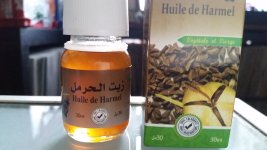
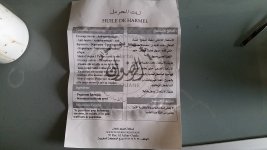
Hi Nexus :) I just got a Peganum harmala oil bottle and I wonder if it contains any harmalas alkaloids. The oil is intended for internal and external use but the instruction sheet doesn't mention usual warnings about MAOI and anti-depressant medications contraindication. I wonder if this oil could be used for tryptamines potentiation ?
 
It'd probably be helpful if you could share more info or a picture of the product.

Harmala extraction is pretty straightforward and fun, so you could always do that to ensure you get what you're after 😀
 
Wash a sample of the oil with some vinegar, then check the vinegar for harmala-style fluorescence under UV light. The oil itself may display fluorescence, but there are plenty of other fat -soluble compounds that also fluoresce, along with certain polyunsaturated fats/PUFA.

I've noticed that harmalas may display exceedingly weak solubility in medium naphtha, but this may have been down to stearic acid contamination, soooo… you might see a tiny solubility of the harmala alks in the seed oil, if they've formed salts with longer-chain fatty acids, which would essentially be harmala soaps. In that sense, take care to minimise emulsions when washing with vinegar.
 
Nice find!

Check out Table1 in this paper, it seems that >90% of the oil (75% for Moroccan variety) are various compounds that are not β-carboline alkaloids. so only a small percentage could potentially be β-carbolines. with the recommended dosage of the oil, any potential MAOI effects would be negligeable, and i think it is probably the same for the whole bottle.

It would be interesting to test if the oil might alter the DMT experience in some way other than MAOI action.
 
Nice find!

Check out Table1 in this paper, it seems that >90% of the oil (75% for Moroccan variety) are various compounds that are not β-carboline alkaloids. so only a small percentage could potentially be β-carbolines. with the recommended dosage of the oil, any potential MAOI effects would be negligeable, and i think it is probably the same for the whole bottle.

It would be interesting to test if the oil might alter the DMT experience in some way other than MAOI action.
True, terpenes are very different than alks
 
Thanks all for your answers. I'm gonna get an UV lamp to check fluorescence.
Nice find!

Check out Table1 in this paper, it seems that >90% of the oil (75% for Moroccan variety) are various compounds that are not β-carboline alkaloids. so only a small percentage could potentially be β-carbolines. with the recommended dosage of the oil, any potential MAOI effects would be negligeable, and i think it is probably the same for the whole bottle.

It would be interesting to test if the oil might alter the DMT experience in some way other than MAOI action.
I came across this paper but it seems to be about EO (Essential Oil) whereas the bottle I have seems to be just Peganum harmala and Sesamum indicum oil, not an EO. I guess oil chemical profile should be different from EO ?
 
yes a pressed oil would be different from an essential oil produced by distillation but i don't know if pressing would work with peganum harmala seeds like it would with sesame seeds, harmalas seem too dry (which is probably why they added the sesame). In any case, i found their website and they list harmala oil in the category of essential oils. To be honest, as an arab, I would not take information of this kind written in arabic as reliable information, so it could be a pressed oil nonetheless. As an example, you can see on the information paper they list the ingredients in french but they don't do it in arabic, because generally arabic people are less fussy and do not look at the ingredients list.
I don't think they have a special way of processing the harmalas different than the way they process their other oils, which is the most common and traditional way of distillation.
 
yes a pressed oil would be different from an essential oil produced by distillation but i don't know if pressing would work with peganum harmala seeds like it would with sesame seeds, harmalas seem too dry (which is probably why they added the sesame). In any case, i found their website and they list harmala oil in the category of essential oils. To be honest, as an arab, I would not take information of this kind written in arabic as reliable information, so it could be a pressed oil nonetheless. As an example, you can see on the information paper they list the ingredients in french but they don't do it in arabic, because generally arabic people are less fussy and do not look at the ingredients list.
I don't think they have a special way of processing the harmalas different than the way they process their other oils, which is the most common and traditional way of distillation.
Ok thanks for the insights :) I guess whether it's oil or EO, harmalas alks amount will be rather low for tryptamines potentiation, unless you drink large amounts of it. I tasted the oil, it's not very bitter, I wonder if bitterness can be an indicator of presence of harmalas alks since pure alks or rue tea are very bitter.
 
Did you ever try this oil in any way? I'm interested in using Peganum harmala for my scalp, as I've seen that's a traditional use. I've considered adding pure harmalas to some base soap, but it feels too wasteful. And other actives may contribute to skin health.
 
I get the impression that it's more or less just a sesame oil extract of harmel, which won't be bringing many β-carbolines along with it.
Having said this, I did notice some fluorescence getting carried over into white spirit after pouring it into a glass jug which had a thin crust of what I'd describe as "harmala crud" at the bottom. Funny thing is, I'd already tried rinsing this layer off with vinegar and water so it's a tad puzzling how there would be something nonpolar-soluble after that unless
  • the acetates might be slightly soluble in white spirit, or
  • it was fine particulates set free from an oil-soluble crust, or
  • the white spirit was somehow contaminated with something which just happened to have the exact same shade of fluorescence as harmalas.
Having mulled it over here, the second option does now seem slightly more the likeliest of the three, but it may be worth doing a couple of experiments with vegetable oil and both harmala freebases and their acetates, just in case.
 
Did you ever try this oil in any way? I'm interested in using Peganum harmala for my scalp, as I've seen that's a traditional use. I've considered adding pure harmalas to some base soap, but it feels too wasteful. And other actives may contribute to skin health.
Yes, I used the oil for skin care and enhancing my beautiful greying hair 😁 I don't really have any particular problem with those two things (skin & hair) so I can't talk about its efficiency but I had to find something to do with this oil since it didn't seem to contain any harmalas, or very few.
 
Back
Top Bottom