• Members of the previous forum can retrieve their temporary password here, (login and check your PM).

Phalaris/other grass types ID thread

Migrated topic.
dreamer042 said:
That one appears to be P. arundinacea
Are you sure? It looks so similar to lya's pictures above it that were ID'd as Dactylis glomerata. Although the ligule does appear more diaphanous on LowHP's specimen.

Just a thought: whenever I've found P. arundinacea it's been on riverbanks or in ditches - clearly damp places. D. glomerata I've found in woodlands, parks and meadows where the habitat is significantly drier. That's not to say, though, that P. arundinacea never grows in drier places (sorry, double negative!), just that it greatly prefers damp places.

Is there a post in this thread detailing the fine differences between these two close lookalike species - besides their habit preferences? Such a thing would help save people a lot of wasted time and effort.
 
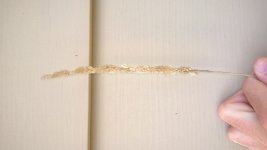
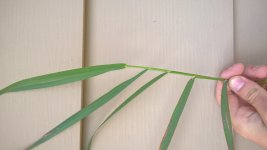
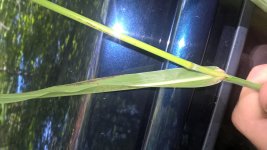
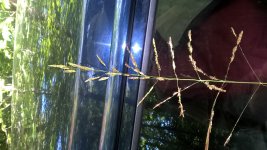
Figured I would try and post a few picture.

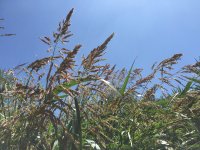
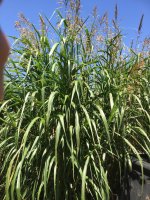
Have found this grass all over the Midwestern U.S. Does not have white striped leaves but seems very similar to Phalaris. The stem is hollow and the leaves are coming off at a 45. Stood over five feet tall and found in a damp, marshy area. I know it is not in season, just curious for identification purposes.

Any insight nexians?
 

Attachments

  • WP_20150930_11_49_14_Pro.jpg
    WP_20150930_11_49_14_Pro.jpg
    1.5 MB · Views: 1
  • WP_20150930_11_48_07_Pro.jpg
    WP_20150930_11_48_07_Pro.jpg
    1.4 MB · Views: 1
  • WP_20150930_11_48_21_Pro.jpg
    WP_20150930_11_48_21_Pro.jpg
    1.4 MB · Views: 1
downwardsfromzero said:
dreamer042 said:
That one appears to be P. arundinacea
Are you sure? It looks so similar to lya's pictures above it that were ID'd as Dactylis glomerata. Although the ligule does appear more diaphanous on LowHP's specimen.

Just a thought: whenever I've found P. arundinacea it's been on riverbanks or in ditches - clearly damp places. D. glomerata I've found in woodlands, parks and meadows where the habitat is significantly drier. That's not to say, though, that P. arundinacea never grows in drier places (sorry, double negative!), just that it greatly prefers damp places.

Is there a post in this thread detailing the fine differences between these two close lookalike species - besides their habit preferences? Such a thing would help save people a lot of wasted time and effort.
I think you are correct that does appear to be orchard grass rather than arund.

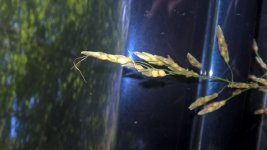
I'm no pro at ID'ing these things, so take it for what it's worth but it looks to me like arund flowers will always be yellow/brown in color instead of green like in the orchard grass specimens.
 
Leithen said:
Figured I would try and post a few picture.

Have found this grass all over the Midwestern U.S. Does not have white striped leaves but seems very similar to Phalaris. The stem is hollow and the leaves are coming off at a 45. Stood over five feet tall and found in a damp, marshy area. I know it is not in season, just curious for identification purposes.

Any insight nexians?
It does look a lot like arundinacea but it's a bit hard to tell. Can you get a clearer shot of the flower head and/or a couple moar flowers to verify?
 
Could someone check the pictures I posted on the last post of the page before this? If it is phalaris I need to harvest it soon as it's starting to die off with the time of year it is.
 
Gone-and-Back said:
Could someone check the pictures I posted on the last post of the page before this? If it is phalaris I need to harvest it soon as it's starting to die off with the time of year it is.
I'm pretty sure that is not a Phalaris species. A cursory google search leads me to believe it's likely a species of Pennisetum.
 
dreamer042 said:
Gone-and-Back said:
Could someone check the pictures I posted on the last post of the page before this? If it is phalaris I need to harvest it soon as it's starting to die off with the time of year it is.
I'm pretty sure that is not a Phalaris species. A cursory google search leads me to believe it's likely a species of Pennisetum.

Dam. I thought it looked pretty similar to phalaris, but I'm not expert obviously. I take it that grass species has no activity?
 
Got some more pictures of another plant. Again I think it looks very similar to phalaris but can not for sure id.

Standing between 4.5 and 6 ft. Hollow stems. Found in early October so not very alive. Still active? Found in central U.S. South of Illinois.

Any help would be greatly appreciated. 😁
 

Attachments

  • WP_20151005_11_47_23_Pro.jpg
    WP_20151005_11_47_23_Pro.jpg
    1.6 MB · Views: 3
  • WP_20151005_11_47_36_Pro.jpg
    WP_20151005_11_47_36_Pro.jpg
    1.8 MB · Views: 3
  • WP_20151005_11_47_41_Pro.jpg
    WP_20151005_11_47_41_Pro.jpg
    1.1 MB · Views: 3
So I don't know if this is the right place to do this but I don't think this warrants another thread.

I'm wondering if anyone remembers any instance of phalaris growing in south/central florida. It is high humidity and I would think they could be growing there.
 
any of the images attached look familiar? growing near a creek in Melbourne, all over the place, I can get more images quite easily
20151126_155854%20-%20Copy_zpsc99wczei.jpg
20151126_152339%20-%20Copy_zpskyh20o9g.jpg
20151126_155535%20-%20Copy_zpsbh4eqnlv.jpg
20151126_155541%20-%20Copy_zpsvvlamlq8.jpg
20151126_155234%20-%20Copy_zpsqnvpydxh.jpg
20151126_155547%20-%20Copy_zpsvxjiyfto.jpg
20151126_155224%20-%20Copy_zpsrmi5oqps.jpg
 
Leithen: First photo is Phalaris Arundinacea
Second photo is definitely not

Gone and Back: The photo on the previous page is either a species of Polypogon or Pennisetum and I am unaware of tryptamine alkaloids being present in either of those grasses.

Astro84: Your grass is Dactylis Glomerata(Orchard Grass), and is not active for entheogenic purposes.
 
Thanks Chimp Z for clarification, I have been doing some more research and I took some images of one I think could be P. Aquatica found along a creek near me
(Open image in new tab for full size)😁
phalaris_zpsgbqyxfpy.jpg~original


phalaris2_zpsj7sffpx6.jpg~original
 
For what it's worth Astro84, that is by my lights most definitely P. Aquatica! Congrats on the find!

dreamer042 said:
I think you are correct that does appear to be orchard grass rather than arund.

I'm no pro at ID'ing these things, so take it for what it's worth but it looks to me like arund flowers will always be yellow/brown in color instead of green like in the orchard grass specimens.

My P. Arund flowers have this curious red tinge about them; though my friends call me colourblind so there's that haha!
 
Hey Folks,

This thread is extremely informative.😁

Hope I'm not going to far of topic but I was hoping to get verification on a species of grass. I think its phalaris arundinacea?


Attachments

  • IMG_0626.JPG
    IMG_0626.JPG
    1.7 MB · Views: 3
  • IMG_0628+-+Copy.JPG
    IMG_0628+-+Copy.JPG
    2.3 MB · Views: 3
dreamer042 said:
^
This does look very much like arundinacea to me.
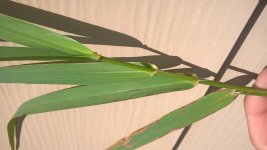
Really? I'd say it looks very much like Phragmites australis (sham's picture, that is). Although to be fair there are a few more details that would aid ID:

*Include close up of the ligule where the leaf joins the stem. P. arund. is longer and membranous, P. aus. is fibrillose.

*A close up of the flowers would also be helpful.

Otherwise they're very nice pictures! :D
 
Back
Top Bottom