neurobloom
Titanium Teammate
On that subject, here are superimposed chromatograms of P. brachystachys extract at different life stages: purely vegetative growth with leaves only, reproductive growth with flowers present, and a dying plant after flowering that had begun to naturally desiccate despite normal irrigation. The vertical axis has been normalized to the same maximum height for all three.
View attachment 104180
We get purest 5-MeO-DMT before flowering. Gramine increases with time, eventually becoming the dominant alkaloid by fluorescence height. I don't have a gramine standard, so I don't know how that maps to mass. I unfortunately didn't keep good enough notes to report the absolute concentrations, but I recall that the concentration of 5-MeO-DMT decreased with time.
I don't know how this would affect the subjective experience since I didn't consume these unpurified. The answer here may just be "not much", given gramine's general inertness in these relatively low doses. Other species or varieties may be completely different, and the diversity of Phalaris is both its promise and its challenge.
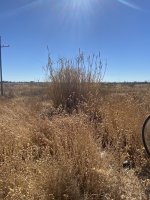
I'm very happy with the variety of P. brachystachys that I'm working with. I wish it had a name; the seller didn't identify it beyond the species. A patch of 2-3 square feet outdoors yields about 1000 g fresh weight per month, which yields about 200 mg 5-MeO-DMT. The same seed grown hydroponically indoors is about 5x as strong.
For completeness, I've tried and failed repeatedly to crystallize 5-MeO-DMT succinate. This is reported in the literature, but the same conditions that successfully crystallized the oxalate didn't work, plus various other attempts. My resin was much more soluble in ethanol than that paper's supplementary materials implied it should be. I guess that might be residual water as a cosolvent; perhaps it would have worked if the resin had been dried hotter or under vacuum, or perhaps a natural impurity inhibits crystallization (since the impurity profile of their synthetic product would be completely different).
Speaking of gramine spiking up in drying partially dessicated leaves. Here's a paper that correlates with your findings: https://ojs.openagrar.de/index.php/JABFQ/article/view/2144/2530
Dead aq leaf litter is still rich in gramine and works as alelopathic agent so it really has an evolutionary purpose in plant competition.
By the way i had pretty good yield and very potent extracts from dying partially dessicated leaves from aq before. Infact it was one of the strongest breakthroughs I had and cleanest in effects. It was the brightest most positive experience i had with phalaris.
Last edited:


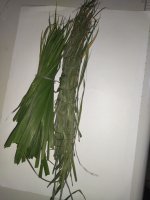
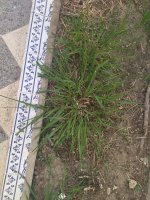
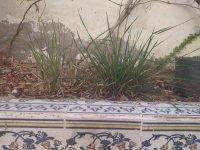








 well what grok told me my bad