i'm still pondering how it can be salvaged..
what i was concerned about earlier is this:
the sugars and structural proteins are bound to the psilocybin, but also probably to the fats..
(and the psilocybin (being a zwitterton) is partially bound by both salt and base..its a complex joining together going on in there)
i assume there's a reason the chloroform defat in the Hofmann procedure precedes the acetone wash..
sometimes what seems simple has a quite advanced reasoning behind it..
i would guess that the fats may need to be dislodged first, to 'expose' the structural proteins properly to the acetone, which after dislodging them, exposes the alkaloids to the methanol
also, the other possible issue relates to what i meant when i said acetone will behave differently with even just 1% water (a couple pages back) ..by this i meant that i suspected that the psilocybin would become more soluble in that case, and be lifted..
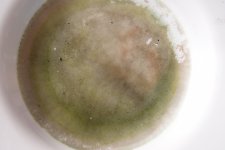
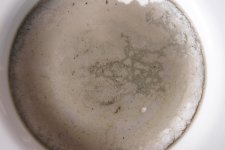
the procedure itself emphasises at the start, that success is dependant on the level of dryness in the material..so finely powdered does help..but what i'm getting at is the acetone (having slight water content via mushrooms still) could possibly lift the alkaloid along with sugars..it did look like the evap crystals were water..
doing the defat first with an NP solvent would further help reduce residual water content..
if the three different fractional residues were combined, the procedure could be theoretically 'mini-repeated'..
anyhow...this is my guess what may have happened..i'm not an advanced chemist though..
and bound sugars will render alkaloids really unsuited to pyrolysis.. ..the end result should be fairly dense
if you can get this bit to work, then it 'works' (by vaporisation)
what i was concerned about earlier is this:
the sugars and structural proteins are bound to the psilocybin, but also probably to the fats..
(and the psilocybin (being a zwitterton) is partially bound by both salt and base..its a complex joining together going on in there)
i assume there's a reason the chloroform defat in the Hofmann procedure precedes the acetone wash..
sometimes what seems simple has a quite advanced reasoning behind it..
i would guess that the fats may need to be dislodged first, to 'expose' the structural proteins properly to the acetone, which after dislodging them, exposes the alkaloids to the methanol
also, the other possible issue relates to what i meant when i said acetone will behave differently with even just 1% water (a couple pages back) ..by this i meant that i suspected that the psilocybin would become more soluble in that case, and be lifted..
the procedure itself emphasises at the start, that success is dependant on the level of dryness in the material..so finely powdered does help..but what i'm getting at is the acetone (having slight water content via mushrooms still) could possibly lift the alkaloid along with sugars..it did look like the evap crystals were water..
doing the defat first with an NP solvent would further help reduce residual water content..
if the three different fractional residues were combined, the procedure could be theoretically 'mini-repeated'..
anyhow...this is my guess what may have happened..i'm not an advanced chemist though..
and bound sugars will render alkaloids really unsuited to pyrolysis.. ..the end result should be fairly dense
if you can get this bit to work, then it 'works' (by vaporisation)