• Members of the previous forum can retrieve their temporary password here, (login and check your PM).

Renewable sources of DMT.

SuperMarioKiev

Esteemed member
Joined
Jul 19, 2026
Messages
69
Merits
1,281
Are there any renewable sources of DMT? I do all my extractions from MHRB but I don't want to wait 20 years for the bark to mature. Are there shorter alternatives? Preferably within 2-5 year range although I am not opposed to anything shorter. I just want something I can plant outside and with care and attention will provide me with this wonderful medicine.
 
yeah, phalaris, and also, learn how to do thin layer chromatography on paper. the paper matters, either strips cut from filter paper, or, invest in chromatography paper, like whatmans. you can use it to to quantitative aproximations of the amount of DMT in a given strain and keep breeding them stronger. TLC can also let you identify wild plants. once you have seperated the DMT into chemically isolate bands, and apply colormetric reagents, similar sized bands can be compared against others to show where there is moderate differences before testing you can.

chromatography grade solvent isnt needed either btw, it matters more that its dry, like, i buy industrial cleaning ethyl acetate and hexane, that works without even being distilled, but, both are stored over an appropriate molecular sieve, its good enough, at least.
 
Phalaris grass :D pm Grasshoppers or neurobloom and ask about buying seeds for a DMT only containing strain


Years ago I experimented with phalaris and a wheatgrass juicer. It worked rather well, but 5-meo became easily available at about the same time.
I noticed that it became inactive after a couple harvests outside. I'm assuming that keeping it separate in a pot would avoid that?

So, DMT only strains are perfected?
 
Phalaris grass :D pm Grasshoppers or neurobloom and ask about buying seeds for a DMT only containing strain
yeah, phalaris, and also, learn how to do thin layer chromatography on paper. the paper matters, either strips cut from filter paper, or, invest in chromatography paper, like whatmans. you can use it to to quantitative aproximations of the amount of DMT in a given strain and keep breeding them stronger. TLC can also let you identify wild plants. once you have seperated the DMT into chemically isolate bands, and apply colormetric reagents, similar sized bands can be compared against others to show where there is moderate differences before testing you can.

chromatography grade solvent isnt needed either btw, it matters more that its dry, like, i buy industrial cleaning ethyl acetate and hexane, that works without even being distilled, but, both are stored over an appropriate molecular sieve, its good enough, at least.
How does one filter out the gramine, hordenine, and tyramines? Is it a different tek or does it just not stick to the non polar solvent?

Also what is a good MAOI that grows easily? The area I live in is warm and subtropical with altitude ( Don't know how much but it's very mountainous)

I think phalaris would be perfect for me but I don't know about a MAOI. Cappi would not grow anywhere near me it isn't humid enough.
 
Last edited:
@SuperMarioKiev So I believe the strains are bred for low gramine or no gramine at all. Ask for one of those. Im not sure about hordenine or tyramines but ask Grasshoppers and/or neurobloom if they have strains that dont produce these unwanted substances. With gramine though you'd use naptha since the gramine will stay in the naptha when you freeze precipitate iirc.

You might consider Acacia complanata, passion Flower/fruit, and Syrian Rue. I believe Syrian Rue grows in the mountains? I know Rue Shop grows at a high elevation in Iran because it increases alkaloid profile. You can get Acacia complanata from Fairdinkum seeds or another Australian supplier but I have had trouble ordering from them because customs seizes my seeds due to quarantine restrictions.

If you can order from Australia there are some fantastic suppliers for Trichocereus, Acacia, and many others.

Also I second what @drpotato said about investing in chromatography
 
@SuperMarioKiev So I believe the strains are bred for low gramine or no gramine at all. Ask for one of those. Im not sure about hordenine or tyramines but ask Grasshoppers and/or neurobloom if they have strains that dont produce these unwanted substances. With gramine though you'd use naptha since the gramine will stay in the naptha when you freeze precipitate iirc.

You might consider Acacia complanata, passion Flower/fruit, and Syrian Rue. I believe Syrian Rue grows in the mountains? I know Rue Shop grows at a high elevation in Iran because it increases alkaloid profile. You can get Acacia complanata from Fairdinkum seeds or another Australian supplier but I have had trouble ordering from them because customs seizes my seeds due to quarantine restrictions.

If you can order from Australia there are some fantastic suppliers for Trichocereus, Acacia, and many others.

Also I second what @drpotato said about investing in chromatography
Is passion fruit actually usable? How much does one need to get the MAOI effects? My grandma has a couple fully grown vines of it in her yard.

Do you make an extract? I always see her drinking tea made from the leafs I wouldn't imagine it having MAOI's.
 
Passion fruit flowers have MAOI's in them AFAIK. The leaves might also be active. I do believe the plant is not as potent compared to other sources. Passion flowers are used in changa because they contain MAOI's. You'd make tea with them, I dont know about extraction but it could work - never heard about it as of yet.

Maybe look into Syrian Rue if Passion Flowers dont work out?
 
Passion fruit flowers have MAOI's in them AFAIK. The leaves might also be active. I do believe the plant is not as potent compared to other sources. Passion flowers are used in changa because they contain MAOI's. You'd make tea with them, I dont know about extraction but it could work - never heard about it as of yet.

Maybe look into Syrian Rue if Passion Flowers dont work out?
Syrian rue would definitely work for me but I can't get any saplings I would have to grow from scratch and apparently the seeds are very fragile and often don't make it.

I might plant a few in a small peat pots because transferring the plant can damage the delicate roots according to google. I also don't like how long it takes to mature but I have no other choice I might as well plant it and just hope for the best.
 
I read here somewhere that MAOI and oral dmt can be dangerous cause you dont know if you might have bad interactions if including gramine stuff, 5-meo dmt, ect,..... ?
 
Maybe try Acacia complanata? It's lesser known and you have to track down seeds. But of course it takes time maybe longer than Syrian Rue

@Ruebacca some of the strains shouldnt contain 5 meo or gramine but to be safe its advised to test your extracts. Gramine isn't as bad as people make it out. 5-meo-dmt is more toxic than gramine for example. I wonder if this should be addressed by more educated persons than I? I don't want to mislead anyone.

& never ever mix 5-meo-dmt with MAOIs/harmalas as you said - it can cause death & its very unpleasant
 
Are there any renewable sources of DMT? I do all my extractions from MHRB but I don't want to wait 20 years for the bark to mature. Are there shorter alternatives? Preferably within 2-5 year range although I am not opposed to anything shorter. I just want something I can plant outside and with care and attention will provide me with this wonderful medicine.
In 3 years MHRB can be harvested. It grows well is areas that do not freeze. 20 years is the age the
Mimosa silk tree takes to mature. This tree is not the right tree for MHRB.
Are there any renewable sources of DMT? I do all my extractions from MHRB but I don't want to wait 20 years for the bark to mature. Are there shorter alternatives? Preferably within 2-5 year range although I am not opposed to anything shorter. I just want something I can plant outside and with care and attention will provide me with this wonderful medicine.
 
In 3 years MHRB can be harvested. It grows well is areas that do not freeze. 20 years is the age the
Mimosa silk tree takes to mature. This tree is not the right tree for MHRB.
How does MHRB harvesting even work? Peel the bark and allow it to regrow? I imagine if I buy a sapling it will expedite the process alot. I don't use a lot its all for personal use. I go through about 250g of bark in 4 months.
 
I read here somewhere that MAOI and oral dmt can be dangerous cause you dont know if you might have bad interactions if including gramine stuff, 5-meo dmt, ect,..... ?
5-MeO-DMT is active at much lower doses than DMT, so if your Phalaris grass unexpectedly produces the former (because of an unexpected environmental response, mutation, open pollination, mislabeled seed packet, etc.) then a serious or even fatal overdose may result. Multiple Phalaris experimenters have reported serious adverse experiences, which I'd guess were 5-MeO-DMT overdoses. Oral use with harmalas is particularly dangerous, since the delayed onset makes it impossible to titrate up the dose like smokers do.

Gramine is relatively nontoxic. From published solubility data, it's possible that extraction with naphtha or limonene would reject gramine to some extent, especially with concentrated solutions. I worked with a more dilute solution, to avoid emulsions (the water extract turns to syrup if you boil it down too far; there's some literature on harvesting to minimize sugar content so your horse doesn't get laminitis that might be relevant) and because my P. brachystachys is relatively low in gramine naturally. I didn't get significant rejection with either solvent. I don't think it's a big concern though. Here's some prior discussion.

Tyramine is rejected by typical extractions, since the phenol group keeps it charged at high pH so it stays in the water. It's possible there's a narrow pH range where it does get extracted and I found a paper claiming that, but I was unable to reproduce that myself and a different paper also seemingly failed. So I think tyramine is very low risk. Hordenine is also a phenolic alkaloid so it might also get rejected, not sure. In any case it's not very toxic. I think the most dangerous constituent will almost always be 5-MeO-DMT.

@Grasshoppers and @neurobloom potentially have the most diverse collection of P. aquatica anywhere in the world. Commercial and academic pasture grass breeders surely have more accessions, but their selection for low alkaloids probably discards most of the genetic diversity. It's very interesting work, though anyone growing their Phalaris for DMT should view themselves as contributing to that research project, not following an established procedure known to be effective or safe. Growing for 5-MeO-DMT is perversely safer, because the desired product is dangerous enough that it's harder to accidentally get something worse.

 
Years ago I experimented with phalaris and a wheatgrass juicer. It worked rather well, but 5-meo became easily available at about the same time.
I noticed that it became inactive after a couple harvests outside. I'm assuming that keeping it separate in a pot would avoid that?

So, DMT only strains are perfected?
We do have a 5-meo-dmt only strain of phalaris aquatica. Use the search tool for "Tanit" there's plenty of information on it. Seeds are also still available.

It will not turn inactive if grown from seed that's what makes this strain interesting it's very stable and reliable source of 5-meo-dmt. And yield is also stable and decent.
 
Last edited:
5-MeO-DMT is active at much lower doses than DMT, so if your Phalaris grass unexpectedly produces the former (because of an unexpected environmental response, mutation, open pollination, mislabeled seed packet, etc.) then a serious or even fatal overdose may result. Multiple Phalaris experimenters have reported serious adverse experiences, which I'd guess were 5-MeO-DMT overdoses. Oral use with harmalas is particularly dangerous, since the delayed onset makes it impossible to titrate up the dose like smokers do.

Gramine is relatively nontoxic. From published solubility data, it's possible that extraction with naphtha or limonene would reject gramine to some extent, especially with concentrated solutions. I worked with a more dilute solution, to avoid emulsions (the water extract turns to syrup if you boil it down too far; there's some literature on harvesting to minimize sugar content so your horse doesn't get laminitis that might be relevant) and because my P. brachystachys is relatively low in gramine naturally. I didn't get significant rejection with either solvent. I don't think it's a big concern though. Here's some prior discussion.

Tyramine is rejected by typical extractions, since the phenol group keeps it charged at high pH so it stays in the water. It's possible there's a narrow pH range where it does get extracted and I found a paper claiming that, but I was unable to reproduce that myself and a different paper also seemingly failed. So I think tyramine is very low risk. Hordenine is also a phenolic alkaloid so it might also get rejected, not sure. In any case it's not very toxic. I think the most dangerous constituent will almost always be 5-MeO-DMT.

@Grasshoppers and @neurobloom potentially have the most diverse collection of P. aquatica anywhere in the world. Commercial and academic pasture grass breeders surely have more accessions, but their selection for low alkaloids probably discards most of the genetic diversity. It's very interesting work, though anyone growing their Phalaris for DMT should view themselves as contributing to that research project, not following an established procedure known to be effective or safe. Growing for 5-MeO-DMT is perversely safer, because the desired product is dangerous enough that it's harder to accidentally get something worse.
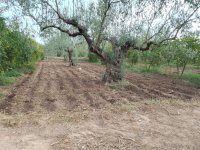
I just prepared the cultivation plot seed bed and started germination already. I'm focusing on the DMT only breedline this season since that's what most people are looking for.
I'll be doing another round of selection and culling on the DMT breedline before i allow the clones to open pollinate so seeds which will be available the coming spring will be more stable.
 

Attachments

  • IMG_20260918_171106_843.jpg
    IMG_20260918_171106_843.jpg
    2.5 MB · Views: 8
Back
Top Bottom