The exact distribution of DMT and 5-MeO-DMT within a single plant and across individual leaves has not been systematically investigated. This is surprising, considering that such information is critically important for guiding sampling strategies in selective breeding programs and optimizing harvests for psychedelic use.
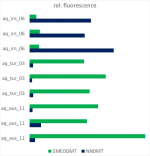
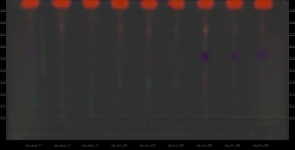
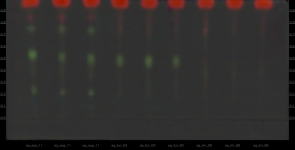
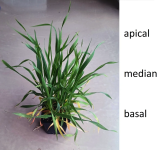
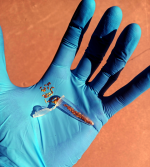
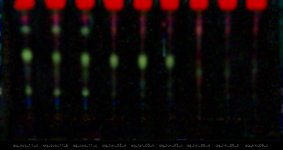
To explore this, I conducted a case study on two Phalaris plants—one DMT-dominant and one 5-MeO-DMT-dominant. From each plant, three individual leaves were sampled from different vertical positions: basal, median, and apical. Each leaf was then divided into three longitudinal sections: proximal (base), central (middle), and distal (tip), resulting in a total of nine samples per plant. Alkaloid concentrations in each sample were quantified using thin-layer chromatography (TLC) coupled with fluorescence photography.
View attachment 103670
View attachment 103671
Substantial variation in alkaloid distribution was observed both between different parts of the plant and within individual leaves. A clear gradient was evident: concentrations tended to decrease from basal to apical leaves and from the proximal to the distal sections of each leaf.
View attachment 103672
This uneven distribution introduces a potential source of variability in alkaloid content, which can affect the reliability of samples used for selective breeding or phytochemical analysis. To improve consistency and comparability in future Phalaris phenotyping, a standardized sampling protocol that accounts for this intra-plant variation is necessary but has yet to be developed.
Interesting indeed, but have you compared samples of the same part of the plant and leaf? aka have you compared for example samples of median leaf central with other samples of median leaf central?
because there is probably variation within the same part of a plant. If so, it would at best complicate the interpretation of your data and at worst render it meaningless, if variation within the same part of plant is just as large as between different parts.
Love your work, but this seems to be a flaw in your methodology.



![20251225__275w[1].jpg](https://forum.dmt-nexus.me/data/attachments/107/107206-547ba1ae790c9d3d961b3377ff119091.jpg?hash=VHuhrnkMnT "20251225__275w[1].jpg")
![20251225__275d[1].jpg](https://forum.dmt-nexus.me/data/attachments/107/107207-ea33567cb9731564f8f345b9b03f26d2.jpg?hash=6jNWfLlzFW "20251225__275d[1].jpg")
![20251225__365w[1].jpg](https://forum.dmt-nexus.me/data/attachments/107/107208-3618f4a1fc90901f1725a68b8e62fcf7.jpg?hash=Nhj0ofyQkB "20251225__365w[1].jpg")
![20251225__365d[1].jpg](https://forum.dmt-nexus.me/data/attachments/107/107210-64f42d87280f3217cd18a1d5bf7ea753.jpg?hash=ZPQthygPMh "20251225__365d[1].jpg")