• Members of the previous forum can retrieve their temporary password here, (login and check your PM).

Research The nexian phalaris breeding programme

Research done by (or for) the DMT-Nexus community
The exact distribution of DMT and 5-MeO-DMT within a single plant and across individual leaves has not been systematically investigated. This is surprising, considering that such information is critically important for guiding sampling strategies in selective breeding programs and optimizing harvests for psychedelic use.

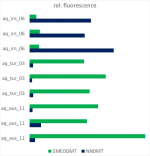
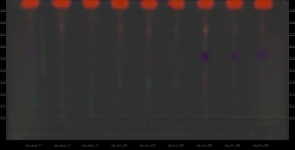
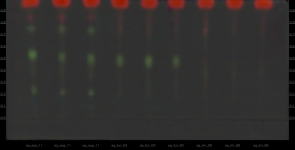
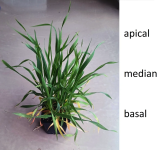
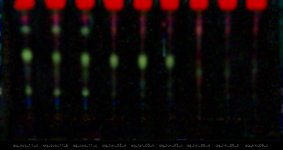
To explore this, I conducted a case study on two Phalaris plants—one DMT-dominant and one 5-MeO-DMT-dominant. From each plant, three individual leaves were sampled from different vertical positions: basal, median, and apical. Each leaf was then divided into three longitudinal sections: proximal (base), central (middle), and distal (tip), resulting in a total of nine samples per plant. Alkaloid concentrations in each sample were quantified using thin-layer chromatography (TLC) coupled with fluorescence photography.

View attachment 103670

View attachment 103671

Substantial variation in alkaloid distribution was observed both between different parts of the plant and within individual leaves. A clear gradient was evident: concentrations tended to decrease from basal to apical leaves and from the proximal to the distal sections of each leaf.
View attachment 103672

This uneven distribution introduces a potential source of variability in alkaloid content, which can affect the reliability of samples used for selective breeding or phytochemical analysis. To improve consistency and comparability in future Phalaris phenotyping, a standardized sampling protocol that accounts for this intra-plant variation is necessary but has yet to be developed.

Interesting ideed, but have you compared samples of the same part of the plant and leaf? aka have you compared for example samples of median leaf central with other samples of median leaf central?
because there is probably variation within the same part of a plant. If so, it would at best complicate the interpretation of your data and at worst render it meaningless, if variation within the same part of plant is just as large as between different parts.

Love your work, but this seems to be a flaw in your methodology.
 

Improving Alkaloid Sampling in Phalaris aquatica: A Practical Strategy for Reliable Plant Phenotyping


Previous investigations have shown that alkaloid distribution within individual leaves and across different parts of a single plant can be highly uneven. This poses a real challenge for reliably identifying high-alkaloid plants—whether for selective breeding or psychedelic use—because inconsistent sampling can lead to misleading results.

In this post, I’m sharing new data on intra-plant variation and proposing a more reliable sampling approach for consistent Phalaris phenotyping.

Why Sample the Median Section? Older (basal) leaves often wilt depending on seasonal cycles, while apical (younger) leaves are few in number and more damaging to remove. Based on this, the median section of the plant seems like the most practical and stable source for sampling.

What I Did:
  • I collected three leaves from the median section of each of three different plants.
  • These leaves were homogenized (chopped/mixed) and tested using TLC fluorescence photography.
  • DMT concentrations were compared to assess the degree of intra-plant variation.
  • The results showed a reduced but still notable level of alkaloid variability—even within this controlled method.

1751057478299.png

1751057492899.png

1751057499066.png

1751057509849.png

Proposed Sampling Guidelines:
  • Standardize Plant Height: Always sample from the median plant section.
  • Composite Sampling: Use 3–5 complete leaves per plant.
  • Use Whole Leaves: From ligule to tip, to avoid internal bias.
  • Homogenize Thoroughly: Grind or finely chop leaves to ensure uniform alkaloid distribution before analysis.
Let me know what you think! If you agree, maybe we can adopt this standardized approach for future testing and comparisons across studies.
 

A Step Into the Unknown: Hybrid Seeds of the Most Potent Phalaris aquatica


1752519144415.png

These seeds are the result of over three years of dedicated research and breeding. The time for harvest has come — and it’s a rich one. What you're looking at are hybrids from some of the most potent Phalaris aquatica plants we've worked with — rare outliers with exceptional levels of DMT and 5-MeO-DMT.


What to expect from the seeds?

The alkaloid profiles of hybrids between unrelated Phalaris aquatica strains remain largely uncharted territory. To date, the only study directly examining such hybrids is Putievsky et al., 1980 ("Chromosomal Differentiation among Ecotypes of Phalaris aquatica L.").

In that study, Putievsky and colleagues found that crossing genetically distinct P. aquatica ecotypes led to chromosomal variations and altered phenotypic traits in the hybrids. While the paper did not analyze alkaloid content directly, the observed genetic differentiation strongly suggests the potential for significant variability in secondary metabolite expression — including tryptamine alkaloids like DMT and 5-MeO-DMT.

In other words, these hybrids may produce novel or amplified alkaloid profiles not seen in either parent line — making them especially interesting for further phytochemical testing.


How to get the seeds?

You’re eligible to receive seeds if you can carry out basic testing — such as thin-layer chromatography (TLC), which is beginner-friendly and well-documented here on the subreddit. More advanced methods like HPLC or GC are also welcome.

We’re happy to assist with protocols and guidance. Don’t hesitate to reach out if you're interested in contributing to this research effort!
 
Hello all,

I'm going to jump in here real quick as I've not *yet* read this whole thread, but it is a topic that is dear to my heart (Phalaris). I love seeing all the TLC work now being done. Have you all tried BAW (butanol:AcOH:H2o) as an eluent? The plates in MeOH:NH4OH looked to have good separation, IIRC I found BAW even better.

As for visualization reagents, Xanthydrol works much better that p-DMAB. Simple quick chemotyping can also be done via Hoffman reagent in a liquid test bypassing TLC altogether. Not sure if anyone else has messed around with this yet. I suspect Xanthydrol could be worked up to do the same thing and would distinguish all 3 chemotypes.

I wrote some years ago about the genetics here:

At the time there seemed to be little interest in the research I was doing, so I super happy to see the forward progression since then! Looks like I have a LOT to catch up on.

Keep up the great work!

-D.
 
As for visualization reagents
They're visualizing with the visible tails of the natural indole fluorescence, with no reagent. That seems strictly better to me for most applications, easier, safer and more specific. The cameras and UV LEDs for that didn't exist back in the seventies, but they're cheaply available now. The specificity removes the need to separate alkaloids before chromatography as your Marum et al. (and Woods and Clark before them) did, simplifying sample prep.

Have you all tried BAW (butanol:AcOH:H2o) as an eluent?
Does that reliably separate DMT from 5-MeO-DMT for you? I tried a few of the TLC systems from Some Simple Tryptamines, though not that one. I never got reliable chromatographic separation. I guess it must be hard, given that most published work assumes they co-elute and uses the xanthydrol color to distinguish. Zhou et al. got the best separation I've seen, but that was on HPTLC plates and still just barely.

The color of the natural fluorescence likewise distinguishes, though mixtures may be tricky in either case. In theory continuous variation in either color could be used to quantify mixtures, though I'm not aware that anyone's built the calibration curves for that and calculated the RSD. I just gave up and separated by HPLC, which is obviously less accessible but antique equipment is pretty cheap.

I wrote some years ago about the genetics here:
I've also found those genetic studies very interesting. The ratios in their populations would indeed seem pleasingly Mendelian, though I wonder how much information is lost when the mixture is reduced to three discrete chemotypes. Marum et al. mention only "traces" of the other constituents in their P. arundinacea. @Grasshoppers found continuous variation in the ratio of gramine to DMT in a different species, their P. aquatica. I've seen significant variation in alkaloid ratio for my P. brachystachys over its life cycle, though the seed I purchased is highly uniform between individuals, perhaps due to the higher homozygosity expected in a self-fertile species.

For completeness I'll note that gramine is not removed by typical extractions, including those with naphtha or d-limonene, but does not seem particularly toxic. I strongly suspect that the most toxic constituent of most Phalaris is 5-MeO-DMT (which has killed at least one person so far, so take care).
 
Hey @Dozuki,

great to see you back here!

Dozuki said:
"I'm going to jump in here real quick as I've not yet read this whole thread, but it is a topic that is dear to my heart (Phalaris). I love seeing all the TLC work now being done. Have you all tried BAW (butanol:AcOH:H2O) as an eluent? The plates in MeOH:NH₄OH looked to have good separation, IIRC I found BAW even better."
Thanks for the input - advice to improve TLC is always welcome! I’d definitely be interested to see plates run with butanol:acetic acid:water (BAW) as the eluent.

Dozuki said:
As for visualization reagents, Xanthydrol works much better that p-DMAB. Simple quick chemotyping can also be done via Hoffman reagent in a liquid test bypassing TLC altogether. Not sure if anyone else has messed around with this yet. I suspect Xanthydrol could be worked up to do the same thing and would distinguish all 3 chemotypes.
One of the main challenges in community-driven TLC is the limited availability of colorimetric reagents. Since testing is often distributed across different countries and individuals with their Phalaris populations, having access to standardized reagents can be tricky.

Direct visualization of fluorescence does additionally speed up the process and allows clear, immediate differentiation between DMT, 5-MeO-DMT, 5-OH-DMT, and another unidentified compound with a similar Rf. There's also a highly lipophilic, unidentified tryptamine with a high Rf that shows up clearly, and this method has proven effective in identifying β-carbolines as well.

Dozuki said:
"Simple quick chemotyping can also be done via Hoffman reagent in a liquid test bypassing TLC altogether."
I experimented with direct colorimetric reagent testing on unseparated extracts, but the results were underwhelming. Compounds like NMT, gramine, and other unknowns seem to interfere with the color reactions, making it difficult to rely on those tests for accurate profiling.

The current TLC protocol has been refined over the years and is now quite simple and efficient - each sample takes less than 5 minutes of effort from prep to result. This allows for high-throughput screening and provides sufficient insight for selecting breeding candidates based on alkaloid profiles.


aizoaceous said:
"For completeness I'll note that gramine is not removed by typical extractions, including those with naphtha or d-limonene, but does not seem particularly toxic. I strongly suspect that the most toxic constituent of most Phalaris is 5-MeO-DMT (which has killed at least one person so far, so take care)."
Very valuable information—thank you for sharing. I tend to agree: gramine doesn't seem to pose a significant risk. In a dataset of 200 seedlings, it was actually negatively correlated with DMT and 5-MeO-DMT levels. That makes sense biochemically, as the biosynthesis of gramine and DMT/5-MeO-DMT competes for similar precursors. So, selecting for higher DMT/5-MeO-DMT content may naturally reduce gramine concentrations over time.

As for toxicity concerns, there are β-carbolines present in some Phalaris samples whose safety profiles are not well understood and should be approached with caution. Also worth noting are tyramines, which can be acutely toxic when combined with β-carbolines or other MAO inhibitors.

Kind Regards
 
Last edited:
As for toxicity concerns, there are β-carbolines present in some Phalaris samples whose safety profiles are not well understood and should be approached with caution. Also worth noting are tyramines, which can be acutely toxic when combined with β-carbolines or other MAO inhibitors.
The beta-carbolines seem like the biggest unknown to me. Their bright fluorescence means they're potentially present with lower mass than their prominence on the TLC plate might suggest. This is another place where a calibration curve from mass to brightness would be valuable, even just using harmalas as the standard.

They're certainly reported in the literature to be present in Phalaris and potentially toxic, though. I wonder if there's a simple way to separate them, stirring the aqueous extract with activated carbon? I tried that once (I forget why) but used too much, removing all fluorescent peaks including the tryptamines. The strong retention of beta-carbolines on my phenyl-hexyl column may suggest that a smaller amount of activated carbon would selectively remove them by a similar mechanism, pi-pi interactions with graphite-like structure in the carbon.

As to tyramine and other hydroxyphenethylamines, I think the risk is very low. Per the paper @neurobloom found and my experiments, typical liquid-liquid extraction rejects those almost perfectly, presumably since the charge on the phenolic hydroxy keeps it in the water at pH >> its pKa of ~10. Maybe there's some narrow pH range where it gets pulled (and a paper I found seems to claim that, though I couldn't replicate), but that seems really hard to hit by accident.

I also haven't found tyramine in my plants (except possibly that inactive P. canariensis), but it's reported in the literature and your collection is much more diverse. Have you found any yet? If yes then you could extract and confirm that rejection, perhaps more representatively than my spiked extract did.
 
Does that reliably separate DMT from 5-MeO-DMT for you?
Of the eluents that I used, BAW (12:3:5) showed the best separation of the ones I tried. It does resolve DMT from 5-MeO. Gramine and DMT tend to be closer in Rf though. I'd be interested to see results other than mine.

My reference was specifically for arund. and really not applicable to other species, especially aquatica. Admittedly, most of the work that I've done has been with arund. as it's super abundant around me and easily collected. That I've seen/read G M and T are not all in a single plant sample in aurnd. unlike aquatica IIRC.

One of the main challenges in community-driven TLC is the limited availability of colorimetric reagents. Since testing is often distributed across different countries and individuals with their Phalaris populations, having access to standardized reagents can be tricky.
I completely understand this. Just thought I'd ask/mention as I found Xanthydrol super helpful myself. Silicotungstic acid seemed promising for quick quantitative comparisons as well. But, yes, access to reagents can be a tricky thing.

The current TLC protocol has been refined over the years and is now quite simple and efficient
I will read thru to thread and try the protocol when I get some more plates.

As for toxicity concerns, there are β-carbolines present in some Phalaris samples whose safety profiles are not well understood and should be approached with caution.
I've found β-carbolines is my extractions and has been an interest.

Sorry for barging without reading the whole thread. I was admittedly excited that people were actually taking Phalaris seriously now. I've been dabbling with it off and on for a long time.

Off to read the whole thread before I post anything else.

-D.
 
Current Recommended TLC Procedure for Phalaris Alkaloid Profiling

1754209383319.jpeg
This protocol outlines a rapid, high-throughput method for chemotyping Phalaris spp. via thin-layer chromatography (TLC), optimized for field researchers and breeders.


Equipment and Materials
TLC Plates:
  • Macherey-Nagel MN818161
  • Silica gel 60, no fluorescence indicator
Solvents:
  • Methanol
  • Ethyl acetate (optional, improves separation)
  • Aqueous ammonia (25%)
Other Supplies:
  • 1.5 mL microcentrifuge tubes
  • Stainless steel dosing cannulas (1.5 inch)
  • Precision scale (e.g., Muaket 50g / 0.001g)
  • 1 mL graduated plastic transfer pipettes
  • Glass bottles for solvent preparation
  • UV light source: 275 nm LED module (12VDC, 5 LEDs × 2), 365nm UVC LEDs (2x)
  • Black plastic box (for visualization)
  • Camera or smartphone


Sample Preparation
1. Drying:
  • Microwave plant material until crisp and brittle.
2. Extraction:
  • Weigh 25 mg of dried plant material.
  • Place in a 1.5 mL centrifuge tube.
  • Add ethyl acetate saturated with 25% aqueous ammonia.
  • Let soak for ~8 hours at room temperature.


Plate Spotting
  • Dip the dosing cannula into the extract.
  • Lightly touch the tip onto the TLC plate to apply the sample.
  • Apply up to 9 samples per plate, spaced ~1 cm apart.

Chromatographic Development
Solvent System:
  • Methanol : Ethyl Acetate : 25% Aqueous Ammonia = 11:6:1
  • Pour into TLC chamber and develop plate as usual.


Visualization
  • Place the developed plate in a dark box under 275 nm and 365nm UV LEDs.
  • Photograph the plate while still wet to capture initial fluorescence.
  • Allow the plate to air-dry.
  • Take a second photo after drying.
  • Use fluorescence patterns to identify:
    • DMT
    • 5-MeO-DMT
    • 5-OH-DMT
    • Other high-Rf tryptamines
    • β-carbolines


Notes
  • Ethyl acetate is not strictly necessary, but it improves separation—especially for lipophilic compounds.
  • Total hands-on time is under 5 minutes per sample, enabling high-throughput screening.
  • Well-suited for quick alkaloid profiling and selection in breeding experiments.
 
Last edited:
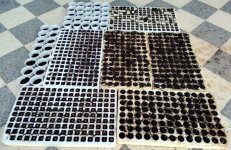
The season in the temperate climate has come to an end. Approximately 300 Phalaris aquatica plants from 10 accessions were evaluated, and the 30 individuals with the most desirable chemical profiles were selected, isolated, and crossed through open pollination.

As the temperate season concludes, the subtropical season is just beginning. The resulting hybrid seeds are now germinating, complemented by seeds from an additional 10 wild accessions.

This has produced what is certainly the largest collection of high-yield Phalaris aquatica plants in the world, shown below.

IMG_20251130_133641_2.jpg

We will test all of these plants and once again select only the most exceptional — the rarest 10%. From the number of seedlings, it’s clear that we have significantly increased our efforts after the recent results were very encouraging. We want to thank everyone who has supported the project with seeds, knowledge, testing, or financial contributions. We are just about to begin the most exciting part of this journey.
 
Back
Top Bottom