
-
Members of the previous forum can retrieve their temporary password here, (login and check your PM).
You are using an out of date browser. It may not display this or other websites correctly.
You should upgrade or use an alternative browser.
You should upgrade or use an alternative browser.
Tis the season for Ps semilanceatta
- Thread starter Ice House
- Start date
Migrated topic.

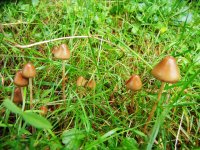
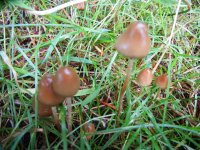
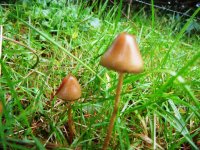
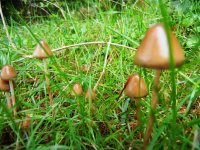
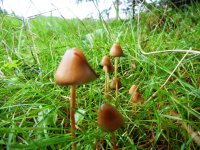


Elpo said:Are you sure these are real Ps Semilanceata? I always assumed they had what is called a nipple on top of the cap? Did you id them with a spore print?
I didn't ID them with a spore print, no need to.
Most often they do have a nipple on top some of these do. Its not uncommon for them to, not have a pronounced nipple on top.
Ive picked thousands and thousands of them over the past 35 years. I am sure of what they are, so sure in fact that I'm going to ingest them without giving it a second thought.
MushLove


shiz, beautiful mang.
the cyans shoudl be out here soon!
the cyans shoudl be out here soon!
Shadowman-x said:shiz, beautiful mang.
the cyans shoudl be out here soon!
I am waiting patiently for the cyans, Im pretty sure its gonna be a while yet. We need, sustained, hi 30s low 40s and rain.
Cooler temps is the trigger with cyans.
IH


Ice House said:Elpo said:Are you sure these are real Ps Semilanceata? I always assumed they had what is called a nipple on top of the cap? Did you id them with a spore print?
I didn't ID them with a spore print, no need to.
Most often they do have a nipple on top some of these do. Its not uncommon for them to, not have a pronounced nipple on top.
Ive picked thousands and thousands of them over the past 35 years. I am sure of what they are, so sure in fact that I'm going to ingest them without giving it a second thought.
MushLove
Ok can you tell us more about the habitat you found them in. I am going out this weekend to find some. Do you go back to the same place year after year?
I also had another question: once found and identified, would it be possible to collect some spores and spread them in their natural habitat to cultivate them for the next year and future years?

Elpo said:I also had another question: once found and identified, would it be possible to collect some spores and spread them in their natural habitat to cultivate them for the next year and future years?
Only pick the mushrooms with open caps and you can also flick the
hats with your finger before you pick them to release spores.
If you do this you will find more mushrooms next year.
You can find information on how to make "spore prints" on shroomery and
possibly this site to.
Theoretically one could collect lots of spore prints, scrape of the spores into a spray bottle, shake
well and then spray the grass area you intend to inoculate. (They seem somewhat picky though)
In nature the spores travel by wind and animals walking around stepping on the mushrooms.
Helping out is definitely not a bad idea.
I dont know what mushroom spores think about chlorine so maybe rainwater is the way to go?

sleepypelican
Rising Star
I need to get out there lol
its pretty darn cold up here and rainy all the time!
locally, we just say after the first frost they come out
locally, we just say after the first frost they come out

pretty sure its a tiny bit warmer here than where ice house is shadow..especially where you and I are in the microclimate..where I am and extending to the sunshine coast area and saltspring fall into the microclimate and it extends just into Washington along the coast and few islands there I think as well. Right on the coast here we are usually a few degrees above even spots a few hours south that are inland more..even one hour from the coast and it gets colder.
Panaeolus cintulus could be fruiting still here also. There is a park with a horse stable right down the street from me with lots of grass and hiking trails so I bet pans and liberty caps will be growing there.
Ice house..are libs usually only growing in a spot where there is grazing animals/horses to fertilize the grass?..or can I find them in any sort of field?
Panaeolus cintulus could be fruiting still here also. There is a park with a horse stable right down the street from me with lots of grass and hiking trails so I bet pans and liberty caps will be growing there.
Ice house..are libs usually only growing in a spot where there is grazing animals/horses to fertilize the grass?..or can I find them in any sort of field?


Ah, my favorite time of the year!
I am eagerly awaiting thecyans as well...
We'll see what the next couple months brings.
I'm a little worried about the torrential downpours of the last week. That stuff wreaks havoc on mulch.
I am eagerly awaiting thecyans as well...
We'll see what the next couple months brings.
I'm a little worried about the torrential downpours of the last week. That stuff wreaks havoc on mulch.
jamie said:Ice house..are libs usually only growing in a spot where there is grazing animals/horses to fertilize the grass?..or can I find them in any sort of field?
They do need the nutrition that hoofed animals provide.
The pasture These were found currently holds mules but its had horses and cows over the years.
IH
hmmm so the horse stables down the road are my best bet.
They don't necessarily need to be in the same field as cows or sheep or anything.
I found a ton at a park last year, one field was near a cattle field but separated by a fence and I guarantee the cattle never set foot in that park. The other field that had much much more actually was no where near grazing animals. If they do in fact need animals, maybe deer could also contribute to their growth?
Your best bet is to look in any field with clumpy grass. Grazing animals don't hurt but they aren't necessary IME.
I found a ton at a park last year, one field was near a cattle field but separated by a fence and I guarantee the cattle never set foot in that park. The other field that had much much more actually was no where near grazing animals. If they do in fact need animals, maybe deer could also contribute to their growth?
Your best bet is to look in any field with clumpy grass. Grazing animals don't hurt but they aren't necessary IME.
sleepypelican
Rising Star
on a related note... ive always had the best luck finding cubes in elephant dung. We have a half rear ended wildlife park/tram ride in the area, and the owner has never objected to me diggin around in there....

Hi guys! So its almost rainy season where I stay in South Africa and want to go looking for some Libs. I got a pretty good location in mind (lots of grass lumps, pretty fertile soil ect) could you maybe just help me out with how long after the rain I should go and what I should be looking at cause I always find LBM that look similar so I'm wary of eating anything.
Any info on what/where/when I should go look could help a lot
Peace
Any info on what/where/when I should go look could help a lot
Peace


