• Members of the previous forum can retrieve their temporary password here, (login and check your PM).

Trying to improve Acacia information

Migrated topic.
Thanks for the reply nen. Indeed raddiana has a sacred place in the African culture and is an efficient remedy for a plethora of ailments besides being a tonic and an aphrodisiac.

The tree grows in the Tunisian south in a natural reserve called "bouhedma" and is considered a threatened species in the country. So far it's growing in numbers and regaining some of its lost territory. A very hardy desert acacia that has helped bring back some previously considered extinct fauna like some gazelle specie back to tunisia. Some black leopards were even spotted in the natural reserve since the come back of the gazelle.

Some personal reports from Israel mentions this species as active. I will have to give the reserve a visit and collect some biomass for testing.

I have tested Acacia Karoo (root bark in summer) by the way a few years ago and got some clear liquid extract that was mildly active vaped on a price of aluminium foil. I used hexane at the time. Might give it another trie with chloroform and grind the material instead of shredded.
 
thanks for that report Sidisheikh.mehriz.…there are various not yet properly defined oil like things which can occur in acacias, some with mild CNS activity, some also volatile oils (fatty acids)… A. karoo ('Sweet Thorn' ) certainly matches the category for papers indicating alkaloids but not identifying them…it may not contain a tryptamine, and there’s a lot in there, but there’s definitely things going on CNS wise with that species!


Jagube…I’ll pop into your floribunda thread when I get a chance, great you are propagating in new territories!

downwardsfromzero….good to see you about..thanks for watching the deck

_Trip_ …thanks for that information back there…it’s worth persisting in these kinds of tests…it’s a vast world of possibles the acacia one…


Woolmer …belated hi
..there is some evidence Galls may increase alkaloids in A longifolia, but may lead to the creation of additional potentially heavy alkaloids (wasp control)…the Galls themselves - while I can imagine some very bizarre wasp induced compounds in there (but then perhaps mite and thrip galls have a gentler chemistry) - that would indeed be an interesting experiment!

.
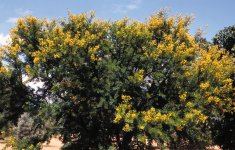
As we've seen a lot about Australian species in growing other continents, here's a photo of the African Acacia karoo (Vachellia karoo) growing in Australia, where it's considered a noxious weed..it has many uses in different parts of Africa, from treating malaria, to treating dizziness, or fattening goats...
 

Attachments

  • A+karoo+nsw.jpg
    A+karoo+nsw.jpg
    437.7 KB · Views: 3
Last edited:
acacian, some good and thoughtful observations in your post (as always)
..I’ll return to a few of them shortly..but regarding species c, it relates to a tangent i felt needed a reminder again…

for parks management to be aware of this means it is clearly not small scale harvesting with a solid code of ethics as some claim .. pretty grim.

Yes…it’s all relevant to the quote posted by SHYBZY…which was from 12 years ago, and in context an ongoing dialogue beyond that…it’s interesting to revisit… as I communicated to cheif hobo stank, I completely understood and resonated with all their concerns about the public sharing of information about acacias, in Australia..

That leads me to tell a historical story..I’ve told this story too many times before, but probably not for quite a few years, and it's still relevant, especially for a new generation..(here we go, one more time.. )

..let’s call it “Wailing Trees”

I had both the luck and the misfortune of being there, at a much earlier age, when the youthful, naive and hopeful 'found' (in a modern context), or first bio-assayed some of these species. Fresh in the astonishment and reverence at the spiritual, creative and psychological research power of this flora - seeing only the possible benefits for humanity at the time. That information was revealed to others, who in turn made it internet public, or shared that information with people with self opportunistic rather than healing motives.

After a few years, one of these species in particular became highly abused in its natural environment, largely national parks, by the advantageous, and the shady. Old mother seed trees were stripped of their bark, left as skeletons to die. Large areas had nearly whole populations of mature adult trees killed in this way.

Not all acacias are as fast growing or short lived as some think. Some of these species take a long time in the wild to reach even modest size. And they're not as common as claimed (often by the opportunists and those self-justifiers). They're concentrated in certain areas, restricted in national parks and nature reserves, or land clearing has changed dated records. There's the ecological destruction aspect..these trees are crucial habitat and food sources for many forms of life..they can't support wide-scale harvesting. Already in some areas of NSW one species in particular, who I know well, may be on the way out in certain locations, and may require regeneration to ever return to natural numbers in one national park.

Whole graveyards of trees were reported. Birds watched more silently from the bushes, or sounded alarm at encroaching humans.

A number of advantageous people began the commodification of wild plants.A few of these people used their power base of corrupt extracts for ego driven self promotion and gain. The situation became particularly bad in the late 90s/early 2000s, when large amounts of plant extracted alkaloids (from national parks and similar) were marketed in new catchy ways to feed international festivals, and a new kind of semi-casual usage to move larger amounts.

The things is, for this story it's not The End yet, but hopefully the final act...

..people offered products need to contemplate the ethics of what they've been offered, where is it from? should you even receive such a thing from strangers? What is the motivation behind this?..another name for the story could be:
“Bloody Hands of the Changa”

It remains the most shameful era in Australian acacia history, and a terrible indictment for the so-called conscious entheogenic community. It's appalling eco-vandalism.

The thoughts and feelings of those who knew and respected these sacred trees - how can I explain...? I'd liken it to coming across a beautiful remarkable woman who has been raped and left battered and bleeding, and you call this out to people, say this is wrong, and some of them go ‘She was good..let’s go back for more’!

It happened under the watch of people in the community who put social diplomacy above ethics, or at least couldn't quite comprehend where it was headed.

As for those who harmed these trees, these sacred forest places, for their own ends -
personally..I think these people will never see the true face of a beautiful tree, or it's molecules...only their own reflected distortions..and they will have to eventually face their actions and clouds in the Bardo.

Or eventually, if they want to keep experiencing plants, they'll have to face themselves. But the wisdom to successfully and sustainably work with such plants is built up over thousands of years in cultures, and the haphazard and commodity driven modern culture could well respect that more, before any wisdom left is also extinct...

pretty grim.

..yeah, what to do?


The decision to create this thread was not taken lightly, and was done so after years of watching what was happening, the increasing destruction..and diminishing levels of high level or therapeutic experiential reports, due to an increasing slackness in set, setting, and general awareness around the significance of what was been partaken in.

It was also after some thought and consultation. The cat being out of the bag as they say with some species, and the level of now generated consumer demand with lack of ethics, required something to take the pressure off as much as possible for these trees. The spreading of ecological eco-ethical knowledge and the widening of the knowledge pool, towards increasing diversity, sustainability and cultivation..and by asking the more conscious community to collaborate in this endeavour...this was seen as the best strategy. And the Nexus as the most balanced, accurate and ethics orientated forum (with a remarkable pool of knowledge) , as the best platform

Further consideration led to some theories about knowledge - (more) information, about acacias, and also of itself..which I'll discuss when i return..


These trees have molecules but are also living beings, like us. Respect and care for life is one of the oldest kinds of wisdom on the planet…

...

Seedling Care

acacian wrote:
re: fertilisation.. I was wondering whether light fertilisation during the seedling stage is something that they would benefit from or whether best to wait till they're more mature? Also if using a sandy mix I have noticed best to have something underneath the pot as if the medium dries out too much before the roots have established it can fall through the pot! I had this happen to a few seedlings in hiko trays recently

..fertiliser in the seedling stage is probably best diluted in water, and watering best done by misting, as they are certainly very delicate when sprouting… ..this has reminded me of something i wish I’d added in the cultivation advice earlier, and that is, with the river sand/peat potting mix, a handy addition is a bit of perlite or even better the expanded clay balls (used sometimes in hydroponics)..this gives forming roots something to grip onto, and can help increase growth …in the seedling stage, just one or two of these clay balls (being quite porous) give the seedlings something to hold onto, and can quicken root rate growth…

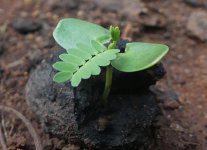
Below is a baby acacia seedling sprouting from a ‘seed ball’…these are used in re-forestation and forestry, and like the clay balls provide a footing for the tiny acacia treelets …they are very delicate.

 

Attachments

  • acacia+germination+(kenya).jpg
    acacia+germination+(kenya).jpg
    180.2 KB · Views: 1
Perlite, river sand, coir and some native potting mix have done me very well when growing- I repotted my seedlings often and found without the potting mix, the root mass fell apart quite easily.

My presence in this subject is almost exclusively limited to the nexus, but I am quickly understanding that the information I am reading here is heavily filtered and the reasons make more sense every day.

I now won't be posting any specifics on when my plants become active, instead I will focus more on spreading informatiom about growing. The absolute last thing I want is my growing posts becoming a manual at the appropriate sized wattle to rip out.
 
That’s cool to know about the roots having something to grab onto.. I have been using perlite through my mix lately but also some granite/Smokey quartz gravel that is abundant around a lake here.. do you think the latter would serve that purpose? Is also very useful for weighting the germing trays!
 
..greetings wattlez... perfecting the art of the growing of acacias is a most noble, important and rewarding pursuit at this juncture, thank you for your endeavours (acacian too)

..it's not entirely grim...there have been some positives, as others have pointed out..looking back over 12 years there has been evolution.. Back in the pre-thread days most internet instructions, based on limited experience or knowledge, about tryptamine acacias, was to harvest bark, with no description of the negative effect on the plant...now there is much discussion of phyllodes/twigs, and numerous successful Phyllode reports, and experimentation... there's an increased awareness, in the entheogen orientated community of the inherent value of Acacias simply as trees, regardless of content..that they are a rich field of unknowns

And there are new findings and tests being conducted here that widen our knowledge of this large group of trees..with potential benefits for many..there are new philosophies and memes generated out of this..and the rediscovery of older ones

One of the realisations/theories of commencing this thread was that it was also a means of collectively gaining or establishing new information.. The more information went out, the more new information was generated and came in ... (there has to be a degree of accuracy and relevance in the information for this to work) ..eventually, spreading outwards and going forward it never really ends, as long as conscious beings using symbolic language exist...there are things here that may well be of interest to some human descendants in 2000 years..it's plant knowledge

[The platform - the DMT Nexus - is like a collective intelligence (organic intelligence)..we may be connected by electromagnetic pulses and symbolic written language, with time delays, none the less it is a connection by signal in consciousness and information...the Nexus has it’s own ‘error correction’ mechanism…if claims are posted in here they can be queried by multiple parties..as a single entity it’s like a counter to AI]

..There was some pondering on information theory too involved to get into now, but it was also realised the information is beyond human language..
One of the Aims of the thread, for the interests of the trees themselves, was to encourage increased growing of them, and new species selection for growing..this has certainly happened and I thank people who of their own volition have encouraged the cultivation of acacias..people form a relationship with the plant. It's a multi level evolutionary feedback or dialogue between tree and human...


Acacias, some species in particular, have a long history with humans..we might say there is a cross species evolutionary resonance..with humans as well as many other species. Species genetically co-evolve, (ideally in symbiosis) in response to each other...In the earliest history of written human language acacias were mentioned, and revered by the wise and studied,

..they are important trees, well beyond whether they contain CNS active compounds, as it was also sought to highlight - ecology, food, shelter, medicine - the Total Tree....it's important that not only are they and their genetic information be preserved, but so also our understanding of them is preserved.
they are the kind of tree we would Terraform with, if we migrate from our Homeworld...
.
(thanks all contributors to the thread)
 

Attachments

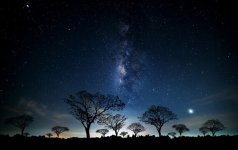
  • Acacia+dawn.jpg
    Acacia+dawn.jpg
    268.3 KB · Views: 1
Thanks for the post Nen, very thoughtful!

I never understood the sheer diversity present within the acacia species until about two years ago. In observing them in nature and growing them, I have come to realise that each variation is the result of success and failures in certain environments, adaptive responses to stresses and crisis and also time. Lots of time...

The fact that I can go for a bushwalk near home and count an easy half dozen acacia species on a single hill amazes me. The Australian environment can be so harsh and unforgiving, yet these species thrive and have for quite some time now...

If you subtract the complexities of modern human society, and see that trees and plants provided so much to earlier humans, you begin to understand just how reliant on them we were.

Very interesting point on terraforming. Such an adaptive species has to be ideal to study in many ways within that context.


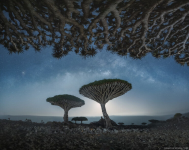
(Image is of dragon blood trees, I am fond of the style of photo)
 

Attachments

  • dragon.png
    dragon.png
    677.5 KB · Views: 2
^yes 'new worlds from old' (pic), wattlez, thanks,

and yes the importance of acacias in human and likely proto-human survival and evolution is vast..it's because of this in part that they are considered sacred in many places..some can survive in the most barren of conditions, and almost all fix the soil (in collaboration with symbiotic co-evolved rhyzobium bacteria)...

as was discovered by some in the evolution of the thread - the study of them as living species in the environment is fascinating and engaging..


(note 'Acacia' this thread includes the new Vachellia, Senegalia, Acaciella etc genuses)

___________________________________________________________________________________________


..i wanted to encourage people to keep contributing new findings here, much has been discovered by the collaborate research at the nexus..

i've said a lot now, and must attend to things...i wanted to offer a little bit more information, towards future research, and mention some of the most recent findings

what's noteworthy about the 2 findings i'll highlight are that they are two Australian species, that are widely grown, and escaped, around the world, and in this case the tested plant material was grown or growing outside of Australia..


First up, Acacia dealbata

It's native to New South Wales, Victoria and Tasmania, and has been introduced to many places world wide incl.: Albania, Argentina, Assam, Azores, Brazil, California, Chile, China, Costa Rica, Ecuador, Ethiopia, France, Guatemala, Haiti, India, Israel, Jamaica, Mauritius, Mozambique, Myanmar, Nepal, New Zealand, Oregon, Palestine, Portugal, Romania, Spain, Sri Lanka, Swaziland, Taiwan, Tanzania, Uganda, Uruguay, and Yugoslavia

..It is a flowers for perfume species, taken out of Australia 200 years ago, and was commonly known in Europe and the US as 'Mimosa', and also 'Cassie'..

Despite being so common, there has not been any previously published identification of alkaloids in any part of the plant
...One recent sample of A. dealbata growing in Portugal has been tested by endlessness for the Nexus and found to contain Bufotenine - the first time it has been found as the sole or primary alkaloid in an acacia (it's been found just a few times usually as traces in conjunction with other primary alkaloids)..the amount was fairly small (0.1%), however this is a single test of one specimen...we know there can be great variance due to sub-type, locality, conditions, season etc..This is a real first for both this species and acacias in general...Given how widespread this species is, it would indicate further research is warranted

A. dealbata is one of the 'bi-pinnate' types of acacias (with many small leaves joining central ribs in fern like foilage)..these have not been widely investigated for alkaloids..some are rich in and grown for tannins, such as A. mearnsii (which has a few isolated reports of dmt in bark, which need corroborating)...The bi-pinnate A. baileyana (also very widely grown) was found to contain in the leaves, tryptamines at one time of year, and beta-carbolines at a different time [Shulgin & Shulgin 'Tikhal'; Robert Hegnauer 'Chemotaxonomie der Pflanzen' )

..it's considered invasive in many parts of the world...


Next up, Acacia retinodes

..now this is an interesting species that has been discussed before..

Native to South Australia and Victoria, and recorded growing in - Cyprus, Ethiopia, France, Germany, India, Indonesia, Italy, Mauritius, New Zealand, Portugal, Romania, Russia, South Africa, Spain, United Kingdom, & the United States ..the only previous data on it was a report of DMT/NMT from Germany, a question-mark nicotine trace finding (which would have been a good example of why not to orally ingest unknown acacias), and a 0.2% alkaloid unknown (Rovelli 1967) in Aus (which may have been A. provincialis) ..

This species was grown by a bright nexian in the UK, and small amounts of phyllodes and twig at 2 years old were sent to the Nexus to be tested. Only a very crude extract was tested, so we can't be sure of actual % in plant, but i believe the finding in Germany was 0.5%...For the Nexus, endlessness found (from a UK cultivated plant) - DMT as the main alkaloid, with some 2-MTHBC, and small amounts NMT, DMT N-Oxide, Bufotenine.

..sometimes known as 'Swamp Wattle', it is a close relative of A. provincialis, which was found by one nexian in Bolivia to have contained active entheogenic alkaloids, which were not identified and may have been of an unknown type or class of tryptamine...that was about 12 years ago...


These plants should never be sourced in their native wild populations, and should ethically be cultivated (as this test was)
...


i wanted to add a note to, and on, the academic publishing mainstream science world -

The progress in terms of screening and identifying alkaloids in acacias in the past 30 years has been very slow, especially given the amount of time and resources already invested in plant screening..it's been partly 'political', as indicated by the with-holding of some reports on tryptamines in acacias in Australia for example, or in Africa and Asia probable nervousness around funding grants ...this has resulted in a shift away from published resources as being accurate or up-to-date as far as this sub-branch of knowledge is concerned...A shift towards, first, independent/underground journals such as Entheogen Review in the 90s, and then towards now internet based resources..The latter are often half-cited as 'anonymous internet sources'..in many cases this is true, and the information's reliability cannot be verified..there's no data, and no peer review..

But what many publishing authors have often not taken into account is the nature of a handful of newer resources such as the DMT-Nexus..some researchers here are not all that 'anonymous', some talk at conferences, even if they use pseudonyms..some work at established lab facilities..They can be contacted, and more importantly, in the case of the Nexus Collaborate Research analysis work - the samples have been kept, as well as the raw data (which is more than can be said for some older accepted papers)..(see also the first edition of the Nexian magazine, for e-publishing)

..i've read some recent papers on acacia alkaloids and tryptamines, who have some good summaries but not a lot new to report...i think they should feel that they can cite the Nexus..it's verifiably reliable, and open to (peer) review of results..Also if they want to get to the sources of 'rumours', they could do well to get in touch with people here..this is living research here, and all the 'noise' is valuable social history

and there is a lot yet to be discovered in this acacian field, with an array of applications and implications

.

Keep the new research, and the information coming in

(and Please be kind to trees)


Be well acacians all...


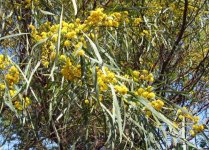
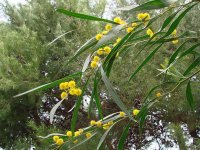
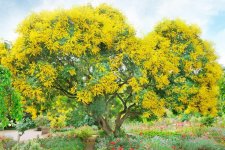
Pictured: Acacia dealbata growing in a park;
Acacia retinodes in Italy; A. retinodes fleur en france.. ;
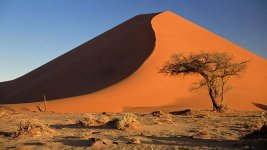
and Acacia in the Dunes...
terraforming and the great expansion
@
 

Attachments

  • acacia-dunes.jpg
    acacia-dunes.jpg
    60.4 KB · Views: 5
  • acacia-retinodes-fleur-.jpg
    acacia-retinodes-fleur-.jpg
    110.3 KB · Views: 7
  • a+retinodes+italy+2.jpg
    a+retinodes+italy+2.jpg
    158.5 KB · Views: 8
  • Acacia-dealbata_mimosa-.jpg
    Acacia-dealbata_mimosa-.jpg
    118.7 KB · Views: 7
Hi, sorry i have not read this whole thread but I came here trying to understand if anyone has really figured out what conditions maximize the ratio of NMT to DMT. Especially in confusa, but also in general. I saw one person who said it has to do with the color and hence the age of the bark. Older and darker bark has less NMT and more DMT... So far i am seeing this also but need a lot more testing. I saw the acacia analysis thread but it was not super useful. If age is the main factor then I would imagine extracting the phyllodes is always the best bet...

I am not at all interested in DMT so i am trying to get the highest ratio of NMT to DMT for my brews. Thanks!
 
Hi, sorry i have not read this whole thread but I came here trying to understand if anyone has really figured out what conditions maximize the ratio of NMT to DMT. Especially in confusa, but also in general. I saw one person who said it has to do with the color and hence the age of the bark. Older and darker bark has less NMT and more DMT... So far i am seeing this also but need a lot more testing. I saw the acacia analysis thread but it was not super useful. If age is the main factor then I would imagine extracting the phyllodes is always the best bet...

I am not at all interested in DMT so i am trying to get the highest ratio of NMT to DMT for my brews. Thanks!
This question is worthy of its own thread if you ask me. It would relate to some quite specific research questions, both in botany and biochemistry.
 
That is indeed a great question @BahiyaSutta

While age is like you say probably very important factor, I'd say that also season, recent weather conditions and even time of day are all things to consider for the alkaloid profile. The plants probably go through different cycles as a result of a number of environmental processes.. and some plants appear to fluctuate more than others which is also interesting. I'd love to hear others weigh on this?

 
I haven't read the entire thread yet, I'm sorry, but I would like to know which species of acacia has the highest percentage of DMT and which one has the highest percentage of phenethylamines based on the latest data and current experiences.

I've heard that Acacia acinacea contains phenethylamines, but I couldn't find enough information about it. I would prefer an acacia that allows for the collection of pods or leaves without damaging the bark.

Additionally, it would be great if the plant is low-maintenance. The most important factor for me is the content of psychoactive substances in the above-ground parts. Thanks!
 
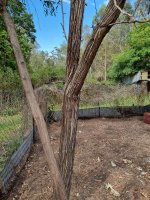
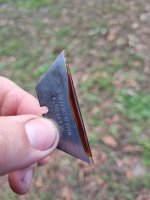
Variety of extraction techniques performed on tree bark of Acacia Leiocalyx yeilding 0.2-4% alkaloids.

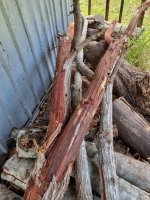
The tree was dead 2 years standing then top half broke off in strong wind. Chopped it up for firewood. Whole bark from the top half trunk was collected for experimentation.

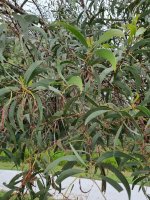
In the photo is the trunk bark. Can see the inner red bark. The leaves and immature seed pods of the same species growing near same location.

The bark was dry and tree dead two years. Yields may be higher on fresh plant material and extraction techniques may not have been perfect.
 

Attachments

  • 20241008_091041.jpg
    20241008_091041.jpg
    4.5 MB · Views: 9
  • 20241012_153439.jpg
    20241012_153439.jpg
    1.2 MB · Views: 9
  • 20241013_084125.jpg
    20241013_084125.jpg
    2.7 MB · Views: 9
  • 20241008_091255.jpg
    20241008_091255.jpg
    3.1 MB · Views: 10
Last edited:
I haven't read the entire thread yet, I'm sorry, but I would like to know which species of acacia has the highest percentage of DMT and which one has the highest percentage of phenethylamines based on the latest data and current experiences.

I've heard that Acacia acinacea contains phenethylamines, but I couldn't find enough information about it. I would prefer an acacia that allows for the collection of pods or leaves without damaging the bark.

Additionally, it would be great if the plant is low-maintenance. The most important factor for me is the content of psychoactive substances in the above-ground parts. Thanks!

Simplex is arguably the highest yielding .. however important to note extract is not just DMT. Acacia harpophylla contains around 3% phenethylamine from memory.
Most Australian tryptamine acacias have very healthy amounts of DMT in the phyllodes. Acacia acuminata has very good levels in both phyllodes and bark I'd probably recommend that for your needs. The right form of floribunda is also consistent in phyllodes but yields more of a DMT "honey".

@Phenethylamine23 your tree is not Acacia melanoxylon. Very likely is Acacia leiocalyx (several successful findings of DMT) or something else in the Cunningham group. Are the stems sharply angular? That is one of the defining features between leiocalyx and concurrens.. which has also had findings of DMT. Have you bioassayed your extract? Based on appearance it certainly looks very promising.
 
Simplex is arguably the highest yielding .. however important to note extract is not just DMT. Acacia harpophylla contains around 3% phenethylamine from memory.
Most Australian tryptamine acacias have very healthy amounts of DMT in the phyllodes. Acacia acuminata has very good levels in both phyllodes and bark I'd probably recommend that for your needs. The right form of floribunda is also consistent in phyllodes but yields more of a DMT "honey".
Thank you for the reply. What can you tell me about Acacia acinacea? Since I already have their seeds, I'm wondering if it's worth trying to grow them and what I can expect. I couldn't find any information about them here, so should I just stick with the species you've described? I'm probably going to get all of the acacia species you mentioned as potent, but I'm not sure about A. acinacea.
 
Thank you for the reply. What can you tell me about Acacia acinacea? Since I already have their seeds, I'm wondering if it's worth trying to grow them and what I can expect. I couldn't find any information about them here, so should I just stick with the species you've described? I'm probably going to get all of the acacia species you mentioned as potent, but I'm not sure about A. acinacea.
I don’t know much about Acacia acinacea sorry..

There’s a whole bunch of good acacias for DMT purposes. I’m not going to list them all but if you look on the early pages of the thread I think there are some decent lists nen made. Obtusifolia, Acuminata, floribunda, Phlebophylla and maidenii are all worth growing.
 
@Phenethylamine23 your tree is not Acacia melanoxylon. Very likely is Acacia leiocalyx (several successful findings of DMT) or something else in the Cunningham group. Are the stems sharply angular? That is one of the defining features between leiocalyx and concurrens.. which has also had findings of DMT. Have you bioassayed your extract? Based on appearance it certainly looks very promising.

Ah thanks, yeah that look like it. Acacia leiocalyx. Twig stems somewhat flattened out and angular. I tried smoking it does something but I dont think it's DMT. Probably degradation product from heat during extraction. A bit disappointing.
 
Last edited:
G'day
interesting report! sounds like the melbourne wildlife is reaching out at the moment :) few people have been having success with trees lately around the area. what made you think it might be 5 meo? also could you describe the characteristics of the longifolia you used? I have always loved the vibe of longifolia I am glad I have finally found a variety of it that is active.. further more I love mucronata too and it is looking like an increasingly good alkaloid candidate for victorians
guys,

I am absolutely new here, in the last 5 years I have been working with acacia longifolia, mearnsii, dealbata,
interesting report! sounds like the melbourne wildlife is reaching out at the moment :) few people have been having success with trees lately around the area. what made you think it might be 5 meo? also could you describe the characteristics of the longifolia you used? I have always loved the vibe of longifolia I am glad I have finally found a variety of it that is active.. further more I love mucronata too and it is looking like an increasingly good alkaloid candidate for victorians
G'day,
I'm absolutely new here but I wanted to share some information I have collected from acacia dealbata, longifolia, mearnsii, melanoxylon, retinodes, confusa, floribunda and mimosa pudica and pigra.
In the last 5 years I have been travelling between Melbourne, NSW, Canberra and Queensland from the bottom to the top and right out west.
I have been reading a lot of the content in various DMT nexus 's... I'm not sure of the lingo here and am far from a chemist but I keep reading about this brown goo left over after evaporating.
All of the acacia and mimosa listed above had been lextech A/B extracted by myself at each change of season month using mostly tree bark. The mimosa, longifolia and floribunda extractions were performed with the phyllodes or leaves and stems also roots in the case of the mimosa.
3parts water 1part vinegar between 5&8%, Demineralised water, 98% sodium hydroxide and shellite.
All liquid filtered through cheese cloth and coffee filters, all solutions kept warm throughout the process and each time they have left this brown goo that smells heavily of DMT.
However I have never tested by smoking, vaping or (I'm not sure what this is but) bioassay?
I have always discarded it thinking itust have been oils, jellies or fats from the shellite and the burn off of the lye from the exothermic reaction.
If someone could shed some light on what I am producing that would be great please.
I am doing the tech on floribunda phyllodes that I have picked fresh tonight at 11pm and dried in my oven on low for 2 hours.
If anyone would like any further information on the tech used for any of the other acacias mentioned please feel free to hit me up?
I'm not up to speed with the terminology but I'll do my best to answer any questions
 
G'day

guys,

I am absolutely new here, in the last 5 years I have been working with acacia longifolia, mearsnsii, debatta,

G'day,
I'm absolutely new here but I wanted to share some information I have collected from acacia dealbatta, longifolia, mearsnsii, melanoxalyn, retinodes, confusa, floribunda and mimosa pudica and pigra.
In the last 5 years I have been travelling between Melbourne, NSW, Canberra and Queensland from the bottom to the top and right out west.
I have been reading a lot of the content in various DMT nexus 's... I'm not sure of the lingo here and am far from a chemist but I keep reading about this brown goo left over after evaporating.
All of the acacia and mimosa listed above had been lextech A/B extracted by myself at each change of season month using mostly tree bark. The mimosa, longifolia and floribunda extractions were performed with the phyllodes or leaves and stems also roots in the case of the mimosa.
3parts water 1part vinegar between 5&8%, Demineralised water, 98% sodium hydroxide and shellite.
All liquid filtered through cheese cloth and coffee filters, all solutions kept warm throughout the process and each time they have left this brown goo that smells heavily of DMT.
However I have never tested by smoking, vaping or (I'm not sure what this is but) bioassay?
I have always discarded it thinking itust have been oils, jellies or fats from the shellite and the burn off of the lye from the exothermic reaction.
If someone could shed some light on what I am producing that would be great please.
I am doing the tech on floribunda phyllodes that I have picked fresh tonight at 11pm and dried in my oven on low for 2 hours.
If anyone would like any further information on the tech used for any of the other acacias mentioned please feel free to hit me up?
I'm not up to speed with the terminology but I'll do my best to answer any questions
I've also gotten the same results from acuminata phyllodes in the past. a/b extraction with shellite yields brown/orange goo that smells like dmt but doesn't combust (can't smoke it) and doesn't give a high. it's likely a problem with the solvent. should probably use something other than bunnings Shellite to be honest
 
I've also gotten the same results from acuminata phyllodes in the past. a/b extraction with shellite yields brown/orange goo that smells like dmt but doesn't combust (can't smoke it) and doesn't give a high. it's likely a problem with the solvent. should probably use something other than bunnings Shellite to be honest
It could be that you need to run that goo through some additional purification cycles to get a workable product. There are other threads covering nuances of acacia extraction, and anyway it isn't really my field. You might find some more useful info by searching with the terms "acacia goo".
 
Back
Top Bottom