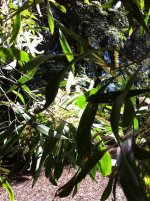
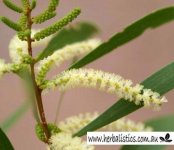
..here's one partly for the chemically minded and curious,
a couple of factors in acacia chemistry which could result in failure to efficiently extract alkaloids..despite many rumors of alkaloids binding to tannins (as the 'tannate) etc., i can find no direct evidence of this..instead the problems appear to be related to the Tars, which will vary seasonally in plants..
Wood Tars (Amphoteric Resins) are complex formations of phenols, cresols, guaiacols, and xylenols..
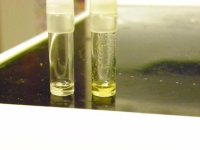
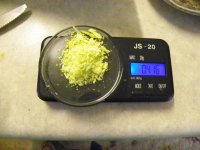
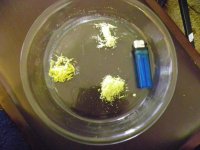
from JG's original A. maidenii experiments 1992 [see p10#197 here]..the first extraction went smoothly, but the 2nd:
..what form of salts are the alkaloids in acacias..? unknown for sure, and probably varies, but turns out this could relate to Gum chemistry..many acacias of course contain gum exudates (both edible and anti-biotic), Gum Arabic being the most common (from A. nilotica & A. aribica)
the main acids which have been found in acacias are Uronic Acids (e.g. A. senegal, A. leata, A. mangium)
..they are a class of plant metabolite often bonded with polysachharides, a class of 'Sugar Acid'
..the gum of A. senegal (and others) comprises partly of the Uronic acids D-glucuronic acid, and 4-O-methyl-D-glucuronic acid [see Studies on uronic acid materials : PARTS XX - XXIV Anderson et al. 1968]
..water-soluble salts of the Uronic acids polymannuronic acid, polyglucuronic acid and polygalaturonic acid were prepared from the bases of the alkaloids pilocarpine, atropine, amphetamine, epinephrine (and others) in Ophthalmic Composition Comprising Water-Soluble Alkaloid Salts of Polyuronic Acids; Patent 1966..the study found that alkaloid Polyuronic salts were better than Hydrochloride salts for prolonged contact treatment (e.g. ointments)
..the other acid found in acacias (other than amino-acids, which i don't think form salts) is Pipercolic acid
(piperidine-2-carboxylic acid), found in some microorganisms and the Murchison meteorite!
..4-hydroxy-pipecolic acid is also known from acacias..
& A. concinnia contained Acacic acid ((3b,16a,21b)-Trihydroxyolean-12-en-28-oic acid)..
that should give the odd researcher something to think about..
............................................................................................................................................................................
ps. have started compiling info on Acacia confusa 海药周到的树 into The Acacia Confusa thread
..i figure more widely utilized species eventually deserve their own threads..
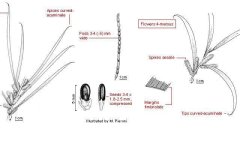
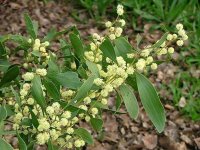
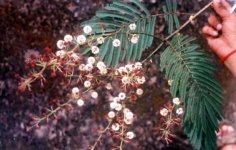
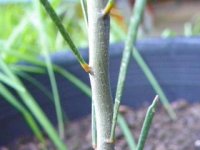
below are Acacia richii (synon. with A. confusa, perhaps a subspecies, common in Fiji and Pacific);
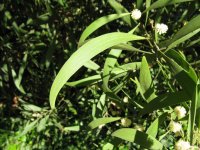
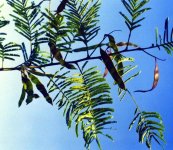
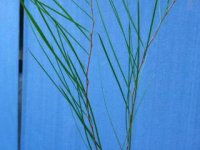
and then A. confusa growing in Taiwan..
.
a couple of factors in acacia chemistry which could result in failure to efficiently extract alkaloids..despite many rumors of alkaloids binding to tannins (as the 'tannate) etc., i can find no direct evidence of this..instead the problems appear to be related to the Tars, which will vary seasonally in plants..
Wood Tars (Amphoteric Resins) are complex formations of phenols, cresols, guaiacols, and xylenols..
from JG's original A. maidenii experiments 1992 [see p10#197 here]..the first extraction went smoothly, but the 2nd:
..so yes, careful and fine manipulation of the pH (up or down) can resolve such an issue..On attempting to acidify, filter, and basify, considerable difficulty was experienced; the acidified residue seemed unfilterable, and when basified with NH3, a thick pink gel was formed which was impossible to extract. By a painful process of trial and error, I found that at very low pH, most of the resins became dissolved or suspended. At slightly low pH, the residue separated nicely into a tar and an aqueous phase. At slightly high pH, the mixture became a thick gelatinous solid. At very high pH, this solid redissolved. The result of this seems to be that much of the tar can be separated by successive extraction at moderately low pH (dilute HCl), and then that the addition of strong hydroxide will leave the amphoteric resins in solution, but make the alkaloids insoluble. These are then extracted into dichloromethane as before, and the organic layer is back extracted with salty NaOH solution to remove impurities.
..what form of salts are the alkaloids in acacias..? unknown for sure, and probably varies, but turns out this could relate to Gum chemistry..many acacias of course contain gum exudates (both edible and anti-biotic), Gum Arabic being the most common (from A. nilotica & A. aribica)
the main acids which have been found in acacias are Uronic Acids (e.g. A. senegal, A. leata, A. mangium)
..they are a class of plant metabolite often bonded with polysachharides, a class of 'Sugar Acid'
..the gum of A. senegal (and others) comprises partly of the Uronic acids D-glucuronic acid, and 4-O-methyl-D-glucuronic acid [see Studies on uronic acid materials : PARTS XX - XXIV Anderson et al. 1968]
..water-soluble salts of the Uronic acids polymannuronic acid, polyglucuronic acid and polygalaturonic acid were prepared from the bases of the alkaloids pilocarpine, atropine, amphetamine, epinephrine (and others) in Ophthalmic Composition Comprising Water-Soluble Alkaloid Salts of Polyuronic Acids; Patent 1966..the study found that alkaloid Polyuronic salts were better than Hydrochloride salts for prolonged contact treatment (e.g. ointments)
..the other acid found in acacias (other than amino-acids, which i don't think form salts) is Pipercolic acid
(piperidine-2-carboxylic acid), found in some microorganisms and the Murchison meteorite!
..4-hydroxy-pipecolic acid is also known from acacias..
& A. concinnia contained Acacic acid ((3b,16a,21b)-Trihydroxyolean-12-en-28-oic acid)..
that should give the odd researcher something to think about..
............................................................................................................................................................................
ps. have started compiling info on Acacia confusa 海药周到的树 into The Acacia Confusa thread
..i figure more widely utilized species eventually deserve their own threads..
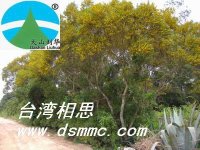
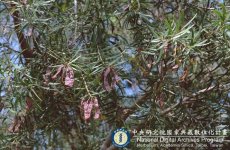
below are Acacia richii (synon. with A. confusa, perhaps a subspecies, common in Fiji and Pacific);
and then A. confusa growing in Taiwan..
.


 ... were the phyllodes you used from the young acuminatas you got a little while ago?