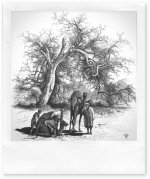
..a very interesting genus that is closely related to acacia is Prosopis, or '
Mesquite'..they are leguminous nitrogen-fixers, playing a similar role in their native environments to acacias..
..native americans use Mesquite as cleansing incense, and it was associated with the outlawed Ghost Dance cult..
from
http://www.texasbeyondhistory.net/st-plains/nature/images/mesquite.html re Honey Mesquite (Prosopis glandulosa var glandulosa (Fabaceae)
Its nutritious pods were highly valued as an important food resource rich in sugar and protein, its hard wood was used for making tools, musical instruments, and fuel, and the plant had medicinal and ritual uses as well.
Medicine. Mesquite gum, herbage, roots, and bark were used in medicinal applications. Leaves were often used in topical applications. Mescalero Apache ground or mashed leaves and mixed them with water, and applied the mix to the afflicted area, especially eyes. Mesquite gum, exudate that collected in cracks in the bark, was dissolved in water and applied to the eyes (Hrdlicka 1908 ).
The Cocopa boiled the inner bark in water given internally to newborns. Both mesquite gum and powdered mesquite bark have antiseptic qualities (Gifford 1933). The Pima treated diarrhea with an infusion of mesquite roots or gum. Astringent qualities of mesquite bark were also utilized by the Pima (Curtin 1949).
from
http://www.themagickalcat.com/Herbs-Mesquite-Chips-1-oz-p/hd-mesqt.htm
Mesquite is associated with healing, cleansing, and purification. Use in healing incenses and mixtures. Use to fuel ritual fires or burn as an incense for cleansing & purification. Use an infusion of mesquite in the bath for purification.
from
Mesquite As A Historical, Modern Natural Remedy - News Taco by Richard G. Santos
Fray Vicente de Santa Maria (1755 – 1813) in his Relación Histórica de la Colonia del Nuevo Santander (annotated by Ernesto de la Torre Villar, Mexico City, 1973) gave an excellent insight into the usage of mesquite by the Native American cultures of the present Mexican state of Tamaulipas and South Texas. He noted the hunter-gatherer Native Americans ate the fruit of the mesquite when ripe. They also ground it to powder form and used it as a form of flour to produce mezquitamal. This was then mixed with water and used as a medicinal tea, tortillas or tamales.
Prosopis are found in the Americas, Africa, Western Asia, and South Asia, often in arid soil. They are also a good source of natural sugars (polysacchrides)..
..a few Mesquite trees have rather interesting indole chemistry..
Prosopis alba (South America, Mexico) leaf has yielded 0.73% tryptamine, 0.7% phenethylamine and 0.43% tyramine [Graziano et al. 1971] as well as MAOI flavonoids including vitexin and quercetin..
Prosopis alpataco bark yielded tetrahydroharmine,
cassine and N-methyl-cassine (of unstudied pharmacology) [Chiale et al. 1982]
Prosopis juliflora (Mexico, South America, Caribbean) has yielded tryptamine, NMT and serotonin [Smith 1977], juliflorine [Ahmad et al. 1989], tyramine [Camp & Norvell 1966] and flavonoids including rutin and apigenin (found in P. incarnata)
Prosopis nigra (Sth. America) bark contained cassine & N-methyl-cassine, leaves reasonable amounts of harman, tetrahydroharman, tryptamine, N-
acetyl-tryptamine, and phenethylamine [Moro et al. 1975]
Prosopis ruscifolia and
P. sericantha (S. and C. America) contained tetrahyrdoharman, cassine and N-methyl-cassine, as well as quercetin and vitexin..[Chiale et al. 1982]
..
Mesquite in the USA, as well as the alkaloids cassine and juliflorine, remain fairly unstudied..
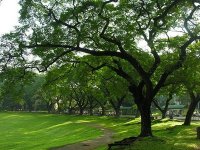
below are P. ruscifolia, P. glandulosa (honey mesquite), P. alba and P. juliflora (plant, flowers)








 ..i trust all is groovy in africa..