
• Members of the previous forum can retrieve their temporary password here, (login and check your PM).

Vinca minor - a nootropic vasodilator with a tryptamine as the active substance

Migrated topic.

Ginkgo

Rising Star
Hey everyone!

I recently discovered Vinca minor (lesser periwinkle) growing in the area. It is used as a nootropic drug because of its vasodilative action. Because it widens the blood vessels, it might be a good addition to entheogens that constricts blood vessels, such as LSA.

The active substance is the tryptamine vincamine. From the structure (see attached image) I find it unlikely that it is able to cross the blood-brain-barrier (BBB) in sufficient degree, but it is nonetheless very interesting that it is a tryptamine!

Does anyone have any information on vincamine's ability to cross the BBB and/or its binding profile to 5HT receptors? Or does anyone have any more knowledge or experience about the herb in general?
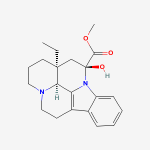
 

Attachments

  • vincamine.png
    vincamine.png
    3.9 KB · Views: 0
polytrip said:
I believe that long term use is definately not a good thing. I've heard that it causes a shortage in red or white bloodcells.
Really? It doesn't surprise me that prolonged use may be bad, but I haven't heard about the shortage in red or white blood cells. Do you know which type it was? It is quite a difference, although shortage of both types is serious. Or perhaps you could show me where you read this? The only real adverse effect I have heard of is a drop in blood pressure if an overdose is taken.
 
madagascar periwinkle ?
doesnt that contain some preddy toxic stuff tho ?


this seemed interesting

Catharanthus lanceus contains up to 6% yohimbine in its leaves
 
Evening Glory said:
polytrip said:
I believe that long term use is definately not a good thing. I've heard that it causes a shortage in red or white bloodcells.
Really? It doesn't surprise me that prolonged use may be bad, but I haven't heard about the shortage in red or white blood cells. Do you know which type it was? It is quite a difference, although shortage of both types is serious. Or perhaps you could show me where you read this? The only real adverse effect I have heard of is a drop in blood pressure if an overdose is taken.
A while ago, i wanted to purchase some vinca minor for studying. I'd heard that it realy helped as a nootropic drug. The shop owner told me that the EU had banned it because of serious side-effects, having to do with bloodcells.
If this is true, it mustn't be hard to find any evidence of that on the net.
 
Yeah, i just wiki'd it. Vinca minor contains some nasty chemicals beside vincamine. One of them is vincristine, used in chemotherapy.
It stops cell-growth and cell-division and has specifically strong effects on bonemarrow. Didn't read any further, we know the bonemarrow-bloodcell relation.
Pure vincamine may be safer than plant-extract.
 
polytrip said:
Yeah, i just wiki'd it. Vinca minor contains some nasty chemicals beside vincamine. One of them is vincristine, used in chemotherapy.
It stops cell-growth and cell-division and has specifically strong effects on bonemarrow. Didn't read any further, we know the bonemarrow-bloodcell relation.
Pure vincamine may be safer than plant-extract.
I was under the impression that Vinca minor didn't contain vincristine and vinblastine, only vincamine and related alkaloids. Wiki doesn't list vincristine as a substance in Vinca minor either. You may be thinking of the Madagascar periwinkle (Catharanthus roseus). Vinca minor is lesser periwinkle.
 
The dutch wikipedia says it does. Probably just smaller amounts.
It completely fit's the story of why the EU banned vinca minor.

I realy think it is safer to experiment with pure vincamine, than with vinca minor extract.
 
Back
Top Bottom