
Sorry, but I find your approach to be too mental and too focused on proving your point that my framing is somehow flawed. I extended an olive branch to you V, and rather than accepting it and meeting me with even the smallest degree of understanding and humility, you persist with your critical thinking. I don't have time for it and frankly its boring. You are welcome to comment on anything I post from here on out, but don't expect a reply from me as I don't find your approach to be productive.I think you’re avoiding the core critique here.
When I point out that exclusion based on cultural or spiritual assumptions seems contradictory to the values of healing, it’s not helpful to respond by implying I am just not ready to understand, and need, like you, ages to get it, or that I should go “see for myself.” That’s not engagement it’s classic deflection. It makes it really difficult for people to engage with you because this behavior seems to be so prevalent in most of your communications, making me worried that this might be something that you don’t notice yourself.
No one’s doubting that there are strong traditions. What’s being questioned is the framework you’re presenting: one where people are dismissed not because of their intent or openness, but because they’re assumed to be too Western, too arrogant, or not yet “able to receive.” That is a stereotype, and wrapping it in spiritual material doesn’t make it less so.
You asked where I got the idea that these healers might be withholding or dismissive, in your own words, you said they’re:
This is not something I projected it’s something you stated directly. Combined with the statement that they than don’t engage and rather withhold their ‘teachings’ makes me question that.
So when I asked why supposedly these healers would withhold knowledge based on cultural assumptions, it was a response to that exact framing. If you don’t believe that’s representative of their mindset, or you where mistaken, that is okay, but let’s not rewrite the conversation as if those ideas came from me. I’m engaging with what you presented.

-
Members of the previous forum can retrieve their temporary password here, (login and check your PM).
You are using an out of date browser. It may not display this or other websites correctly.
You should upgrade or use an alternative browser.
You should upgrade or use an alternative browser.
What do Curanderos think about the DMT experience and its rising popularity?
- Thread starter Ajqij
- Start date
All well stated in my opinion Blig, and can't argue with many of your points, in fact I learned some key things about how you and perhaps others view the Mayans and indigenous people of Central and South America. Having spent a good deal of time living near and with the Lowland and Highland Maya and with other tribes like the Chichimec, Otomi, and Nagual descendants of the Toltec’s, it is a fact that some partake in full-on modern modalities, others live in clay huts with satellite dishes, but many also live in remote jungle villages or high mountainous regions that take days travel to. In some regions, the native language of these tribes is forbidden by the governments in control, (parents are imprisoned if their children speak their native tongue in schools) whereas tribes people in more remote regions are free to speak as they like, and many even refuse to speak Spanish at all.I don't question that people that have lived with and for psychedelics their whole lives, and may come from at least a few generations of people doing so, for sure know a thing or two about the plants they use and the spaces those plants lead to. However, I would caution about turning that into the "ancient traditions" trope, unless it's "ancient" in the sense that some things are "ancient" in the US (100-200 years).
Clearly, the descendants of the Mayan people aren't living in societies that resemble much the societies of their ancestors a thousand years ago, for the better and for the worse. They live in societies part of the current, global techno-industrial society, even if they have managed to keep some remains of their traditions and old ways of life alive. And while I think that the Neolithic was a disaster for humanity and the so-called "discovery" of America was a disaster for the people living there, it's convenient to not forget that many societies there, particularly the more advanced ones (like the Mayans) were deeply unequal and violent societies. I don't consider a tragedy that traditions such as human sacrifice died out. The Mayan civilization is also a civilization that collapsed more than once, they seemed to be as "in balance" with their environment as Sumerians were (which is to say, not much, but still undoubtedly more than our current global system).
To make a comparison, a hundred years ago (or even just 50 in some regions) many rural areas in Europe still preserved many old ways of living, practices, and beliefs. But to have considered their folk healers and midwives as "Celts" (for example) and pretend that their beliefs and those of the ancient peoples they still preserve some traditions of are the same would have been preposterous. I don't really see any difference, in many ways rural Europeans of a hundred years ago were much more culturally shielded from the then-expanding techno-industrial system than current rural Mexicans (as there was no TV, no Internet, etc.).
So, I think it's important to listen to what people who do have a tradition of psychedelics use think about the expansion of its use throughout the world, but in my opinion it's also important to not idealize them, nor romanticize or absolutize their (likely recent, by historical terms) traditions.
This being said, how I interpret
is not as "they think all Westerners are too arrogant to receive and learn", but as that they think Western culture is too arrogant to receive and learn and thus they have no interest in "contributing" to it. That is, the point is about the culture and not about individuals belonging to it. Which, with the caveat above (it's not like they are not influenced by the so-called Western culture), I agree with.
Edit: also, it's clear that they don't think that all Westerners are too arrogant to receive and learned, as the OP is a Westerner that has been learning from them.
The point is that there is a continuum of modern-day adaptations . . . but, I will say again that the Curanderos I have met, who are, in my opinion, masters of their trade, don't just draw their expertise from a few generations ago, but from lineages that extend as far back in time as Pre-CE Mesoamerican civilizations and even beyond. There are ancient carvings depicting hallucinogenic practices Curanderos sometimes proudly refer to, some that even point to the understanding about how certain plants cannot be ingested becuase of physiological DMT inhibitors, (like this Azteca carving that shows an ancient psychonaught giving himself a lovely plant enema . . . something I haven't tried, but certainly is a viable alternative to snorting Yopo, enduring bouts of diarrhea, or harsh tokes from a DMT pipe.)
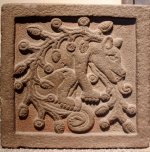
There is a large amount of evidence that reveals tight linkages between ancient ways and the ways of those who are dedicated to keeping the traditions and plant magic of their ancestors alive today. So, while I respect your opinion Blig, I don't agree with it. What I do agree about is that the majority of healers and elders I've met don't judge specific westerners, but most certainly are ambivalent about engaging with modern societies and cultures that have lost touch with the soul of their being, with a reverence for the earth, nature, and life as a whole. But that doesn't mean they aren't loving, compassionate, or uncaring about people or the state of the world. Rather, to me it means they understand that the world doesn't need to be saved because it will save itself without their holy intervention. Cheers.
Last edited:
Greetings double! and thanks for your question. It is correct that Ayahuasca originated in South America, but sometime mid century these specicif ceremonies migrated north to Costa Rica, Guatamala, Yucatan, and Mexico. However the use of DMT compounds in ceremonies nearly identical to those of the south have been conducted for centuries by the Maya, Aztecs, Toltecs, and the mother civilization, the Olmecs, (around 1000 BC to 500 CE). Anadenanthera peregrina (Yopo), Acacia species, Mimosa tenuiflora, and a host of others that no one but the remote tribes of the jungles are privy to.Thank you for this.
I have to say that after 30 years of my regular but sporadic use of entheogenic or psychedelic plants I came to very similar conclusions.
Is there any local tradition of ayahuasca use in Central America? I thought that it's only a thing for South America people.
Last edited:


I don't doubt for a moment that many of them are.I will say again that the Curanderos I have met, who are, in my opinion, masters of their trade,
Probably there is a common thread from the Paleolithic. I don't doubt that, that thread also exists elsewhere. But it has suffered many modifications, to pretend otherwise is to have a romantic idea of the past. I'm not an expert in the Mayans, but I do know that different Mayan cities had different traditions. And that Mayan traditions and beliefs have changed along their very long history, that includes several collapses. Many practices are dead, most notably human sacrifices. When did it become clear that some practices were "true" and some weren't? To our Western values it's "clear" that there's a moral difference between taking psychedelics and throwing someone to die on a cenote. But that's precisely from a framework that was alien to the old Mayans. When you pick and choose from tradition based on a different moral framework, you're modifying that tradition. I'm not saying that it's something inherently negative or positive, and it's not unique to Mexico at all, but a global phenomenon. But it can't be ignored.don't just draw their expertise from a few generations ago, but from lineages that extend as far back in time as Pre-CE Mesoamerican civilizations and even beyond
I don't think we disagree that much. For what I have seen (not in Central America, that's true) there are reasons to think that some extremely ancient spiritual practices, themes and archetypes have been passed on in ways that may change in external details but share a common core. Those practices and core ideas tend to have survived better in isolated, rural areas. And even inside "mainstream" religions there have been branches that preserve some of that core.So, while I respect your opinion Blig, I don't agree with it
But that's not exceptional to Mexico, and the wide variety of spiritual practices that come from very old traditions proves that there's more than a single approach to it. For example, Theravada Buddhism is an old tradition and Buddha himself stated that he didn't invent or discover anything new, but just rediscovered an ancient path that others had traversed before. It's undeniable that there are Theravada monks with very deep knowledge about the nature of the mind, based both in their tradition and personal experience. And they surely would agree with the Mexican curanderos in some points, and disagree in others. The same goes for many other spiritual traditions.
I think the reason some people take issue with how you present the curanderos is because you seem to claim (and correct me if it's wrong) that they are the final authority on the DMT experience because they preserve an extremely ancient tradition that uses it. To which these immediate contentions arise: why would ancient equal correct or true? And if it does, why aren't other ancient practices from the same tradition considered correct or true? Why aren't the many other ancient spiritual traditions correct or true too? But that's not possible, as they contradict each other in many points (while sharing some common points).
It comes across as if you considered any other approach to the psychedelic/spiritual realm to be automatically lesser or more limited. In that case, you would have to support those claims before expecting others to believe them, and I'm afraid "it's ancient" is not enough, particularly when it's only partially ancient and many other approaches are ancient too. Bear in mind that the question is not the validity of the curandero approach (which I don't think anyone would question), but the idea that it's the only valid approach, or the superior one.
Yes, I don't think we are too far off in terms of this convo, thanks. I will however correct you about an assumption you made . . . I never stated that the Curanderos are the "final authority on the DMT experience." Please show me where that statement is made? The title of my post was "How do the Curanderos think about the DMT experience," not "The Curandero's are the final authority on the DMT experience." And for whatever it's worth, what "comes across" does so with two connection points - the sender and the receiver. The actual content of what travels across doesn't automatically carry what the sender intended, it could also be how the reciever interprets it from their "framing" as it were. More later, gotta run. And thanks for this dialogue, I find it more encouraging than some others in terms of being open to new ways of viewing the DMT experience. Blessings!I don't doubt for a moment that many of them are.
Probably there is a common thread from the Paleolithic. I don't doubt that, that thread also exists elsewhere. But it has suffered many modifications, to pretend otherwise is to have a romantic idea of the past. I'm not an expert in the Mayans, but I do know that different Mayan cities had different traditions. And that Mayan traditions and beliefs have changed along their very long history, that includes several collapses. Many practices are dead, most notably human sacrifices. When did it become clear that some practices were "true" and some weren't? To our Western values it's "clear" that there's a moral difference between taking psychedelics and throwing someone to die on a cenote. But that's precisely from a framework that was alien to the old Mayans. When you pick and choose from tradition based on a different moral framework, you're modifying that tradition. I'm not saying that it's something inherently negative or positive, and it's not unique to Mexico at all, but a global phenomenon. But it can't be ignored.
I don't think we disagree that much. For what I have seen (not in Central America, that's true) there are reasons to think that some extremely ancient spiritual practices, themes and archetypes have been passed on in ways that may change in external details but share a common core. Those practices and core ideas tend to have survived better in isolated, rural areas. And even inside "mainstream" religions there have been branches that preserve some of that core.
But that's not exceptional to Mexico, and the wide variety of spiritual practices that come from very old traditions proves that there's more than a single approach to it. For example, Theravada Buddhism is an old tradition and Buddha himself stated that he didn't invent or discover anything new, but just rediscovered an ancient path that others had traversed before. It's undeniable that there are Theravada monks with very deep knowledge about the nature of the mind, based both in their tradition and personal experience. And they surely would agree with the Mexican curanderos in some points, and disagree in others. The same goes for many other spiritual traditions.
I think the reason some people take issue with how you present the curanderos is because you seem to claim (and correct me if it's wrong) that they are the final authority on the DMT experience because they preserve an extremely ancient tradition that uses it. To which these immediate contentions arise: why would ancient equal correct or true? And if it does, why aren't other ancient practices from the same tradition considered correct or true? Why aren't the many other ancient spiritual traditions correct or true too? But that's not possible, as they contradict each other in many points (while sharing some common points).
It comes across as if you considered any other approach to the psychedelic/spiritual realm to be automatically lesser or more limited. In that case, you would have to support those claims before expecting others to believe them, and I'm afraid "it's ancient" is not enough, particularly when it's only partially ancient and many other approaches are ancient too. Bear in mind that the question is not the validity of the curandero approach (which I don't think anyone would question), but the idea that it's the only valid approach, or the superior one.

When you mention the acacias used in Central America/mexico I assume you are referring to Vachellia species?
Do you have first hand experience with these species in such a context? I am just interested because there is of course speculation, but there just is not enough published around the subject for anyone sitting at home to know.
The same goes for not just Mimosa hostilis but Mimosa verrucosa as well…who has actually drunk jurema in a traditional context(without rue etc) and had a DMT trip? I believe at least in Brazil it’s a thing, and that mimosa is orally active. I don’t even know what species I have been using for the past 17 years…not sure which ones I grow either…are these trees really hostilis? Are they verrucosa?
I would like to see more published around the subject of entheogenic Mimosa and Vachellia use in Mexico and Central America. PD Newmans new work surrounding Gleditsia use in south-east USA is pretty awesome if it’s legit.
Am I missing something? Do we know Mimosa and Vachellia were used in Mesoamerica as entheogens?
I was under the impression there was no real evidence for DMT use in the region despite the use of other tryptamines. Personally I have never experienced took to be much like DMT, though it’s incredibly hallucinogenic. I don’t believe they used 5-MeO-DMT containing toads but I do think they used Bufo marinus which is a bufotenine experience like yopo. Psilocybin, mescaline, LSA, tropanes…these we know about.
Ayahuasca use in the region seems to certainly be a new thing…however Banisteriopsis muricata does occur in Mexico, and maybe 12 years ago I do remember some speculation around possible uses of it in the region but I can’t remember who/what/where/when.
Do you have first hand experience with these species in such a context? I am just interested because there is of course speculation, but there just is not enough published around the subject for anyone sitting at home to know.
The same goes for not just Mimosa hostilis but Mimosa verrucosa as well…who has actually drunk jurema in a traditional context(without rue etc) and had a DMT trip? I believe at least in Brazil it’s a thing, and that mimosa is orally active. I don’t even know what species I have been using for the past 17 years…not sure which ones I grow either…are these trees really hostilis? Are they verrucosa?
I would like to see more published around the subject of entheogenic Mimosa and Vachellia use in Mexico and Central America. PD Newmans new work surrounding Gleditsia use in south-east USA is pretty awesome if it’s legit.
Am I missing something? Do we know Mimosa and Vachellia were used in Mesoamerica as entheogens?
I was under the impression there was no real evidence for DMT use in the region despite the use of other tryptamines. Personally I have never experienced took to be much like DMT, though it’s incredibly hallucinogenic. I don’t believe they used 5-MeO-DMT containing toads but I do think they used Bufo marinus which is a bufotenine experience like yopo. Psilocybin, mescaline, LSA, tropanes…these we know about.
Ayahuasca use in the region seems to certainly be a new thing…however Banisteriopsis muricata does occur in Mexico, and maybe 12 years ago I do remember some speculation around possible uses of it in the region but I can’t remember who/what/where/when.
I've not come across any ceremonial activities that utilize Bana, although I do believe it grows in Central America. I've heard of some shamanic fusion curanderos who use it, but I've not come across any myself. Likewise, while alkaloids such as Mimosa tenuiflora, Acacia species, and Virola do not appear to have an "ancient" history with Mayan curanderos specifically, they have been and still are being used in Guatamala and southern regions of Mexico in medicine ceremonies. There are, I suspect MANY ingestible DMT active plants that either are not blocked by inhibitors or simply do not require them. I'm planning another expedition to the Highlands in the Fall to the town of Momostenango to get a blessing for my Tzolking Calendar book I will be publishing early next year and will follow up on some leads for plants that have not been revealed to the world as of yet. Appreciate your dialogue Jamie.When you mention the acacias used in Central America/mexico I assume you are referring to Vachellia species?
Do you have first hand experience with these species in such a context? I am just interested because there is of course speculation, but there just is not enough published around the subject for anyone sitting at home to know.
The same goes for not just Mimosa hostilis but Mimosa verrucosa as well…who has actually drunk jurema in a traditional context(without rue etc) and had a DMT trip? I believe at least in Brazil it’s a thing, and that mimosa is orally active. I don’t even know what species I have been using for the past 17 years…not sure which ones I grow either…are these trees really hostilis? Are they verrucosa?
I would like to see more published around the subject of entheogenic Mimosa and Vachellia use in Mexico and Central America. PD Newmans new work surrounding Gleditsia use in south-east USA is pretty awesome if it’s legit.
Am I missing something? Do we know Mimosa and Vachellia were used in Mesoamerica as entheogens?
I was under the impression there was no real evidence for DMT use in the region despite the use of other tryptamines. Personally I have never experienced took to be much like DMT, though it’s incredibly hallucinogenic. I don’t believe they used 5-MeO-DMT containing toads but I do think they used Bufo marinus which is a bufotenine experience like yopo. Psilocybin, mescaline, LSA, tropanes…these we know about.
Ayahuasca use in the region seems to certainly be a new thing…however Banisteriopsis muricata does occur in Mexico, and maybe 12 years ago I do remember some speculation around possible uses of it in the region but I can’t remember who/what/where/when.
You are right on that. I wanted to say more that that's how it comes across in general, and that that's why some people may react negatively to it (that's why I said that you seem to claim it). But it's true that you didn't say it, and I'm happy that it has been clarified.I never stated that the Curanderos are the "final authority on the DMT experience." Please show me where that statement is made?
Yes, I agree. That's why I was pointing that out: if the receiver explains what he thinks he's receiving and the sender sees that it's not what he intended to send, then it can be amended by both sides. It's not necessarily about anyone being at fault for it.And for whatever it's worth, what "comes across" does so with two connection points - the sender and the receiver.
By the way, I'm curious about how the curanderos you've met see psylocibin mushrooms. Do they see them as similar to DMT plants in nature? Do they have a similar role?
In my travels I've experienced Curanderos incorporating Psyolcibin into their ceremaonies but mostly in southern Mexico and in the Zapotec, Mixtec,, and Nahua peoples. María Sabina's Veladas stand out most in my mind. Never got to meet her but boy would I have loved to!




Who wouldn't?Never got to meet her but boy would I have loved to!

BTW . . . thanks much for providing this portal for sharing and learning. I'll do all I can to try to convey to folks here that while I've been blessed to gain extraordinary insight into the Curandero world, I don't think they are superior or the holders of ultimate truth, and I don't believe I'm an expert, just a traveler who's taken time to drop to his knees before those who are masters of the plants.Who wouldn't?

Thanks for sharing Ajqij.
A question, might be lame but here it goes: do you know or asked if any of them had a "modern" DMT experience? If they vaped the extracted DMT or similar? Even if they didn't, did you describe what it does and what did they think of it?
The "DMT experience" is as varied as the forms it can have in this world and when it enters the people that find and access them.
A question, might be lame but here it goes: do you know or asked if any of them had a "modern" DMT experience? If they vaped the extracted DMT or similar? Even if they didn't, did you describe what it does and what did they think of it?
The "DMT experience" is as varied as the forms it can have in this world and when it enters the people that find and access them.
Greetings Ruffles. Not a lame question at all, appreciate you asking. The majority of elders and healers I've encountered conduct all their journeys within a cultural and ceremonial context that includes everything from cutting the limbs and leaves of selected plants, preparing them for extraction, purifying the space in which "engagement with the ancestors" as they put it will take place. So those who participate in the experiences are involved in the entire process. Pure DMT is mostly not a thing in the places I've visited. There have been a few younger Curanderos who are internet-wise who've experimented with crystal forms, but what they've shared about it is kind of humorous. . . "The sacred plants are like beautiful cosmologically-blessed women . . . why would you only want ten minutes with her when you can have her for hours?" Apparently, they're not up on the DMTx wave yet. LOLThanks for sharing Ajqij.
A question, might be lame but here it goes: do you know or asked if any of them had a "modern" DMT experience? If they vaped the extracted DMT or similar? Even if they didn't, did you describe what it does and what did they think of it?
The "DMT experience" is as varied as the forms it can have in this world and when it enters the people that find and access them.

Oh Yum Hunab Ku Evam Maya E Ma Ho
@endlessness has vaped DMT with traditional curanderos in Brazil. I wish I could find the thread/threads but it could be as far back as like 2008 and I can’t..anyway maybe he will see this and can tell the story. If I remember correctly, they were definitely into it and wanted more.
"Ri K'olik Q'iij Chi Kechaj!"Oh Yum Hunab Ku Evam Maya E Ma Ho
The Brazilians are indeed passonate exploritory souls! The black sand beaches and massive starlit nights must be contributers. Hit me up if you learn anything.@endlessness has vaped DMT with traditional curanderos in Brazil. I wish I could find the thread/threads but it could be as far back as like 2008 and I can’t..anyway maybe he will see this and can tell the story. If I remember correctly, they were definitely into it and wanted more.

I edited the link so that when endlessness comes on he'll at least have a notification of this conversation and be able to chime in if he so chooses.
One love
One love


I must not be a very good student, as the only thing I learned from this person is that seeking to impose a hierarchical framework (with oneself at the top, naturally) on what is essentially a non-hierarchical community, makes one look foolish and out of touch, especially when claiming special shamanic knowledge.@Ajqij, you were a good teacher and, through your example, showed much more than your words ever conveyed.
May only good come to you
Last edited:
Similar threads

- Replies
- 127
- Views
- 2K


- Replies
- 33
- Views
- 1K
- Replies
- 10
- Views
- 371

