• Members of the previous forum can retrieve their temporary password here, (login and check your PM).

Amanita Muscaria -- With or Without Lemon Juice?

Schahin92

Esteemed member
So I used to take dried caps just tiny amounts, and had a good experience. but then I started having negative experiences whenever I took a little bit more than Microdose.

I cannot say if it was because of the different potencies in the Amanitas but I decided It could have been the Ibutenic Acid in it so I started making teas.
Now with tea I would like to have a method than doesnt get me that drunk feeling but a clean feeling.

So does normal boiling in water convert the Ibotenic Acid to Muscimol too? I'd like to know how ancient northern tribes prepared the Tea when they had no knowledge of Ph-Lowering and the chemical reactions. But I dislike the Siberian method with the Shamans Urine, dont know how one can go through that.
 
So does normal boiling in water convert the Ibotenic Acid to Muscimol too?
As far as I know yes, but it needs some time boiling.

I'd like to know how ancient northern tribes prepared the Tea
I'm not sure they made a tea, I believe they ate them. However apparently they were dried close to a fire, and therefore heated up.

But I dislike the Siberian method with the Shamans Urine
The reason they did that is that A. muscaria is actually rare in Siberia. It was not available to most people, and that was a way to use a single dose for more than one person. That method is not attested anywhere else as far as I know.
 
As far as I know yes, but it needs some time boiling.


I'm not sure they made a tea, I believe they ate them. However apparently they were dried close to a fire, and therefore heated up.

So if fire makes it ok to eat it, so normal boiling should make it ok to eat?

Its because in all the Amanita Groups people always talk about the PH-Lowering method, and I wonder why.
 
So if fire makes it ok to eat it, so normal boiling should make it ok to eat?
I think yes. That's how I've done it in the past.

about the PH-Lowering method
I don't know that method, but I boiled them in acidic (lower pH) water. It may be just that. So yes, you can use lemon as you say, or also vinegar. I left them boiling for quite some time, IIRC at least 30 minutes.

There are other users here more experienced with Amanita muscaria, so hopefully they'll chime in too. I used the above method and it worked well for me.
 
Translated and summarized from this paper: Change in Ibotenic Acid and Muscimol Contents in Amanita muscaria during Drying, Storing or Cooking

TemperatureIbotenic Acid (IBO) remainingMuscimol (MUS) remaining
Fresh (control)100%100%
40 °C65%620%
50 °C64%575%
60 °C54%650%
80 °C17%640%
100 °C12%290%
120 °C0.5%50%

pHIBO change rateMUS formation rateRelative magnitude of changeWhat the paper explicitly shows
4.0Very rapid decreaseVery rapid increaseLargest change observedSteep IBO loss and steep MUS rise
5.0Rapid decreaseRapid increaseSlightly less than pH 4.0Similar pattern, slightly slower
5.98Moderate decreaseModerate increaseClearly reduced vs acidicSlower slopes than pH 4–5
7.0Moderate–slow decreaseModerate–slow increaseSmaller overall changeNear-neutral dampens conversion
8.0Slow decreaseMinimal increaseMinor changeConversion strongly suppressed
9.0Very slow decreaseVery little increaseNear-stableCurves nearly flat
10.0Minimal changeMinimal changeLeast change observedIBO and MUS largely stable

ConditionDrying methodDurationIBO (ppm)MUS (ppm)IBO remaining (%)MUS remaining (%)
Fresh (control)None4628100%100%
Sunlight-ISun-dried outdoors3 days2169647%1200%
Sunlight-IISun-dried outdoors11 days36338%413%
Heater-IIIDried near oil heater2 days583113%388%

Tsunoda K, Inoue N, Aoyagi Y, Sugahara T. Change in ibotenic acid and muscimol contents in Amanita muscaria during drying, storing or cooking. Food Hygiene and Safety Science. 1993;34(2):153–160.


My Amanita Day Protocol: For one person, combine 1.5 to 2.5 grams of dried Amanita muscaria caps, crushed or powdered, with water at a 10:1 water-to-mushroom ratio, adjust the pH to 4.2 using citric acid or lemon juice, then heat the mixture to 85°C and maintain that temperature for 100 minutes with a lid on; after cooling, strain out the solids and drink the liquid for a muscimol-rich, ibotenic-acid-free experience.
 

Attachments

  • 34_153.pdf
    813.8 KB · Views: 0
Last edited:
For one person, combine 1.5 to 2.5 grams of dried Amanita muscaria caps, crushed or powdered, with water at a 10:1 water-to-mushroom ratio, adjust the pH to 4.2 using citric acid or lemon juice, then heat the mixture to 85°C and maintain that temperature for 100 minutes with a lid on; after cooling, strain out the solids and drink the liquid for a muscimol-rich, ibotenic-acid-free experience.
What level of experience does this commonly bring on for you? And does body weight seem to be a factor or is it potentially not, as is potentially not with psilocin?


One love
 
Translated and summarized from this paper: Change in Ibotenic Acid and Muscimol Contents in Amanita muscaria during Drying, Storing or Cooking

TemperatureIbotenic Acid (IBO) remainingMuscimol (MUS) remaining
Fresh (control)100%100%
40 °C65%620%
50 °C64%575%
60 °C54%650%
80 °C17%640%
100 °C12%290%
120 °C0.5%50%

pHIBO change rateMUS formation rateRelative magnitude of changeWhat the paper explicitly shows
4.0Very rapid decreaseVery rapid increaseLargest change observedSteep IBO loss and steep MUS rise
5.0Rapid decreaseRapid increaseSlightly less than pH 4.0Similar pattern, slightly slower
5.98Moderate decreaseModerate increaseClearly reduced vs acidicSlower slopes than pH 4–5
7.0Moderate–slow decreaseModerate–slow increaseSmaller overall changeNear-neutral dampens conversion
8.0Slow decreaseMinimal increaseMinor changeConversion strongly suppressed
9.0Very slow decreaseVery little increaseNear-stableCurves nearly flat
10.0Minimal changeMinimal changeLeast change observedIBO and MUS largely stable

ConditionDrying methodDurationIBO (ppm)MUS (ppm)IBO remaining (%)MUS remaining (%)
Fresh (control)None4628100%100%
Sunlight-ISun-dried outdoors3 days2169647%1200%
Sunlight-IISun-dried outdoors11 days36338%413%
Heater-IIIDried near oil heater2 days583113%388%

Tsunoda K, Inoue N, Aoyagi Y, Sugahara T. Change in ibotenic acid and muscimol contents in Amanita muscaria during drying, storing or cooking. Food Hygiene and Safety Science. 1993;34(2):153–160.


My Amanita Day Protocol: For one person, combine 1.5 to 2.5 grams of dried Amanita muscaria caps, crushed or powdered, with water at a 10:1 water-to-mushroom ratio, adjust the pH to 4.2 using citric acid or lemon juice, then heat the mixture to 85°C and maintain that temperature for 100 minutes with a lid on; after cooling, strain out the solids and drink the liquid for a muscimol-rich, ibotenic-acid-free experience.

Have you tried consuming it with no lemon juice as mere boiling?

I wonder if some Ibotenic Acid is a bad thing, Many just eat the dried caps.
 
I’ve done a ~2 hour decoction of an oz, and poured the tea into ice cube trays for easy dosing at 1g/ice cube, which worked well.

However, what I typically do is just weigh out the amount I want, break up the mushrooms and steep in freshly boiled water for 10-20 minutes, which also works well IME. Straining the mushrooms makes for a lighter tea, whereas keeping them in the tea makes it stronger, suggesting that the basic infusion method does not get all the actives.

I presume the age of the mushrooms and the temperature at which they were dried determines the ratio of ibotenic acid to muscimol. In any case, I don’t typically use any lemon juice or other acid, and have found my teas to be consistently relaxing without much/any noticeable stimulation or toxic-feeling effects (at doses of around 100-2000mg).
 
Last edited:
I’ve done a ~2 hour decoction of an oz, and poured the tea into ice cube trays for easy dosing at 1g/ice cube, which worked well.

However, what I typically do is just weigh out the amount I want, break up the mushrooms and steep in freshly boiled water for 10-20 minutes, which also works well IME. Straining the mushrooms makes for a lighter tea, whereas keeping them in the tea makes it stronger, suggesting that the basic infusion method does not get all the actives.

I presume the age of the mushrooms and the temperature at which they were dried determines the ratio of ibotenic acid to muscimol. In any case, I don’t typically use any lemon juice or other acid, and have found my teas to be consistently relaxing without much/any noticeable stimulation or toxic-feeling effects (at doses of around 100-2000mg).


So how was the difference of the 2 hour decotion and the mere steeping it in boiled water? Obviously there is a huge gap, can you notice in with the effects?

I get some odd feelings when too much science is involved in a sacramental process, while using modern measurement equipments to check the PH and all that stuff.

Have you tried the dried caps and how much quantitity of them were you able to take?
I got the problems that with dried caps only microdosage amounts work for me more than that it gets negative so even I dont know the potency of each cap, I just credited it to the amount of IBO

There is Facebook Group called Amanita Science where one of the admins says that Boiling it in Water has no effect at all on the Decarboxilation which sounds weird to me to be honest, How did Ancient People use it then, or why does drying the caps decarboxilate but boiling it shouldnt
 
I should have prefaced that my proposed amanita day protocol, which we didn't end up following. We just sublingually administered a small amount of heat dried cap instead of going through the whole process of prolonged boiling and preparation. The proposed method was just extrapolating from the data in that study and meeting in the middle. That didn't take into account ph as a contributing factor or starting with dried vs fresh material. So please disregard that protocol completely.

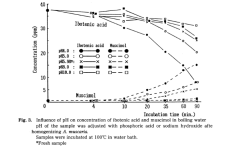
Diving a little deeper into this study:

1766769840517.png

Time (min)pHIBO (ppm)MUS (ppm)Notes
04.0~37.5~0.5Baseline
44.0~30~3.5Rapid IBO loss begins
104.0~20~6Inside overlap window
204.0~12~8.2Peak MUS
354.0~10~8.5Plateau
604.0~9~7.2MUS begins decline
904.0~8~6.0Degradation ongoing
07.0~36~0.3Baseline
107.0~32~2.8Slower IBO loss
207.0~27~3.6Lower MUS
357.0~22~4.2No clear MUS peak
607.0~19~3.5Flattening
907.0~18~3.0No degradation yet
010.0~37~0.2Very stable IBO
9010.0~32~1.5Minimal conversion

MetricEstimated Time (min)
Max MUS~35–45
Min IBO~45–60
Crossover Window~35–50

50 minutes at 100 °C and pH 4 would be the best estimate for maximum conversion before degradation begins for fresh material.

-----------------------------------------------------------------------------------------------------------------------------------------------------------------------------------------------------------

I think most of us experimenting with these mushrooms are likely to be using dried material. This table outlines the "sweet spot" for each drying condition.

Drying MethodTemp (°C)DurationIBO Status After DryingMUS Status After DryingLater Boiling Conversion Window (at 100 °C, pH 4)
Air-dried (shade)~20–253–14 daysNear original (~100%)Minimal (<10%)Wide window: 10–50 min (MUS peaks ~35–45 min)
Sun-dried~30–453–7 daysModerately reduced (60–80%)MUS elevated (~20–40%)Medium window: 10–40 min (MUS peaks ~30–40 min)
Heater-dried (low)50–6010–12 hrsReduced (~50–65%)MUS increased (~5–6×)Narrower: 10–35 min (MUS peaks ~25–35 min)
Heat-dried (mid)806 hrs~17% of IBO remains~6.4× MUS increaseVery narrow: 10–25 min (MUS peaks ~20–30 min)
Heat-dried (high)1004 hrs~12% of IBO remains~2.9× MUS increaseExtremely narrow: 10–20 min (MUS peaks ~15–25 min)
No drying (fresh)N/AN/AFull IBO (~35–40 ppm)Near-zero MUSFull window: 10–50+ min (MUS peaks ~35–45 min)

45 to 50 minutes at 100 °C and pH 4 would be the likely peak window for conversion in shade-dried material.
40 to 45 minutes at 100 °C and pH 4 would be the likely peak window for sun-dried material.
35 to 40 minutes at 100 °C and pH 4 would be the likely peak window for material dried at low heat (50°-60°C).
25 to 30 minutes at 100 °C and pH 4 would be the likely peak window for material dried at medium heat (80 °C).
15 to 25 minutes at 100 °C and pH 4 would be the likely peak window for material dried at high heat (100 °C).


When the drying method is unknown: 25–35 minutes at 100 °C and pH 4 is the best compromise because it is late enough to capture most ibotenic‑acid‑to‑muscimol conversion if the material was only air or sun dried, yet early enough to avoid significant muscimol degradation if the material had already been heat dried.
 
Last edited:
So how was the difference of the 2 hour decotion and the mere steeping it in boiled water? Obviously there is a huge gap, can you notice in with the effects?

I get some odd feelings when too much science is involved in a sacramental process, while using modern measurement equipments to check the PH and all that stuff.

Have you tried the dried caps and how much quantitity of them were you able to take?
I got the problems that with dried caps only microdosage amounts work for me more than that it gets negative so even I dont know the potency of each cap, I just credited it to the amount of IBO

There is Facebook Group called Amanita Science where one of the admins says that Boiling it in Water has no effect at all on the Decarboxilation which sounds weird to me to be honest, How did Ancient People use it then, or why does drying the caps decarboxilate but boiling it shouldnt

Everything I wrote involved starting with dried caps. However, I have not tried eating dried caps, straight up, if that’s what you mean. I didn’t notice a big difference between a hot water infusion, as opposed to a longer decoction (simmering for multiple hours), which is why I switched over to simply infusing the dried caps in freshly boiled water, as I described.

Setting aside alchemical nuances of different prep methods, leaving the mushroom bits in the water guarantees full effects, though I would probably strain them at higher doses. While I’m not experienced with higher doses of amanitas, working with lower doses of dried caps is pretty simple, in my experience - just steep in hot water, strain the mushrooms, or not, drink the tea, and relax or go to bed.
 
@dreamer042

Aside from the scientific Data it would be good to know how much IBO is actually tolerable, I think the ratio is important.

What methods have you used personally? Have you tried boiling with and without lemon juice (or something acidic)?
 
IBO is a serious neurotoxin, it's used to induce brain damage in neuroscience research. The honest safe level for this compound is none. It appears you also will never get the level down to none in amanita, but you can get down to trace levels per gram, and I guess that's the best we can hope for.

Personally, my experience with amanita is eating dried caps, chewing up small amounts and letting it absorb subligually then spitting out the material, smoking it with and without cannabis, and making tea (without acidifying). I've only experimented with smaller doses, but i've witnessed other taking large doses of it to fairly unpleasant effects (sweating, shivering, tremors, nausea, vertigo, etc).

I find it interesting and respect the history and symbolism (especially around xmas traditions) but I don't find it be all that great of a substance in general and don't recommend it for recreational use, but I'm glad I found that study and am able to share some good data in the interest of harm reduction for those that choose to work with these fascinating and formidable fungi.
 
Back
Top Bottom