


I think they may have changed the name again. Capricrous bunch, these botanists…Coleus blumei is now an outdated name. Solenostemon scutellaroides var. Electric Lime tests positive for Salvinorin A both chemically and experientially.

I think they may have changed the name again. Capricrous bunch, these botanists…Coleus blumei is now an outdated name. Solenostemon scutellaroides var. Electric Lime tests positive for Salvinorin A both chemically and experientially.

I believe it's "Coleus scutellarioides" now, but I still don't even understand how it differs from Salvia divinorum in terms of genus—they have a ton of similarities. Read that it's related to the type of "lever pollination mechanism" within flowers.I think they may have changed the name again. Capricrous bunch, these botanists…
spand or plant pecan contains harmaline. We used the Coleus scutellarioides with pecan tonight and slowly increased the amount. Only the harmaline effect is noticeable and no other effects are visible. It does not seem to work. Our plan is to look into extracting dmt and share our experiences later. We used Coleus scutellarioides as a source of dmt but it did not work.من فارسی صحبت نمیکنم، بنابراین از مترجم استفاده میکنم. آیا هوم همان گیاه اسپند (اسفند) است؟
"I don’t speak Farsi, so I am using a translator. Is Hōm the same plant as espand (esfand)?"
Yet, my "Electric Lime" looks nothing like either. I also tried quidding leaves and felt less than with my mysterious red coleus, so I'm going to quid that one again tonight.
This is exactly how chewing leaves from my red coleus feels! Excellent breakdown. Difficult to tell apart from placebo, but the sensation is present. Powdered red leaves did not seem to have the same effect.
Eleven years ago I ingested sixteen capsules of dried leaf powder from an extremely basic looking coleus (red, white, and green). I remember becoming so unbelievably tired that I never wanted to try again, but hadn't noticed any other effects.
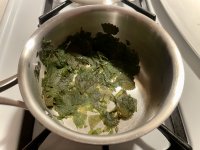
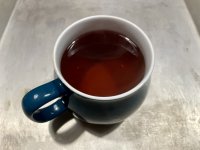
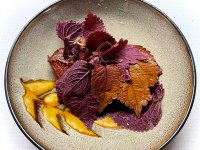
In one of the experiments, I read that the purple type with fluff and velvet was used. But I have used different types and so far there has been no result.Ingested 12oz grapefruit juice, some homemade berberine tincture, and then immediately started chewing UNK leaves while working in the garden. At some point I got fed up with chewing and decided to look up reports from folks who claim to have felt effects from coleus—most revolved around brewing tea or smoking dried leaves (maybe heat is beneficial). I brewed three cups and drank them over the course of ~90 minutes. Very peculiar how the anthocyanins almost immediately move from fresh leaves into water before it’s even boiling (see attached images).
I experienced that same sleepy feeling while awake, but woke up uneasy and anxious a few times during the night. No OEVs or CEVs; dreaming was not lucid; got ~8 hours of sleep. Fragments of dreams can be remembered, though they were more unhinged and upsetting than usual.
Perhaps there are only physiological effects from the various abietane diterpenoids? These compounds could potentially improve awareness of dreaming at low doses (disrupt deep sleep), but cause physical discomfort at high doses. Or, maybe I overshot inhibition of some CYP450 enzymes by combining grapefruit juice with berberine.
This experiment involved ~20g fresh leaf total (the most I’ve taken so far). I likely won’t feel safe pushing above ~30g fresh leaf if anxiety and discomfort persist. Oddly, I do feel rejuvenated today for whatever reason.
Esfand, or peganum. Pecan is something else.spand or plant pecan contains harmaline.
There is no DMT in Coleus. Psychoactive effects there are due to salvinorin A - an entirely different, non-alkaloid compound - but it seems not all varieties of Coleus scutellaroides produce significant amounts of salvinorins.Coleus scutellarioides as a source of dmt but it did not work.
Where did you read that the purple coleus was used? Was it in combination with harmalas or other plants?In one of the experiments, I read that the purple type with fluff and velvet was used. But I have used different types and so far there has been no result.
I also don't know what kind was used by the natives in South America. If you have any information on this, please share. Thank you.
Looking again at your picture, the leaf outline, at least, is reminiscent of a Salvia guaranitica (possibly hybrid) that seems to be fairly common in cultivation - not that that necessarily means much. Beyond that, I hope you don't mind me posting these recent pics of my coleus plants that you inspired me to sow a few months back:To be honest, we should be using something that looks more like this.
Anyone know botanists in Puerto Rico? Would love to cultivate some wild Coleus scutellarioides. I think every cultivar will produce varying results.
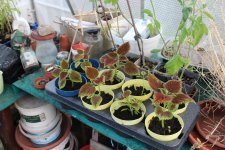
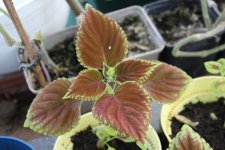
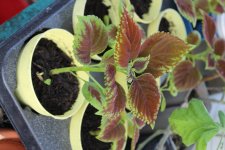
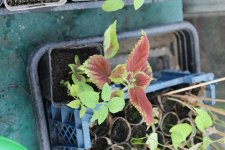

I have had a very strange "trip" with similar looking leaves, using it with high dose rue, i somewhat enjoyed chewing a leaf or two of coleus but the trip i had eating too much leaves kinda turned me off, was so weird, it is def psychoactive though imeLooking again at your picture, the leaf outline, at least, is reminiscent of a Salvia guaranitica (possibly hybrid) that seems to be fairly common in cultivation - not that that necessarily means much. Beyond that, I hope you don't mind me posting these recent pics of my coleus plants that you inspired me to sow a few months back:
View attachment 111629View attachment 111627View attachment 111628
This variety appears to breed true to seed via self-fertilisation. There were also some adventitious Lippia dulcis (the green plan, below) seeds that made their way into the seed tray. It seems these two species are very happy to grow in intimate proximity. I wonder what might happen if they were ingested together?
View attachment 111626
Can you elaborate a bit more on your technique? A low dose of rue and a few coleus leaves were part of the herb mix that recently sent me into an unexpected—though brief—psychedelic state. Simply using rue or pure harmalas with coleus has not brought that same effect back. I'm currently checking for interactions between the other herbs.I have had a very strange "trip" with similar looking leaves, using it with high dose rue, i somewhat enjoyed chewing a leaf or two of coleus but the trip i had eating too much leaves kinda turned me off, was so weird, it is def psychoactive though ime
This is the trending Coleus thread, so please share anything that's relatedLooking again at your picture, the leaf outline, at least, is reminiscent of a Salvia guaranitica (possibly hybrid) that seems to be fairly common in cultivation - not that that necessarily means much. Beyond that, I hope you don't mind me posting these recent pics of my coleus plants that you inspired me to sow a few months back:

at the time i was swallowing ground rue capsules, and i would chew the coleus leaves fresh, i first used about 2-3 leaves, for the first 2-3 days i think, and it was pretty nice with a nice glowing euphoria, then i chewed about 10 i think and i was really tripping, it felt like there was a reverse tolerance where each day coleus would be stronger, the "trip" or "high" (im not sure what to call it) was very strange, dont really know how to describe it but it def felt somewhat like how people describe low dose salvia, although i have never really tried salvia so not sure.Can you elaborate a bit more on your technique? A low dose of rue and a few coleus leaves were part of the herb mix that recently sent me into an unexpected—though brief—psychedelic state. Simply using rue or pure harmalas with coleus has not brought that same effect back. I'm currently checking for interactions between the other herbs.
Rue at the same dosage at different times won't always have the same effect. Sometimes it's more psychedelic, or euphoric, or sedative. This seems to be due to, maybe, some kind of natural cycles of variance in the neurochemistry and/or metabolism. Dietary effects could well play a role, which kind of adds illumination to the idea behind the vegetalista dieta, perhaps.A low dose of rue and a few coleus leaves were part of the herb mix that recently sent me into an unexpected—though brief—psychedelic state. Simply using rue or pure harmalas with coleus has not brought that same effect back
Ime this is somewhat true, the first 2-3 days i used coleus it was pretty mild, i just felt a nice mood boost/euphoria, third day it completely took me by surprise, and it wasn't the rue because rue hit the same as the days prior, i did almost double the amount of coleus but i surely did not expect anything close to what happened.What if there's a nominally active compound in coleus with a similar property of sensitivity to conditions? That could make things a tad tricky.

Well, there's that old herbalist's adage that herbs that compliment each other are often found growing together. I've yet to corroborate this line of thinking, introduced to me by a college professor many years ago, but it makes me wonder about Chromolaena odorata, which often grows beside acacia trees....There were also some adventitious Lippia dulcis (the green plan, below) seeds that made their way into the seed tray. It seems these two species are very happy to grow in intimate proximity. I wonder what might happen if they were ingested together?