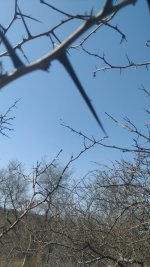
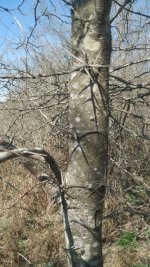
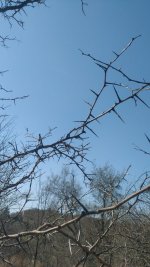
I was listening to the mind escape podcast, episode #275.
P.D. Newman was discussing entheogenic plant use by native Americans. He said he has found evidence of the Cherokees using an Ayahuasca analogue comprised of Gleditsia triacanthos and Passiflora incarnata. The idea of honey locust being active has been around a while, in fact Trout bioasseyed it in his book some simple tryptamines.
P.D. Newman also bioassayed it and said the resulting effects were indistinguishable from Ayahuasca. He took about 10 grams of honey locust with 25 grams of passionflower. I do not know which part of the root was used whether the whole root or just the root bark.
According to trout the tree responds badly to having the roots disturbed. Fortunately honey locust sends out suckers which could be sustainable harvested without damaging a mother plant. It's also quick from seed. The wood has other uses as well. It's good firewood and is rot resistant so it makes excellent fence posts, tool handles, etc.
P.D. Newman was discussing entheogenic plant use by native Americans. He said he has found evidence of the Cherokees using an Ayahuasca analogue comprised of Gleditsia triacanthos and Passiflora incarnata. The idea of honey locust being active has been around a while, in fact Trout bioasseyed it in his book some simple tryptamines.
P.D. Newman also bioassayed it and said the resulting effects were indistinguishable from Ayahuasca. He took about 10 grams of honey locust with 25 grams of passionflower. I do not know which part of the root was used whether the whole root or just the root bark.
According to trout the tree responds badly to having the roots disturbed. Fortunately honey locust sends out suckers which could be sustainable harvested without damaging a mother plant. It's also quick from seed. The wood has other uses as well. It's good firewood and is rot resistant so it makes excellent fence posts, tool handles, etc.









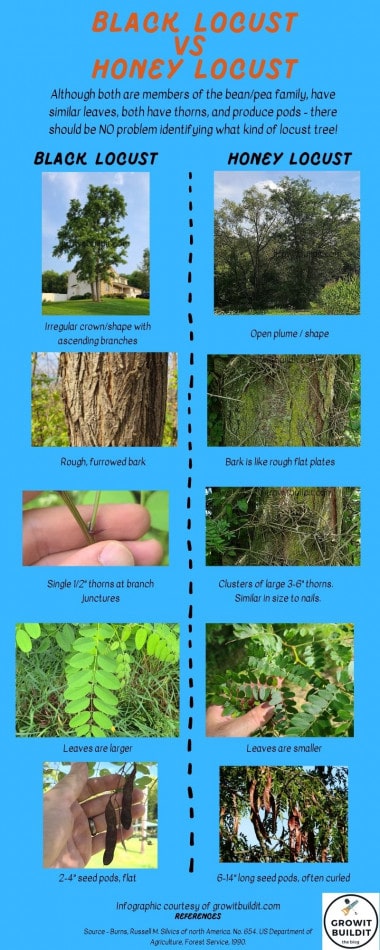

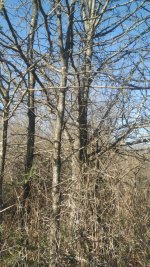
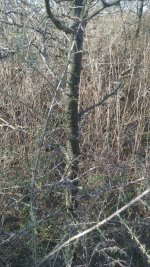
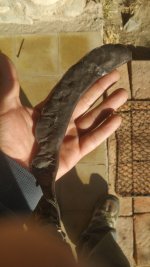

 ] Adding to that the lack of obvious spines and we've an even stronger case for it not being the target species. Sorry!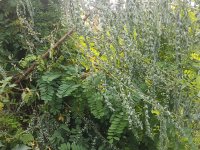
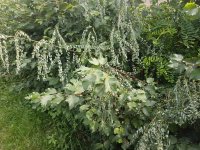
 but I think the spines and leaf shape say otherwise.)