• Members of the previous forum can retrieve their temporary password here, (login and check your PM).

Mesc types or stubborn contam

Migrated topic.

Phlux-

The Root
OG Pioneer
Joined
Jul 2, 2008
Messages
2,396
Merits
42
cactus extraction yeilded some acetate - this was cleaned up to hcl then re-x'd with heptane.
outcome - nice white powder - bitter as hell.
200mg yeilded - hrmm not much - feels like someones sitting on my chest, sedation, mild visuals, etc.
now this mesc was cleaned up well using various teks - is this a stubborn contam that has almost identical solubilities as mesc or does mesc actually somehow have various types ? dunno the correct way to express it chemically.
the xtals also look different - no nice fans like with mesc hcl usually.
 
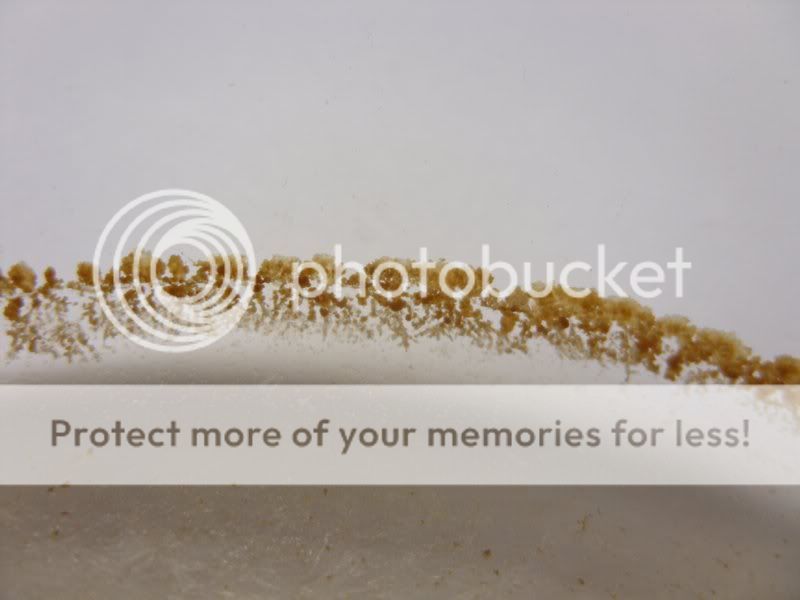
Phlux, did the hcl conversion and evap leave behind small balls of white powder clumnped together close to the edges of the dish by any chance?

SWIM notices this on every extraction, the white powder that accumulates doesnt form 'fans' like mesc as you noted, but once its crushed up it has the same color as Mescaline, it looks like a totally different alkaloid however, especially the way it evaporates, no crystal structure to speak of (at least not to the naked eye).
 
SWIM has not noticed this. His cleaned mescaline HCl looks very pure, producing a single crystal formation which under a microscope looks 100% pure. There's very light pinkish hue to it, but that's normal. The actual crystal structure seen lacks any deviations form the normal crystal structure. There's no other type of crystal present. So SWIM's is either 100% pure, or there are two alkaloids present with the same crystal structure.

Can you post a picture?
 
It has been proven there are at least two alkaloids present in peruvianus/panchanoi extracts in this THREAD, that can be separated by filtration when the N/P is gassed. The secondary alkaloid was bio assayed and gave sedative effects.
WR
 
i have eaten the alkaloids separately as well and my findings run parallell to what you have stated.
 
1 thing tho - each cactus has a different load of alkaloids, torch and macrogonus seem to have sedating secondary alkaloids, pedro seems to have a good few, often making up a large percent of the overall alkaloid profile.
Bridgesii has perhaps the largest amount of different non-mesc alkaloids, iv yet to work with brigesii so nothing to state there.
 
I have been working with powdered TBM on this method since Xmas and from what I can tell is there are at least three "other alkaloids" besides mescaline in TBM the least of which acts just like the sedating alkaloid/s from macro/peru and the others both are stimulants with maybe some empathogenic qualities. I do believe there is a MAOI like compound in bridgesii also but doubt it is an alkaloid.This is what spurred my original work on this, to retain all of the positive components while reducing the volume/impurites to a minimum without strong acids and bases which I believe destroy or do not extract the substances which are responsible for the synergy found in whole extracts.
Nice pictorial.
SB
 
quoting from - entheogen.com

T. bridgesii apparently contains Kaempferol and Quercetin, both said to be MAOI. I haven't explored this much but google "bridgesii MAOI".

read the link - its got some usefull info.
 
I have read this subject extensively and is the leading reason I am working on a whole extract via resin rather than a multi-solvent, step basification and extraction algorithym to attempt a complete alkaloid profile. I do not believe it is an alkaloid which is responsible for the activity level of TBM but perhaps the flavinoids or perhaps a saponin. I also believe the extreme Ph of a base to salt does not just ommit these from the extraction but destroys them.
This said bio-assay of pure mescaline sulphate with quercetin did not yield any potentiation. A second attempt will be made using a extract of Kaemphera galanga with the same dose followed by a mixed flavinoid attempt.
At this point however I am skeptical that these are the principles involved.
These flavinoids are ubiquitous in many foods as well as other species of Trichocereus which do not behave the way Tb does.IMO it is either a synergism of compounds or an as yet unknown potentiator. I am however hoping Kaempherol or Kaempherol+quercetin proves interesting as it would shed some light on the subject.
SB
 
These flavinoids are ubiquitous in many foods as well as other species of Trichocereus which do not behave the way Tb does.IMO it is either a synergism of compounds or an as yet unknown potentiator. I am however hoping Kaempherol or Kaempherol+quercetin proves interesting as it would shed some light on the subject.

Yup,that sums up more or less my opinion for the subject. If Kaempherol and quercetin where the sole principles wouldnt we be seeing lots of contradictions with food around? For example if i remember correctly onions are loaded with quercetin: wouldnt this pose trouble if an SSRI taking individual ate a good portion of onions? It would if it was a strong MAOI.

By the way ,have extractions of mescaline be done in Bridgesii? If so ,was the mescaline ield bigger than other cacti?That could be also a method to see if the active/potentiating principle is another substance apart from an alkaloid : it wouldnt follow the alkaloids to the last step, given that teks like those are geared to isolate alkaloids.If Bridgesii gives low amounts or normal amounts of mescaline in classic extraction methods then this would furthely support the notion of something else in there kicking the noches up a bit!

Is anyone aware of qualitative and quantitative analysis on that cacti?
 
okay so pix as promised - this is the sedating alkaloid - overpowers the mesc totally.
never seen such a lot of it get thru all the filtering etc.

SDC13812_800x600.jpg


SDC13810_800x600.jpg


SDC13813_800x600.jpg
 
Soxy bastard, you definitely have a point on the potential non-alkaloids of the cacti having effects. Calamus contains many active compounds that are mescaline related, none of which are alkaloids. An A/B on calamus would remove all the actives.
 
this is what made me think that the currents teks loose quite a bit.
tea from this one torch i have is incredible - totally heavily visual within 20 minutes of consuming it.
the full spectrum extract doesnt have this effect but does have a sedating effect.
i think perhaps the sedating effect is canceled out by one of the other alkaloids or non-alkaloids in the plant.
 
As soon as you do anything to the cacti, you've altered the chemical makeup of it. Just cutting open the cacti causes oxidation of many compounds in the cacti. Each tech is going to cause a different set of alterations to the active compounds.

One time, SWIM was extracting Pedro using the old resin tech (long ago before it was ever posted on the Nexus). He accidentally let the extract boil down too much and burnt all of it. He tried it anyway.

What he experienced from the burnt resin was a mini trip that was extremely visual. It peaked after about 20 minutes and lasted a total of about 30 minutes. The visuals were strong, very mescaline like, but were gone in a flash. It was definitely not mescaline. All the mescaline had burnt to a crisp, but something in the Pedro that was active remained.

I would LOVE to know what that alkaloid is. It would be fantastic to be able to isolate it. Perhaps the alkaloid was created by being burnt? I don't really know.

The cacti have lots of active compounds in them. Probably more than what we know.
 
Back
Top Bottom