nen888 said:
- there are also some reports of a "highly intoxicating lichen-fortefied beer from Siberia and Russia" using Lobaria (or Sticta) pulmonaria, some similar lichens (Sticta, Lobaria) from North America Great Lakes region (growing on maple or hemlock trees) edible, used as a soup or tonic..
.
This lichen is in Norwegian called lung-birch bark and is widely used against respitoryand slime related problems. It is not psychoactive alone. So have to be something in the process of making that beer that makes it active.
SKA said:
Thanks Hvalfangeren.
Can you give the source that mentions that Gymnocolea inflata ingestion produced these powerfull hallucinogenic effects?
Unfortunately I cannot see those pages. Also I cannot read Norwegian.
Luckily, after some googling for "Gymnocolea inflata" I found this Topic about it on Entheogen.com forums:
entheogen.com
No I do not have the source from that statement. Its ear-to-mouth: friend to professor to student, then posted on a Norwegian tripping forum (
www.norshroom.org), stayed there for 3-4 years and reposted here now. So the info is mythic in nature.
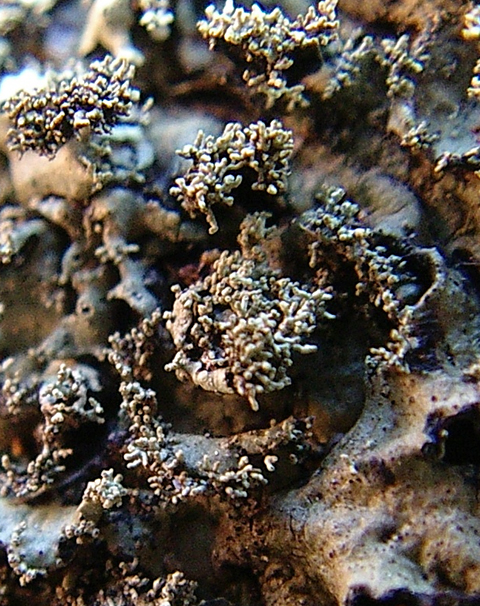
I have located and picked what Im pretty confident is the rumored "Iceland-moss" (Collema undulatum, fuscovirens, furfuraceum, crispum etc(?))and Im in the process of drying it. When timing is right I will consume it and at a later time smoke it.
I am pretty sure that the one Ive picked is Collema fuscovirens.
Its fairly easy to identify due to the slimy texture, the heart shape, the blackish to dark olive-green color and theres no known poisonous look-alikes to my knowledge. Identification info:
http://symbiota.org/nalichens/taxa/index.php?taxon=53520
The fact that theese lichens can occur blue, strengthens my belief that this is the rumored "magic lichen".
Will pick some fresh stones to bring home this weekend.
edit: found a Collea specie called occultatum. Occult Jelly lichen, grows on leaf trees... its on the Norwegian red-list.
I will also pick alot of different color variations from the Xanthaparmelia conspersa to test the various acids and theyre potancy;
2. (1) Marg K+ yellow–beige (fumarprotocetraracid) . . . . . 3. X. protomatrae
2. Marg K+ red (salazinacid) . . . . . 4. X. stenophylla
Marg K+ yellow–orange or red(stictinacid, ± norstictinacid) . . . .





 Trying to impede the flow of knowledge and information is unwise, as much as I feel for your curiosity. The spread of awareness will only cause you to seek even more details deeper into the unknown. Although it may not seem as easy at this time, this is a good thing. It's the only thing, really. :twisted: