• Members of the previous forum can retrieve their temporary password here, (login and check your PM).

Research The Acacia Analysis Thread

Research done by (or for) the DMT-Nexus community
Migrated topic.
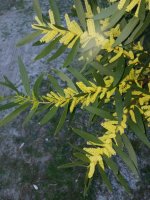
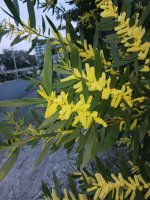
They are easily confused and used to be regarded as the same species.. I have a lot of trouble telling them apart. It was apparently initially thought to be a hybrid between retinodes and saligna.

Lucidcentral.org gives a useful distinction between retinodes, provincialis and uncifolia:

A member of the ‘Acacia microbotrya group’ most closely related to A. uncifolia and A. retinodes, differing from the latter in smooth, grey bark, often pruinose branchlets and phyllodes that are uncrowded on stems, more numerous flowers per head that are pale yellow to golden and broader pods
 
They are easily confused and used to be regarded as the same species.. I have a lot of trouble telling them apart. It was apparently initially thought to be a hybrid between retinodes and saligna.

Lucidcentral.org gives a useful distinction between retinodes, provincialis and uncifolia:
Thanks for the info buddy,

So are those 2 species very different as far as DMT content goes or is it worth a shot?

And how would you go about it i.e. grind up the twigs and do a tek as you would with MHRB, or is it a different process alltogether?
 
There was one promising test done on Acacia provincialis by the nexian yatiqiri..

From the Trying to improve Acacia info thread, nen888 wrote:

A. saligna (South Aus.,WA,Vic.,NSW,) ..was my ID for the tree first bio-assayed by yatiqiri a few months ago, and found to have interesting tryptamine-like entheogenic effects, with possibly other kinds of alkaloids .. the ID has been revised to A. provincialis (Victoria), once thought to be a hybrid of saligna & retinodes..average alkaloid content was around 0.5%(?), and may have varied between parts of plant.. thanks hebrew,wira for help with ID..

My thoughts are that these three species - being so closely related - probably share an overall similar chemical makeup.. meaning provincialis and uncifolia are good potential tryptamine candidates. This is also seen in the Cunningham group.. a botanically 'difficult' complex with very subtle taxonomic differences .. but of which the majority have had reports of tryptamines. Same with the longifolia clade.. they are all species which have had tryptamine findings, albeit some more consistent than others.

For a first test, maybe gather some phyllodes/twig and test each separately.. 100-200g will give an idea if there is anything worthwhile.
 
There was one promising test done on Acacia provincialis by the nexian yatiqiri..

From the Trying to improve Acacia info thread, nen888 wrote:


My thoughts are that these three species - being so closely related - probably share an overall similar chemical makeup.. meaning provincialis and uncifolia are good potential tryptamine candidates. This is also seen in the Cunningham group.. a botanically 'difficult' complex with very subtle taxonomic differences .. but of which the majority have had reports of tryptamines. Same with the longifolia clade.. they are all species which have had tryptamine findings, albeit some more consistent than others.

For a first test, maybe gather some phyllodes/twig and test each separately.. 100-200g will give an idea if there is anything worthwhile.
Sounds like a plan! Will do that the first chance I get!

Could you please clarify, do I need to chop up the whole twig and treat it the same way you would with MHRB?

And does it matter what time of the year you do the harvesting? I think I read somewhere that it's better during a dry spell?

Thanks again!
 
Time of year does seem to matter.. end of summer for many species is revered as a high tryptamine time. Same with winter. This is probably in correlation with flowering time. That said.. for testing, now is always a good time as your understanding of the species will become more nuanced.

For a quick test, oven drying material and then grinding to a fibre/powder will do fine :)
 
Last edited:
Time of year does seem to matter.. end of summer for many species is revered as a high tryptamine time. Same with winter. This is probably in correlation with flowering time. That said.. for testing, now is always a good time as your understanding of the species will become more nuanced.

For a quick test, oven drying material and then grinding to a fibre/powder will do fine :)
Super, many thanks mate, will definitely give this a try!
 
Good luck! And do post your results/method of extraction in the Acacia Extraction Workspace if you feel so inclined :)

Also, I forgot to add that with really small twig its not worth trying to peel the bark off, but for thicker stems it is a good idea so you have a better idea of the weight you are working with.. excess wood will dilute the weight and result in difficulty assessing yield. Bashing stems with a hammer will help free the bark off as long as it hasn't dried too much.

I recommend reading the Trying to improve Acacia information thread.. its over 100 pages long and is without a doubt one of the very best resources on alkaloids and Acacia. There is some good info on Acacia retinodes there. Just glossing over one of nen888's posts on retinodes I saw that the test in Germany found DMT, NMT and nicotine!
 
Good luck! And do post your results/method of extraction in the Acacia Extraction Workspace if you feel so inclined :)

Also, I forgot to add that with really small twig its not worth trying to peel the bark off, but for thicker stems it is a good idea so you have a better idea of the weight you are working with.. excess wood will dilute the weight and result in difficulty assessing yield. Bashing stems with a hammer will help free the bark off as long as it hasn't dried too much.

I recommend reading the Trying to improve Acacia information thread.. its over 100 pages long and is without a doubt one of the very best resources on alkaloids and Acacia. There is some good info on Acacia retinodes there. Just glossing over one of nen888's posts on retinodes I saw that the test in Germany found DMT, NMT and nicotine!
Hey buddy thanks again for all the useful info!

I just did a first test, and I wish I had read your post above beforehand as I could use that info regarding the twigs!

Should I target young grern twigs or older drier ones?

I'll go ahead and post in that section you recommend as I intend to make more tries, since the first tets was a failure.
 
Thanks for the info. It would be much more reliable if the same extraction method was used for all samples, and I believe HCL is preferable to vinegar for extraction efficiency, especially from dry material.

i've come to conclude that the presence of any other alkaloid in anything but trace amounts is usually not good, and species high in NMT will yield inferior product.
 
Hi guys, Ive only just found this forum recently and before I did I done an extraction on some root (Acasia Acuminata)
purchased on line here in Australia and used a method on Tiktock, lye water root bark and naphtha or shelite and freezer precipitation . I had some success I think as I produced some yellow waxy material that when taken using a $12 coil wax pen from Temu I think I was very close to breaking through amazing experience. On my property I have a couple of Acacia macradenia growing and upon inspection of the trees a large branch had broken off one . I did some investigation and could only find one reference that it may contain tryptamines, so using the say extraction process I ground some dried trunk bark and had what seems similar results in every respect as with Acuminata. the smoke isn't harsh at all. I know that extraction process isn't recommended and the open coil vape either, about to order a Yocan orbit after some research on here. Just thought someone may get some usfull info from this about using Acasia Macradena cheers
 
Hey Louie,

Glad you had a good experience with your acuminata extract.. it is a groovy tree indeed. STB extraction isn't known to work all that well with Acacia compared to A/B.. it might still work ok in some instances but for testing a new plant I'd suggest doing an A/B extraction. And absolutely avoid taking rootbark from wattles.. it will kill them. Hopefully the rootbark you bought was from farmed acuminata and not taken from wild populations. For this reason it is good to avoid bark vendors in Australia unless your sure of their harvest ethics.

Yeah I've not read any reports with Acacia macradenia.. if testing start with maybe 200g phyllodes/twig.. dry thoroughly and do an A/B extraction.

Also, for questions on extraction of acacia please post in the Acacia Extraction Workspace .. this thread is more dedicated to discussion/analysis of extracts. Its really starting to get a bit cluttered with all the questions about extracting from random species. The best resource for Acacia and their alkaloids is Trying to improve Acacia info .. I would suggest reading that. It is Acacia 101 and will likely answer most of your questions :)
 
Acacia leiocalyx

I have recently observed positive results from a.leiocalyx trunk bark.
Harvested material was selected from an adult tree which unfortunately met it's end last year during the storms. The bark was all from around the dead stump that was left after being cut down.

Just to reiterate, this bark was still attached to the stump (just) but had been out in the elements of the Qld weather for over 18 months. There was nothing 'fresh' about this material.


The process.


1st acid pull

250g of the bark was powdered using a shredder followed by Nutribullet to leave mostly dust and a bit of fibre.

100ml of white cooking vinegar added

1000ml distilled water added

Simmer for at least 1 hour

Drain and keep liquid.


2nd acid pull

Repeat steps as above


3rd acid pull

50ml vinegar added

500ml distilled water added

Simmer for at least 1 hour

Drain and keep liquid.


All saved liquids were combined and reduced down to 500ml, then allowed to cool.


Freebase conversion

60g of lye into 250ml of water, did not let it cool, add to reduced liquid.
No precipitation was visualised upon contact.
Pressure was monitored and vigorous shaking was performed, screw the emulsion I'll show it who's boss when/if it shows its ugly head.


Extraction

I managed to dig 250ml of shellite out of the shed in town.
Added it to the caustic soup.
The first Pressure peak will come after the naphtha is added so alot of care is needed.
Gentle rolls and tips with constant burping of the jar until pressure isn't of a concern.
Begin vigorous shaking. Have at it.

The jar was then added to a warm water bath probably around 60 Celsius.
Pressure again, be careful.

After settlement and more shaking about 5 times over the next 3 hours I removed the shellite and repeated extraction process 2 more times until I had produced about 600ml of alkaloid saturated naphtha.

Naphtha has turned almost flourescent yellow by this point.


Freeze participation will be performed on the collected sample.
Followed by possibly a heptane wash to clear any impurities.


Because I'm an impatient sod, A small amount of the saturated naphtha was evaporated on a mirror leaving behind a yellow gooey oil.
Smells like the universe.

I endeavour to keep you all posted on the future results.


So just to summarise whats planned and what to look for:

Freeze precip results
TLC results
Re-x/Heptane wash results
Bioassay
 
does anyone know what this tumors are on (suspected) maidenii/leiocalyx? located about an hour north of brisbane.

while they look kind of like termite/bug nests, i have harvested them before and its like, a tumor/wart made of the same material as what the soft outer part of the bark under the skin is made of. my extraction was a failure unfortunately, so i dont know what i had. or if anything was in them since i was inexperienced and followed a tek wrong.

So yeah, they are like just solid fresh bark (live and juicy) but many trees with much of them tent to be in poor health like the 1st pic, they are very common on dead trees and their presence is like tumors on animals that live to an old age. when they die they become very crumbly and at that point you would absolutely mistake it for some sort of termite-like mound made of wood pulp instead of something that grew to be that way.

Soon ill go around collecting samples to test for activity using colormetric reagents, ill also take some tumors to test independently as well, to see if they are also active, and, more or less so, but thats a ways off and i cant help but wonder what the heck they are

1741160291134.jpeg1741160256337.jpeg
 
They’re wasp galls.. acacias often get taken over by them and in extreme cases they will kill plants.

Apparently made from a mix of plant material and wasp saliva.

Hope you are staying safe with the weather up there @drpotato and @Ozzy_Chronik .. already feeling the winds down here.
 
They’re wasp galls.. acacias often get taken over by them and in extreme cases they will kill plants.

Apparently made from a mix of plant material and wasp saliva.

Hope you are staying safe with the weather up there @drpotato and @Ozzy_Chronik .. already feeling the winds down here.
so its like, an infection/wart sort of situation, ok.

Also, yeah, one upside is when the storm subsides i can pretty casually go do some nice sustainable harvesting
 
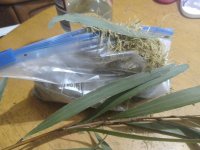
Hello, I shredded 86g ready for max ion tech. I have asked the spirits for a healthy yield.
 

Attachments

  • IMG_20250307_202554_HDR.jpg
    IMG_20250307_202554_HDR.jpg
    4.4 MB · Views: 9
Time of year does seem to matter.. end of summer for many species is revered as a high tryptamine time. Same with winter. This is probably in correlation with flowering time. That said.. for testing, now is always a good time as your understanding of the species will become more nuanced.

For a quick test, oven drying material and then grinding to a fibre/powder will do fine :)
this is something i have been wondering about, is it the case that DMT is higher during flowering? or just before/after?
I havent seen someone explicitly mention this, for vegetables at least flowering is not a great time for harvest, but this is a tree of course haha.

Fortunately at least, DMT is always there, just not as much or consistently all year round if you can ID the thing without the flowers.


Thanks to cyclone alfred theres a lot of acacias around here now which have snapped branches, so soon ill be collecting some samples to run colormetric testing on, and i get to benefit from this short term access to sustainable wood-bark.

Another question i have: for something like maidenii, or leiocalyx, or any others that are very similar in appearance and found in the same places, lets call them maidenii-like, low DMT content, and lots of fat, wax and resin, like acuminata on the opposite of steroids, what would be a good strategy for field-testing for whether a given tree is worth collecting from? ideally you dont want to spend time and resources processing empty leaf/bark but, you are taking from the tree too, if you can avoid a weaker / non active or lookalike that would be great. Has anyone developed a shortcut method to apply say, marquis reagent out in the field? i assume some degree of extraction is required before any DMT is concentrated and clean enough for the test to produce useful results.
Best i could think of was burning a small piece of bark or leaf in a test tube under hard vacuum since hand pumps can get small volumes easily down to about -700mmHg in my experience, and then testing that assuming a smell test at that point wasnt sufficient.
I accidentally distilled the DMT out of the collective toluene pulls from ACRB because the oil was so clear i didnt notice it getting thick and thought i could distill off more solvent before doing FASA. turned out i had a LOT of fats and other gunk there, or they held onto toluene really well, either way, it started smoking and later i collected 30mg of dmt from the toluene distillate. since i used a shortpath, i think i lost a lot as smoke in the time i had my back turned, the worst kind of condenser for entraining smoke.

 
what would be a good strategy for field-testing for whether a given tree is worth collecting from?

I saw some blue's and dark purple's on an unknown Acacia, nothing extracted from the green leaves.
I debarked everything that had color and shredded in a coffee grinder.
Its been soaking in a caustic soda solution for 2 days now out in the sun, just busy with other stuff and then I'll get round to nps and freeze precip.
 
oh right i forgot about that. i literally posted to that thread.
so. is that pretty reliable/consistent, that it will fluoresce if theres *any* DMT in the bark?
Since i dont have a known sample to test i dont know exactly how bright it should glow, like, at point blank would i see it in daytime, or is it a dull glow you can see in a dark room?
Sadly i tried shining the light on my accuminata bark powder, but i could not observe anything at all, other than a small amount of lighter material that was obviously just light colored wood, i know its not the same but, still disappointed my actual sample didnt work. I have also tested this on p. aquatica in the past, no effect either.
but, i guess either way theres nothing left for me to do but test some nearby trees with a file and my UV light
 
Back
Top Bottom