1. Background
This report presents the second bioassay of one of two selected Type I (DMT-dominant) clones derived from our F1 hybrid population and compares the findings with those obtained from the initial harvest.
Our previous report describing the first bioassay of these two selected clones can be found here: First Bioassay Report:
Another aquatica DMT clone
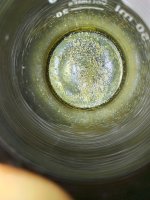
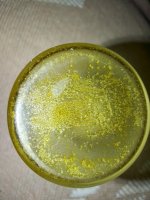
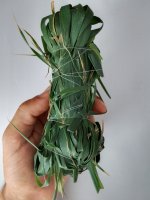
8.5g fresh leaf dried to 2g using a moisture analyzer. Acid base extracted with chloroform yielded 18mg crude freebase.
Bioassay proved the same as DMT extracted from MHRB.
During the initial harvest, a combined sample of both clones yielded 18 mg of crude freebase from 2.0 g dry leaf material (0.9% crude yield). Bioassay indicated subjective effects that were qualitatively and quantitatively consistent with those expected from reference DMT. TLC analysis of the combined extract further indicated a clean Type I (DMT-dominant) chromatographic profile.
The present report documents observations from a subsequent regrowth harvest. Of particular interest, the current harvest produced a markedly different subjective dose-response while retaining the characteristic qualitative profile associated with DMT. To our knowledge, this represents the first such observation within our breeding programme. As chromatographic analysis of the present harvest has not yet been completed, these findings are presented as preliminary observations intended to guide further analytical investigation.
2. Plant Material and Cultivation
2.1 Plant History
The two selected clones were originally maintained in the breeding plot and later transplanted together into a single container during early summer. The first bioassay was performed shortly after transplantation while both plants were recovering from prolonged drought, high summer temperatures, and transplant stress.
Following establishment in the container, both clones received regular irrigation and fertilization to encourage vegetative regrowth prior to the present harvest.
2.2 Differential Growth Response
Despite being maintained under identical cultivation conditions, the two clones exhibited markedly different responses during midsummer.
One clone resumed vigorous vegetative growth and produced sufficient biomass for harvest. In contrast, the second clone the higher-yielding individual identified during the previous TLC analysis produced very little vegetative regrowth despite regular watering and instead devoted nearly all new growth toward flowering.
Consequently, the present report concerns only the vigorously regenerating clone.
The contrasting developmental responses observed under identical environmental conditions further emphasize the phenotypic diversity retained within this breedline and identify additional traits that may prove valuable during future selection.
Controlled Pollination
The two clones were intentionally maintained together to facilitate cross-pollination.
This pairing successfully produced 70 seeds, which are scheduled for germination during the coming autumn selection cycle. Both parental clones will also be maintained through continued vegetative propagation in order to preserve their genetics for future breeding work.
3. Harvest and Extraction
First Harvest (Combined Clones)
- Fresh weight: 8 g
- Dry weight: 2.0 g
- Crude freebase: 18 mg
- Crude yield: 0.90%
Second Harvest (Single Clone)
- Fresh weight: 64 g
- Dry weight: 14.14 g
- Crude freebase: 51 mg
- Crude yield: 0.36%
Extraction was performed using the same acid-base procedure employed in the previous report, utilizing sodium hydroxide for basification and chloroform as the non-polar extraction solvent. Identical extraction methodology was maintained to maximize comparability between harvests. All bioassays reported herein were conducted by vaporization of the isolated crude freebase extract.
The previous combined harvest was analyzed by TLC and displayed a clean Type I chromatographic profile. TLC analysis of the present harvest has not yet been completed and will be reported separately.
Based on the extraction yield obtained from the second harvest (51 mg crude freebase from 14.14 g dry leaf), the 2 mg bioassay dose corresponds to approximately
0.55 g dried leaf equivalent, while the 4 mg dose corresponds to approximately
1.11 g dried leaf equivalent.
4. Bioassay Observations
Bioassay of the second harvest produced a subjective response that differed substantially from the first harvest.
A 2 mg dose produced effects subjectively comparable to approximately 8 mg of reference DMT, while a 4 mg dose produced effects roughly comparable to approximately 15 mg of reference DMT. These observations suggest a substantially greater apparent potency on a per-milligram basis than was observed during the initial bioassay.
Qualitatively, however, the character of the experience remained consistent with that expected from DMT. Visual phenomena were comparable in nature, while the progression of the experience appeared somewhat slower and subjectively easier to navigate. The overall character was experienced as calmer, more meditative, and less chaotic than typical reference DMT.
It is important to emphasize that these observations are based solely on subjective bioassay. The chemical basis for the altered dose-response remains unknown pending chromatographic characterization of the current harvest.
5. Comparison with the Initial Harvest
The first bioassay consisted of a combined harvest from both selected clones and produced subjective effects consistent with reference DMT in both qualitative character and apparent dose-response.
The present bioassay differs in two important respects.
First, the material originated exclusively from the actively regenerating clone, as the second clone produced insufficient vegetative growth for harvest.
Second, despite producing a substantially lower crude extraction yield (0.36% versus 0.90%), the extract exhibited a markedly greater apparent potency during informal bioassay.
At present, no conclusions can be drawn regarding the chemical basis for this observation.
6. Data Summary
First Bioassay (Combined Harvest)
Fresh weight: 8 g
Dry weight: 2.0 g
Crude freebase: 18 mg
Crude yield Growing conditions: In-ground, drought-stressed
TLC: Clean Type I (DMT-dominant) profile
Subjective potency: Comparable to reference DMT
Second Bioassay (Single Clone)
Fresh weight: 64 g
Dry weight: 14.14 g
Crude freebase: 51 mg
Crude yield: 0.36%
Growing conditions: Container-grown, irrigated and fertilized
TLC: Pending
Subjective potency: Apparent increase relative to reference DMT during informal bioassay
7. Discussion
The altered subjective dose-response observed in the second harvest was unexpected, particularly given the lower crude extraction yield.
Several explanations remain possible, including seasonal influences, physiological changes associated with regrowth, differences in alkaloid composition, variation in relative concentrations of minor constituents, or clone-specific biochemical responses following transplantation and renewed growth.
At present, no single explanation can be favored. Completion of TLC analysis will provide an initial comparison with the previous harvest.
To our knowledge, no previous Type I clone evaluated within this breeding programme has produced extracts exhibiting this degree of apparent increase in subjective potency while retaining the characteristic qualitative profile associated with reference DMT.
8. Conclusion
This second bioassay documents a previously unobserved phenomenon within our breeding programme.
A selected Type I clone produced extract that retained the characteristic qualitative profile associated with DMT while displaying a markedly different subjective dose-response compared with previous Type I selections.
At present these observations should be regarded as preliminary pending chromatographic analysis of the current harvest. Nevertheless, together with the contrasting developmental responses observed between the two parent clones under identical cultivation conditions, these findings further illustrate the considerable phenotypic diversity retained within this breedline and provide additional directions for future selection and chemical characterization.
9. Community Discussion
Feedback and discussion are welcomed, particularly regarding:
Possible explanations for the altered subjective dose-response.
Seasonal or developmental influences on alkaloid composition in Phalaris.
Comparable observations from repeated harvests of genetically identical material.
Suggestions for analytical approaches that may help characterize the present harvest.




 www.frontiersin.org