

-
Members of the previous forum can retrieve their temporary password here, (login and check your PM).
You are using an out of date browser. It may not display this or other websites correctly.
You should upgrade or use an alternative browser.
You should upgrade or use an alternative browser.
Research Acacia floribunda - Workspace and information
- Thread starter acacian
- Start date
Research done by (or for) the DMT-Nexus community
Migrated topic.

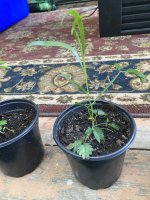

Awesome Jamie! Do you know if is an active strain?
I was told the seeds came from an active tree so I assume yes.

Heat wave scorched one of my trees. Too many days of sudden intense UV/heat I guess. My greenhouse is covered in pollen and I think it’s filtering the light as well so when I moved the cacti and other stuff out to the yard this year I could tell it was a shock even though the greenhouse gets full sun all day. These trees are small still but they spent an entire winter outside in the PNW so that’s something.
Out of the 4 I have one was totally fine with it so maybe that’s the one that will do well here. Still have a bunch of cool acacia seed to grow out gifted like a dozen years ago so thanks for that if your reading this. Maybe someday a floribunda can go in the ground here. Mimosa hostilis on the other hand suffered winter elimination so if you have them in the PNW protect them in winter lol.
Out of the 4 I have one was totally fine with it so maybe that’s the one that will do well here. Still have a bunch of cool acacia seed to grow out gifted like a dozen years ago so thanks for that if your reading this. Maybe someday a floribunda can go in the ground here. Mimosa hostilis on the other hand suffered winter elimination so if you have them in the PNW protect them in winter lol.
Attachments
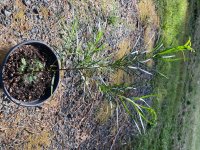
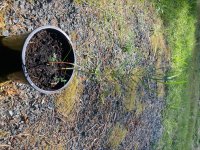
The first pic is the healthy tree that survived the heat/sun. Second is the worst of the 4. I think they will recover in the shade

I notice all my acacias become significantly stronger and resilient when they are planted in the ground. I'm in their native climate but I would bet the healthy floribunda would be okay if planted outside next spring. Not sure if that's an option for you but they really don't seem to respond well to root boundness ime. Only thing in what I imagine of a PNW climate is just making sure to plant in a more free draining area. Floribundas are hardy beasts though.
I 100% agree.. going in the ground lets the tap root search for water deeper down.. that said.. there can be complications going in the ground too.. I’ve watched my fav floribunda deteriorate in health the past few years being right next to a massive bay leaf tree.. the others are doing well.I notice all my acacias become significantly stronger and resilient when they are planted in the ground. I'm in their native climate but I would bet the healthy floribunda would be okay if planted outside next spring. Not sure if that's an option for you but they really don't seem to respond well to root boundness ime. Only thing in what I imagine of a PNW climate is just making sure to plant in a more free draining area. Floribundas are hardy beasts though.
@Jamie01 the ones you have left are looking very happy. Lovely soft dark green foliage! With the eastern active species my observation is that a nice loose organic mix seems to do them well.. heavy clay and sedimentary soils are a little tricker.. I’m on a mix of clay and basalt here and only a few of my acacias are thriving.. the rest are coping. Surprisingly phlebophylla is one of the happier of the bunch which is a huge surprise to me.. the happiest is by far Acacia cardiophylla and certain floribunda.. three are happy one is not.. the one that isn’t is next to the bay tree. Maybe too much acidity maybe root competition ..
I’m at a valley bottom just above sea level with like 4 different mountains rising around us and ocean is across the road so when the winter rains start here this is where water tends to go so the soil here can just soak for months( rainforest).
I’d like to build a berm that drains fast that I can plant some stuff in here but also I don’t own the land. No plan to move atm but still I’d be digging stuff up at some point I guess.
Just a small update which was quite interesting, I am currently growing 3 forms of floribunda in my garden. Three 'white willow', and two other willow forms... one grown from seed collected in Victoria, the other from near the NSW/QLD border. They're all willowy but the one I call 'white willow' has paler and looser flowers than the others and even more pendulous a habit. These days I use the term white willow interchangeably to mean the active form of floribunda with broader phyllodes/pendulous habit.
Anyways .. for this update I'm going to distinguish between the three forms I have as I had some interesting observations during flowering. So the specimen grown from the seed of the original white willow specimen has retained the looser, longer and paler flowers; while the other one that flowered has kept the tighter flowers.. it is still reasonably pale too. Obviously growing plants from seed won't guarantee true to type characteristics; one of my white willow has grown more more erect than it's mother plant, however the flower style translating through the seed was interesting. The Border ranges specimen flowered with the same tighter flowers as the normal willow specimen. I can't remember what the flowers were like on the particular specimen I got the seed from.. there are three patches I've worked with up there and have only seen one freshly in flower.
Anyways .. for this update I'm going to distinguish between the three forms I have as I had some interesting observations during flowering. So the specimen grown from the seed of the original white willow specimen has retained the looser, longer and paler flowers; while the other one that flowered has kept the tighter flowers.. it is still reasonably pale too. Obviously growing plants from seed won't guarantee true to type characteristics; one of my white willow has grown more more erect than it's mother plant, however the flower style translating through the seed was interesting. The Border ranges specimen flowered with the same tighter flowers as the normal willow specimen. I can't remember what the flowers were like on the particular specimen I got the seed from.. there are three patches I've worked with up there and have only seen one freshly in flower.
Yeah floribunda always has needly phyllodes when younger.. then you'll see the phenotype come through as it ages. Sorry about your dead plant.. I just lost my maidenii from the drought. We're going into a super el nino here apparently. Floribunda isn't bothered by the dry or the cold generally.. although when they're young most acacias will be a bit frost sensitive.Interesting observations @acacian. I have one 'white willow' and one 'small seed' growing. My NSW/QLD border died from transplant shock. No flowers on mine yet but next season they should be good to go. Both varieties have distinctly narrow phyllodes.

Hi everyone,
Many moons ago I tried my hand at some alchemy using Acacia Floribuna. Mildly successful however during bio essay I only got to visit the waiting room. I was informed there that I was not ready and to come back later.
Humbling moment.
Much learning later, I return here to see what there is to be found.
I was walking and stumbled on this tree that asked me to do some blood tests.
Samples currently drying for 2 weeks. Ready to go.
Any tips on the testing methods to yield something.
So did the extract from those previous attempts turn out to be active? Was the waiting room experience from that same batch? Standard A/B works fine for floribunda.. I prefer to use a non selective solvent for it such as DCM, toluene or xylene. Naptha (sold as Shellite) in Australia is generally very poor quality for DMT extraction so I would not bother using it. It often leaves residues and absorbs water from the extraction which ends up in the extract at the end.
For acacia phyllode prolonged boiling helps break down the chlorophyll which makes the rest of the extraction more straightforward.
A quick A/B with 2-3 x 30min boils will be sufficient to get an idea of it is an active variety worth pursuing further. As a number of us have detailed in the thread, there are some commonly encountered characteristics of the active vs the inactive varieties. Once you have established if it has DMT you can tweak your extraction.. for twig, stem and branch bark I prefer to soak in ethanol instead of boiling. For phyllodes boiling works best due to chlorophyll content. Thorough filtration will also make for a smoother process.
As far as the extract is concerned, vaporization technique is particularly important with this species .. extracts can be a little finicky to efficiently vaporize and don’t vaporize as quickly as cleaner DMT extracts. I find phyllode extracts of floribunda generally a fair bit weaker than bark extracts and tend to taste a little bitter.
My observation is that floribunda extracts can take longer to vaporize and require more exposure to heat. A few times now I’ve given friends a good dose of floribunda extract and they have not managed to get much vapor out of it; resulting in minimal effects. I’ve then gone on to have the leftovers from their hit and suddenly the pipe has filled with plumes of vapor and I’ve almost broken through by accident. I essentially got their whole hit. It seems there is something among the alkaloids that takes a while to break down with heat so sometimes a number of tokes on the pipe are required for it to start vaporizing. I believe it is the same substance causing this issue that makes the extracts so sticky and difficult to crystalize. @nen888 has hypothesized that this is likely fatty acids creating a matrix with the alkaloids.. I’ve not figured out an effective way to separate them. Multiple defats doesn’t work.
I have given all of my floribunda ‘white willow’ plants a good prune recently so have a couple hundred or so grams of phyllodes/twig to test. They are around three years of age .. hopefully they are producing alkaloids now. I believe that tests over the coming years will reveal whether alkaloid activity in floribunda is due to environmental or genetic factors.. or both? The seed I grew them from was harvested from DMT containing specimens that I worked with extensively. The parent trees reliably contained tryptamines so it will be very interesting to finally conclude whether there is such a thing as a DMT containing variety or whether the species becomes active under certain environmental conditions. They aren’t old enough yet to draw any solid conclusions so a number of tests will be conducted as they continue to age.
All the best with your test.
Last edited:
Thank you so much for your detailed reply.So did the extract from those previous attempts turn out to be active? Was the waiting room experience from that same batch? Standard A/B works fine for floribunda.. I prefer to use a non selective solvent for it such as DCM, toluene or xylene. Naptha (sold as Shellite) in Australia is generally very poor quality for DMT extraction so I would not bother using it. It often leaves residues and absorbs water from the extraction which ends up in the extract at the end.
For acacia phyllode prolonged boiling helps break down the chlorophyll which makes the rest of the extraction more straightforward.
A quick A/B with 2-3 x 30min boils will be sufficient to get an idea of it is an active variety worth pursuing further. As a number of us have detailed in the thread, there are some commonly encountered characteristics of the active vs the inactive varieties. Once you have established if it has DMT you can tweak your extraction.. for twig, stem and branch bark I prefer to soak in ethanol instead of boiling. For phyllodes boiling works best due to chlorophyll content. Thorough filtration will also make for a smoother process.
As far as the extract is concerned, vaporization technique is particularly important with this species .. extracts can be a little finicky to efficiently vaporize and don’t vaporize as quickly as cleaner DMT extracts. I find phyllode extracts of floribunda generally a fair bit weaker than bark extracts and tend to taste a little bitter.
My observation is that floribunda extracts can take longer to vaporize and require more exposure to heat. A few times now I’ve given friends a good dose of floribunda extract and they have not managed to get much vapor out of it; resulting in minimal effects. I’ve then gone on to have the leftovers from their hit and suddenly the pipe has filled with plumes of vapor and I’ve almost broken through by accident. I essentially got their whole hit. It seems there is something among the alkaloids that takes a while to break down with heat so sometimes a number of tokes on the pipe are required for it to start vaporizing. I believe it is the same substance causing this issue that makes the extracts so sticky and difficult to crystalize. @nen888 has hypothesized that this is likely fatty acids creating a matrix with the alkaloids.. I’ve not figured out an effective way to separate them. Multiple defats doesn’t work.
I have given all of my floribunda ‘white willow’ plants a good prune recently so have a couple hundred or so grams of phyllodes/twig to test. They are around three years of age .. hopefully they are producing alkaloids now. I believe that tests over the coming years will reveal whether alkaloid activity in floribunda is due to environmental or genetic factors.. or both? The seed I grew them from was harvested from DMT containing specimens that I worked with extensively. The parent trees reliably contained tryptamines so it will be very interesting to finally conclude whether there is such a thing as a DMT containing variety or whether the species becomes active under certain environmental conditions. They aren’t old enough yet to draw any solid conclusions so a number of tests will be conducted as they continue to age.
All the best with your test.
I tried only once and got to a state with fully immersive closed eye visuals. Open eyes gave weird contrast to straight edges and walls. It was here a voice told me I should stop, that I was not ready for the next step yet. It was said in a kind way but with authority. I would consider that active.
I have a Storz and Bickel Mighty so I will be able to do some good data collection on temps and dosage. But first I need to do some cooking.
Really appreciate the tips. I will be starting today and hope to have results back soon.
Have a great day!
Do you have a good step by step for the A/B? I have both Shellite and Xylene but i have only used shellite before. Anything to know about Xylene?So did the extract from those previous attempts turn out to be active? Was the waiting room experience from that same batch? Standard A/B works fine for floribunda.. I prefer to use a non selective solvent for it such as DCM, toluene or xylene. Naptha (sold as Shellite) in Australia is generally very poor quality for DMT extraction so I would not bother using it. It often leaves residues and absorbs water from the extraction which ends up in the extract at the end.
For acacia phyllode prolonged boiling helps break down the chlorophyll which makes the rest of the extraction more straightforward.
A quick A/B with 2-3 x 30min boils will be sufficient to get an idea of it is an active variety worth pursuing further. As a number of us have detailed in the thread, there are some commonly encountered characteristics of the active vs the inactive varieties. Once you have established if it has DMT you can tweak your extraction.. for twig, stem and branch bark I prefer to soak in ethanol instead of boiling. For phyllodes boiling works best due to chlorophyll content. Thorough filtration will also make for a smoother process.
As far as the extract is concerned, vaporization technique is particularly important with this species .. extracts can be a little finicky to efficiently vaporize and don’t vaporize as quickly as cleaner DMT extracts. I find phyllode extracts of floribunda generally a fair bit weaker than bark extracts and tend to taste a little bitter.
My observation is that floribunda extracts can take longer to vaporize and require more exposure to heat. A few times now I’ve given friends a good dose of floribunda extract and they have not managed to get much vapor out of it; resulting in minimal effects. I’ve then gone on to have the leftovers from their hit and suddenly the pipe has filled with plumes of vapor and I’ve almost broken through by accident. I essentially got their whole hit. It seems there is something among the alkaloids that takes a while to break down with heat so sometimes a number of tokes on the pipe are required for it to start vaporizing. I believe it is the same substance causing this issue that makes the extracts so sticky and difficult to crystalize. @nen888 has hypothesized that this is likely fatty acids creating a matrix with the alkaloids.. I’ve not figured out an effective way to separate them. Multiple defats doesn’t work.
I have given all of my floribunda ‘white willow’ plants a good prune recently so have a couple hundred or so grams of phyllodes/twig to test. They are around three years of age .. hopefully they are producing alkaloids now. I believe that tests over the coming years will reveal whether alkaloid activity in floribunda is due to environmental or genetic factors.. or both? The seed I grew them from was harvested from DMT containing specimens that I worked with extensively. The parent trees reliably contained tryptamines so it will be very interesting to finally conclude whether there is such a thing as a DMT containing variety or whether the species becomes active under certain environmental conditions. They aren’t old enough yet to draw any solid conclusions so a number of tests will be conducted as they continue to age.
All the best with your test.
Similar threads

- Replies
- 5
- Views
- 248
- Replies
- 0
- Views
- 650
- Replies
- 6
- Views
- 2K
- Replies
- 15
- Views
- 2K
- Replies
- 0
- Views
- 683