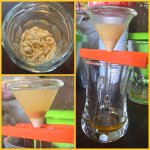
Yes I think that would be the better option for oral consumption, but for smoalking It's maybe better to minimize the water content to reduce the solubility of contaminants, like calcium hydroxide for example, it is slightly soluble in water but not in ethanol. If there's a way to reliably clean it later (without NPS), then starting with 40% would be good, as I believe the cleaning steps would be required in either case.40% is apparently the optimal concentration for tannin precipitation. Why not start directly with a 40% ethanol solution instead? As water is a good solvent too.
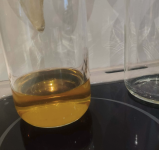
For the second batch which I would like to use for changa I did not use acetic acid so the main contaminants should be calcium carbonate and calcium tannate, these are insoluble in ethanol and do not gel up like calcium acetate but they are very fine particles, so I am hoping with patience and filtering I will remove the majority of them.I'm sure Transform will be able to advise you about how to proceed, and about any potential dangers of calcium acetate. While I'm sure it's not too healthy to smoke, smoking anything by combustion is unhealthy. So my concern would be if it's particularly worse than smoking the compounds found in typical changa plants.
Here's the concise LLM output for reference
I feel mostly concerned about the calcium oxide formation which might occur as the temperature at the tip of a cigarette for example can reach 900 °C. And also about the PM.Risks of smoking substances containing CaCO₃ or Ca-tannate:
- Formation of caustic calcium oxide (irritates and burns lungs/throat)
- Respiratory irritation from fine particulate matter
- Release of CO₂ reducing oxygen intake
- Toxic organic vapors from tannate decomposition (phenols, catechols)
- Chemical burns to mucous membranes
- Unknown impurities or untested combustion products → potential toxic exposure
Maybe most of the stuff will remain as ash if smoalked in a joint that it wouldn't be a major concern comapred to what you said about smoking anything in general.