• Members of the previous forum can retrieve their temporary password here, (login and check your PM).

Research The nexian phalaris breeding programme

Research done by (or for) the DMT-Nexus community
If coumarin and coumarin derivatives are common in poacea and extractable in a crude acid base like in the TLC protocol shouldn't we be seeing it very often in most phalaris samples? Why is it a rare occurrence?

 
If coumarin and coumarin derivatives are common in poacea and extractable in a crude acid base like in the TLC protocol shouldn't we be seeing it very often in most phalaris samples? Why is it a rare occurrence?
Common but not ubiquitous, perhaps? Their presence in other grasses serves as an indicator of plausibility, not a guarantee that my suggestion is correct. Only a definitive form of chemical analysis would settle this question.
 
If coumarin and coumarin derivatives are common in poacea and extractable in a crude acid base like in the TLC protocol shouldn't we be seeing it very often in most phalaris samples? Why is it a rare occurrence?
(other paper is included as attachement)

It's hard to find any evidence supporting that coumarins are common in grasses. There are a few notable species like Hierochloe odorata and Anthoxanthum odoratum that are grasses. Those seem to an exception to the rule. That being said, phylogenetically they are not that far seperated from phalaris, they all belong to the subfamily pooideae, and they are found in the same sister clade "Poeae chloroplast group 1" according to this paper. But how they exactly are related is unclear. Other members of the highlighted clade have no evidence for containing coumarins.

UPDATE: After looking for more, I found that there is evidence that Avena sativa aka oats contains a coumarin called scopletin. Its in the same sister clade.

That being said, It could surely be possible. It's fluorescence is described as being very bright. So even if a little amount makes it through your mostly alkaloid specific separation method, you could see it. I wonder if the color would be the exact same though.
 

Attachments

‎‎

Second Bioassay Report of a Type I Phalaris Clone Following Regrowth Under Controlled Cultivation


1. Background

‎This report presents the second bioassay of one of two selected Type I (DMT-dominant) clones derived from our F1 hybrid population and compares the findings with those obtained from the initial harvest.

‎Our previous report describing the first bioassay of these two selected clones can be found here: First Bioassay Report:


‎During the initial harvest, a combined sample of both clones yielded 18 mg of crude freebase from 2.0 g dry leaf material (0.9% crude yield). Bioassay indicated subjective effects that were qualitatively and quantitatively consistent with those expected from reference DMT. TLC analysis of the combined extract further indicated a clean Type I (DMT-dominant) chromatographic profile.


‎The present report documents observations from a subsequent regrowth harvest. Of particular interest, the current harvest produced a markedly different subjective dose-response while retaining the characteristic qualitative profile associated with DMT. To our knowledge, this represents the first such observation within our breeding programme. As chromatographic analysis of the present harvest has not yet been completed, these findings are presented as preliminary observations intended to guide further analytical investigation.


2. Plant Material and Cultivation


2.1 Plant History

‎The two selected clones were originally maintained in the breeding plot and later transplanted together into a single container during early summer. The first bioassay was performed shortly after transplantation while both plants were recovering from prolonged drought, high summer temperatures, and transplant stress.

‎Following establishment in the container, both clones received regular irrigation and fertilization to encourage vegetative regrowth prior to the present harvest.


2.2 Differential Growth Response

‎Despite being maintained under identical cultivation conditions, the two clones exhibited markedly different responses during midsummer.

‎One clone resumed vigorous vegetative growth and produced sufficient biomass for harvest. In contrast, the second clone the higher-yielding individual identified during the previous TLC analysis produced very little vegetative regrowth despite regular watering and instead devoted nearly all new growth toward flowering.

‎Consequently, the present report concerns only the vigorously regenerating clone.

‎The contrasting developmental responses observed under identical environmental conditions further emphasize the phenotypic diversity retained within this breedline and identify additional traits that may prove valuable during future selection.

‎Controlled Pollination

‎The two clones were intentionally maintained together to facilitate cross-pollination.

‎This pairing successfully produced 70 seeds, which are scheduled for germination during the coming autumn selection cycle. Both parental clones will also be maintained through continued vegetative propagation in order to preserve their genetics for future breeding work.


3. Harvest and Extraction


‎First Harvest (Combined Clones)

  • ‎Fresh weight: 8 g
  • ‎Dry weight: 2.0 g
  • ‎Crude freebase: 18 mg
  • ‎Crude yield: 0.90%

‎Second Harvest (Single Clone)

  • ‎Fresh weight: 64 g
  • ‎Dry weight: 14.14 g
  • ‎Crude freebase: 51 mg
  • ‎Crude yield: 0.36%


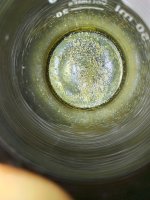
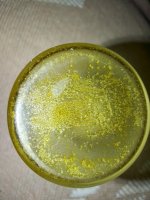
‎Extraction was performed using the same acid-base procedure employed in the previous report, utilizing sodium hydroxide for basification and chloroform as the non-polar extraction solvent. Identical extraction methodology was maintained to maximize comparability between harvests. All bioassays reported herein were conducted by vaporization of the isolated crude freebase extract.


‎The previous combined harvest was analyzed by TLC and displayed a clean Type I chromatographic profile. TLC analysis of the present harvest has not yet been completed and will be reported separately.

‎Based on the extraction yield obtained from the second harvest (51 mg crude freebase from 14.14 g dry leaf), the 2 mg bioassay dose corresponds to approximately 0.55 g dried leaf equivalent, while the 4 mg dose corresponds to approximately 1.11 g dried leaf equivalent.


4. Bioassay Observations

‎Bioassay of the second harvest produced a subjective response that differed substantially from the first harvest.

‎A 2 mg dose produced effects subjectively comparable to approximately 8 mg of reference DMT, while a 4 mg dose produced effects roughly comparable to approximately 15 mg of reference DMT. These observations suggest a substantially greater apparent potency on a per-milligram basis than was observed during the initial bioassay.

‎Qualitatively, however, the character of the experience remained consistent with that expected from DMT. Visual phenomena were comparable in nature, while the progression of the experience appeared somewhat slower and subjectively easier to navigate. The overall character was experienced as calmer, more meditative, and less chaotic than typical reference DMT.

‎It is important to emphasize that these observations are based solely on subjective bioassay. The chemical basis for the altered dose-response remains unknown pending chromatographic characterization of the current harvest.


5. Comparison with the Initial Harvest

‎The first bioassay consisted of a combined harvest from both selected clones and produced subjective effects consistent with reference DMT in both qualitative character and apparent dose-response.

‎The present bioassay differs in two important respects.

‎First, the material originated exclusively from the actively regenerating clone, as the second clone produced insufficient vegetative growth for harvest.

‎Second, despite producing a substantially lower crude extraction yield (0.36% versus 0.90%), the extract exhibited a markedly greater apparent potency during informal bioassay.

‎At present, no conclusions can be drawn regarding the chemical basis for this observation.


6. Data Summary

‎First Bioassay (Combined Harvest)

‎Fresh weight: 8 g
‎Dry weight: 2.0 g
‎Crude freebase: 18 mg
‎Crude yield Growing conditions: In-ground, drought-stressed
‎TLC: Clean Type I (DMT-dominant) profile
‎Subjective potency: Comparable to reference DMT

‎Second Bioassay (Single Clone)

‎Fresh weight: 64 g
‎Dry weight: 14.14 g
‎Crude freebase: 51 mg
‎Crude yield: 0.36%
‎Growing conditions: Container-grown, irrigated and fertilized
‎TLC: Pending
‎Subjective potency: Apparent increase relative to reference DMT during informal bioassay


7. Discussion

‎The altered subjective dose-response observed in the second harvest was unexpected, particularly given the lower crude extraction yield.

‎Several explanations remain possible, including seasonal influences, physiological changes associated with regrowth, differences in alkaloid composition, variation in relative concentrations of minor constituents, or clone-specific biochemical responses following transplantation and renewed growth.

‎At present, no single explanation can be favored. Completion of TLC analysis will provide an initial comparison with the previous harvest.

‎To our knowledge, no previous Type I clone evaluated within this breeding programme has produced extracts exhibiting this degree of apparent increase in subjective potency while retaining the characteristic qualitative profile associated with reference DMT.


8. Conclusion

‎This second bioassay documents a previously unobserved phenomenon within our breeding programme.

‎A selected Type I clone produced extract that retained the characteristic qualitative profile associated with DMT while displaying a markedly different subjective dose-response compared with previous Type I selections.

‎At present these observations should be regarded as preliminary pending chromatographic analysis of the current harvest. Nevertheless, together with the contrasting developmental responses observed between the two parent clones under identical cultivation conditions, these findings further illustrate the considerable phenotypic diversity retained within this breedline and provide additional directions for future selection and chemical characterization.


9. Community Discussion

‎Feedback and discussion are welcomed, particularly regarding:

‎Possible explanations for the altered subjective dose-response.
‎Seasonal or developmental influences on alkaloid composition in Phalaris.
‎Comparable observations from repeated harvests of genetically identical material.
‎Suggestions for analytical approaches that may help characterize the present harvest.
 

Attachments

  • IMG_20260711_050417_867.jpg
    IMG_20260711_050417_867.jpg
    1.3 MB · Views: 8
  • IMG_20260711_050610_515.jpg
    IMG_20260711_050610_515.jpg
    1.3 MB · Views: 8
  • IMG_20260709_124057_521.jpg
    IMG_20260709_124057_521.jpg
    1.1 MB · Views: 8
Last edited:
This might be a bit off-topic. I find these interesting examples of mutations possible using the new substance. No English texts were found. There are a lot of links at the end of the article, but I haven't had time to check.

Tetyannikov N.V., Bome N.A. Studies on mutagenic effect of phosphemide in barley. Proceedings on applied botany, genetics and breeding. 2022;183(4):141-151. (In Russ.) https://doi.org/10.30901/2227-8834-2022-4-141-151

325.jpg

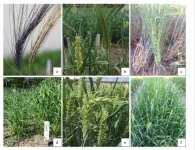
Fig. 2. Barley mutations observed in the f2 generation:
a – change in the intensity of black color of the spike; b – formation of awns in the hooded genotype; c – change in spikelet
arrangement on the spike (branching); d – dwarf mutants; e – curly spike; f – early earin.

Results and conclusions
It was revealed that the greatest contribution to the formation of field germination of seeds of mutant populations in the f1 and f2 generations was made by the mutagenic factor (20.36%), as well as the interaction of the factors "genotype × environment" (18.55%) and "mutagen × environment" (14.93%). A concentration of 0.01% was classified as semi-lethal for two samples. In the f2 generation, the mutagenic effectiveness of 0.002% phosphemid concentration exceeded 0.01% by more than 4 times. A low concentration was more effective and efficient for the variety 'Zernogradskiy 813' (17.43%) and sample Dz02-129 (12.04%). For sample C.I. In 10995, a high concentration of fosfemide proved more effective (29.66%), ensuring a high mutation rate (9.79%) with a relatively low mortality rate (33.00%). Nine different types were identified in the mutation spectrum. In the f3 generation, distinct inheritance of changes was confirmed in 46.43% of families.

This is information from from AI. May contain inaccuracies.

Step-by-Step Synthesis
The industrial and laboratory synthesis of Phosphemide is based on the phosphorylation of 2-aminopyrimidine, followed by nucleophilic substitution with aziridine.

Step 1: Phosphorylation (Synthesis of the Dichloride Intermediate)
2-Aminopyrimidine is reacted with phosphorus oxychloride (POCl₃). This reaction typically requires an organic base (such as pyridine or triethylamine) or an excess of the amine to act as an acid scavenger for the generated hydrochloric acid (HCl).
\(\text{C}_{4}\text{H}_{5}\text{N}_{3}+\text{POCl}_{3}\xrightarrow{}{\text{Base}}\text{C}_{4}\text{H}_{4}\text{N}_{3}\text{-NH-POCl}_{2}+\text{HCl}\)
  • Product: Pyrimidin-2-ylphosphoramidic dichloride.

Step 2: Aziridinization (Chlorine Substitution)
The resulting dichloride intermediate is treated with aziridine (ethyleneimine). This step is highly exothermic and is conducted at low temperatures in an anhydrous organic solvent (e.g., benzene, toluene, or diethyl ether) or a weakly alkaline aqueous medium. An acid acceptor like triethylamine is added to neutralize HCl and prevent the premature acid-catalyzed opening of the aziridine rings.
  • Product: Phosphemide (isolated via filtration of the amine salt followed by crystallization/purification of the filtrate).


Mechanism of Action
The pyrimidine ring targets the molecule toward rapidly dividing cancer cells by mimicking natural nucleic acid bases. Once inside the cell, the two aziridine rings undergo ring-opening under slightly acidic conditions, forming highly reactive carbonium ions. These ions covalently bind to DNA bases (predominantly at the N7 position of guanine), leading to DNA cross-linking, chromosome breakage, and inhibition of tumor cell replication.
Sounds like realistic plan.
 
Last edited:
This might be a bit off-topic. I find these interesting examples of mutations possible using the new substance. No English texts were found. There are a lot of links at the end of the article, but I haven't had time to check.
Mutation breeding of Phalaris is reported in the literature; the Canadian group that bred the glabrous canaryseed used sodium azide. This is still a dangerous chemical (a little less acutely toxic than sodium cyanide, drain disposal absolutely forbidden since it can form explosive salts with the plumbing), but friendlier than the mutagens you mention above because it's not a human carcinogen. I think that would be a feasible amateur project and I may attempt it.

A 2 mg dose produced effects subjectively comparable to approximately 8 mg of reference DMT, while a 4 mg dose produced effects roughly comparable to approximately 15 mg of reference DMT.
I guess the obvious question is whether that's just a mixture of DMT and 5-MeO-DMT, although the dose seems small for that. Have you spotted known mixtures of purified 5-MeO-DMT and DMT to determine how repeatably your TLC method can distinguish them? Or for all the effort you've invested, it must at some point be worth just paying a lab for MS.
 
(other paper is included as attachement)

It's hard to find any evidence supporting that coumarins are common in grasses. There are a few notable species like Hierochloe odorata and Anthoxanthum odoratum that are grasses. Those seem to an exception to the rule. That being said, phylogenetically they are not that far seperated from phalaris, they all belong to the subfamily pooideae, and they are found in the same sister clade "Poeae chloroplast group 1" according to this paper. But how they exactly are related is unclear. Other members of the highlighted clade have no evidence for containing coumarins.

UPDATE: After looking for more, I found that there is evidence that Avena sativa aka oats contains a coumarin called scopletin. Its in the same sister clade.

That being said, It could surely be possible. It's fluorescence is described as being very bright. So even if a little amount makes it through your mostly alkaloid specific separation method, you could see it. I wonder if the color would be the exact same though.
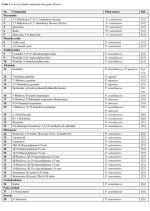
Simple coumarins characterize primarily by blue, indigo, violet, or greenish fluorescence.

Fluorescence intensity often increases when chromatograms are treated with alkali (e.g., 10% KOH in alcohol).
 
@kenz

I expect that we will explore mutation breeding at some point. At this stage, however, the fastest path to progress is through wild germplasm and classical selective breeding.

@aizoaceous

Yes, with the current TLC strategy, DMT and 5-MeO-DMT can be clearly distinguished when they occur together in the same plant. The bioassayed plant is scheduled for repeated testing. While it seems unlikely that the bioassay contained a mixture of both compounds, we cannot rule it out with certainty yet. At present, we have no definitive explanation for the subjectively increased potency, and we will continue investigating this.

Additional bioassays are required to build a more complete picture of the effects associated with the Type 1 profiles. A single dose equivalent to 1 g of dried leaf material has already provided a glimpse of what we may be able to achieve in the future.

We also need to determine whether Type 1 profiles that contain the unidentified high-Rf fluorescent compound differ from those that do not. If they do, it may be appropriate to expand the current Type 1 classification into Type 1a and Type 1b profiles.

@kenz

The fact that the high-Rf compound has only been observed in Type 1 profiles suggests that it may be linked to the biosynthetic pathway responsible for unsubstituted tryptamines.

I would like to invite anyone with the necessary expertise to join us in answering these questions. Although our seed supply is still very limited, we can provide a dozen seeds to researchers interested in contributing to this work.
 
Back
Top Bottom