• Members of the previous forum can retrieve their temporary password here, (login and check your PM).

Phalaris/other grass types ID thread

Migrated topic.
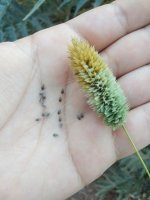
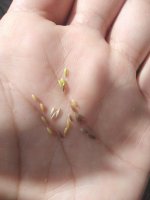
Here's an example of a phalaris minor. On a first glance it looked almost exactly like brachystachys until i inspected the seeds. This goes to show how unreliable it is to identify these grasses based on plant morphology alone.
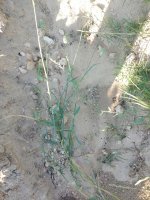
 

Attachments

  • IMG20210512174420.jpg
    IMG20210512174420.jpg
    5.4 MB · Views: 2
  • IMG20210512173952.jpg
    IMG20210512173952.jpg
    3 MB · Views: 2
Dithyramb, there is so much i want to ask you but i don't have the full member privilege to text you neither here is the right place to. I've found some patches of arundo donax and phragmites australis, also an acacia floribunda and some scattered patches of wild harmala.

It's intriguing how similar our bioassays are. Looks like we live in similar climate, with similar endogenous entheogens. I read jim deckorne's bioassay with phragmites and now i havea a bit of cold feet trying it..
 
Please be very careful testing these plants, don't bioassay without at least some sort of confirmation that you have the wanted alkaloids. Plants may have toxic compounds too, and you may not detect it by simple subjective experience when consuming it.

This may be of use, specially point 6
 
Thank you for sharing i appreciate it. Unfortunately i can't seem to find the reagents needed for testing where am from. I can still seperate the gramine out though with an extraction. I wrote down my procedure for the intitial full spectrum extraction here . I can perform a mini extraction from that extract using naphtha . Hows does that sound?
 
Sidisheikh.mehriz said:
Dithyramb, there is so much i want to ask you but i don't have the full member privilege to text you neither here is the right place to. I've found some patches of arundo donax and phragmites australis, also an acacia floribunda and some scattered patches of wild harmala.

It's intriguing how similar our bioassays are. Looks like we live in similar climate, with similar endogenous entheogens. I read jim deckorne's bioassay with phragmites and now i havea a bit of cold feet trying it..
Congrats on promotion! 😉

Yes, gramine should get left behind if you do a naphtha extraction.
 
downwardsfromzero said:
Congrats on promotion! 😉

Yes, gramine should get left behind if you do a naphtha extraction.

Thanks:d I'm thrilled!
Have you heard of anyone in nexus producing their own nano zinc powder pure enough for a n-oxide zinc reduction?
What do you think is the best thread for such a topic?
I mean i have made nano iron and copper powder before just for the fun of it using OTC vitamin C and oxalic acid and active carbon but haven't tried it on zinc before. Oxalic acid can be easily purified by sublimation. Zinc oxalate can be purified to a reasonable level with crystallisation and Washing before thermal decomposition to zinc oxide then further reduced with active carbon, heated in a test tube to elemental zinc powder.
 
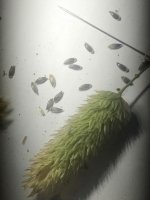
This is phalaris truncata. The seeds have similar small infertile lemmas very much like brachystachys has but it's thinner and longer. The panicles are thin and silvery green. In it's natural habitat it can grow has high as aquatica and the panicles can be as long as aquatica but they will be silvery and thin. It's perennial.

First pic is truncata and second is brachystachys for comparison.
 

Attachments

  • IMG20210518145945.jpg
    IMG20210518145945.jpg
    2.5 MB · Views: 3
  • IMG20210316151210.jpg
    IMG20210316151210.jpg
    2.7 MB · Views: 3
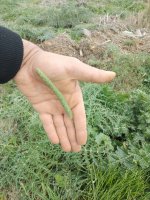
Here's another truncata that i initially misidentified as aquatica. I uprooted this plant and planted it in my garden. Now that it's panicles have matured i can see that the seeds are definitely truncata.
Notice how thin the leaves are! Everything about this grass is so thin.
 

Attachments

  • IMG20210322143230.jpg
    IMG20210322143230.jpg
    4.7 MB · Views: 1
  • IMG20210322143240.jpg
    IMG20210322143240.jpg
    5.6 MB · Views: 1
Sidisheikh.mehriz said:
Have you heard of anyone in nexus producing their own nano zinc powder pure enough for a n-oxide zinc reduction?
What do you think is the best thread for such a topic?
I mean i have made nano iron and copper powder before just for the fun of it using OTC vitamin C and oxalic acid and active carbon but haven't tried it on zinc before. Oxalic acid can be easily purified by sublimation. Zinc oxalate can be purified to a reasonable level with crystallisation and Washing before thermal decomposition to zinc oxide then further reduced with active carbon, heated in a test tube to elemental zinc powder.
I'd take this question to the Chemistry section for discussion. Have you tried this carbon reduction of zinc oxide in a test tube yourself?
 
Great, i'll take the question to the chemistry section. I've tried the carbon reduction on copper oxide before and it worked well but i haven't tried it on zinc oxide yet. That's why am asking.
 
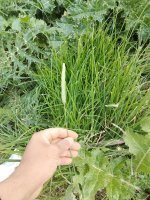
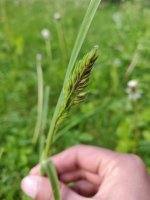
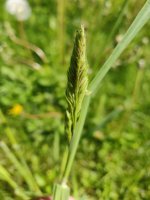
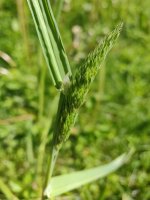
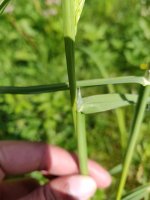
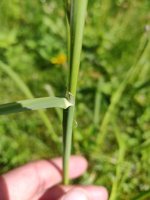
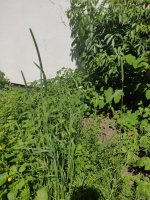
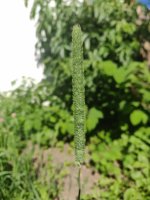
Can anyone ID this?
 

Attachments

  • IMG_20210521_151623.jpg
    IMG_20210521_151623.jpg
    1.2 MB · Views: 2
  • IMG_20210521_151418.jpg
    IMG_20210521_151418.jpg
    1.3 MB · Views: 2
  • IMG_20210521_151405.jpg
    IMG_20210521_151405.jpg
    1.4 MB · Views: 2
  • IMG_20210521_151339.jpg
    IMG_20210521_151339.jpg
    1.1 MB · Views: 2
  • IMG_20210521_151317.jpg
    IMG_20210521_151317.jpg
    1.3 MB · Views: 2
Could this be truncata?
 

Attachments

  • IMG_20210614_154503.jpg
    IMG_20210614_154503.jpg
    3.5 MB · Views: 1
  • IMG_20210614_154533.jpg
    IMG_20210614_154533.jpg
    769.7 KB · Views: 1
  • IMG_20210614_154633.jpg
    IMG_20210614_154633.jpg
    1.3 MB · Views: 1
Dasein said:
Could this be truncata?
Hi Dasein,

the last two plants you have photographed are not phalaris.
You can identify them with e.g. Flora Incognita app.

In any case most of poacee grasses contains triptamines, but like phalaris, poisons and many other molecules.
 
Era/is said:
Dasein said:
Could this be truncata?
Hi Dasein,

the last two plants you have photographed are not phalaris.
You can identify them with e.g. Flora Incognita app.

In any case most of poacee grasses contains triptamines, but like phalaris, poisons and many other molecules.

Wait, really? Those last three photos are consistent with Phalaris aquatica.
 
RhythmSpring said:
Era/is said:
Dasein said:
Could this be truncata?
Hi Dasein,

the last two plants you have photographed are not phalaris.
You can identify them with e.g. Flora Incognita app.

In any case most of poacee grasses contains triptamines, but like phalaris, poisons and many other molecules.

Wait, really? Those last three photos are consistent with Phalaris aquatica.
Oops, sorry I has observed quickly the photos. Enlarging the photo I've seen the knurls, initially I thought that the ears had grains / round seeds.
 
Hi. I went looking for P. Arundinacea with some help from a map of recorded observations. Much grateful if you can help me confirm or deny. :)
 

Attachments

  • DSC_0703.JPG
    10.8 MB · Views: 3
  • DSC_0678.JPG
    8.4 MB · Views: 2
  • DSC_0675.JPG
    6.5 MB · Views: 2
  • DSC_0670.JPG
    13.2 MB · Views: 4
  • DSC_0668.JPG
    14.8 MB · Views: 2
  • DSC_0713.JPG
    9.8 MB · Views: 3
Back
Top Bottom