• Members of the previous forum can retrieve their temporary password here, (login and check your PM).

Trying to improve Acacia information

Migrated topic.
..Acacia looks like a real nice character..:) thanks acacian..
and i'm sure acacia seeds and flowers would be one of his favourite sweet snacks, along with grubs..

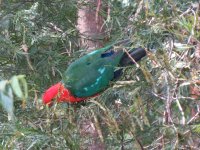
todays allies, an aussie King Parrot feeding on Acacia fimbriata seeds;
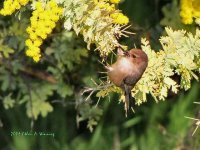
then a Bushtit feeding on the australian Acacia baileyana in Golden-Gate Park, San Francisco..!
[Bushtits are social songbirds that twitter as they fly between shrubs and thickets in western North America. Almost always found in lively flocks, they move constantly, often hanging upside down to pick at insects or spiders on the undersides of leaves.]
and below the Bushtit, colonising acacias in Golden Gate Park..
 

Attachments

  • king-parrot-feeding-acacia-fimbriata-15-oct-12.jpg
    king-parrot-feeding-acacia-fimbriata-15-oct-12.jpg
    2.2 MB · Views: 0
  • Bushtitacacia-winning.jpg
    Bushtitacacia-winning.jpg
    35.7 KB · Views: 0
  • acacias-murphy-smaller-300x224.jpg
    acacias-murphy-smaller-300x224.jpg
    38 KB · Views: 0
..and timeloop, enjoying your writing and thinking style..:) ..thanks for link, still to read..
you wrote:
Recently I have been thinking a great deal about the co-evolution of plants and the human mind... Im coming to the conclusion that perhaps we have strayed from the evolutionary path that the plants had in mind for us all along.
..i resonate with and enjoyed that comment..one of the theories of McKenna's which inspired me in the mid 90s was what i dubbed and planned to write an essay on: 'The Plan Of The Plants'..the idea that animals and eventually humans have evolved as an elaborate seed dispersal mechanism for plants..'dreamt' up millions of years ago in anticipation of having the keep the seed of life going, beyond this homeworld, or 'stop-over'..
as McKenna put it, 'what do We have that dolphins don't? Digits!' (holding up his ten fingers)
we are not, in this concept, some pinnacle of evolution and consciousness, but rather an specially adapted form of nature, with the physical means to construct vessels to get the DNA off this rock in an emergency ..(an emergency to 'nature' may be a 2-4 million year scenario..fairly sudden really in it's terms) .onwards to the stars..!
.

ps. NMT is a very interesting compound/medicine..as interesting to me as DMT..
visuals are not the whole picture..:) and the after-feeling of clarity is worth it alone..😉
 
..i'll just give an excerpt from the NMT talk to save people jumping there..
...not so much a visual or auditory entheogen, although there were some visuals, but rather a 'Spatial hallucinogen'...imagine you could 'feel' but not see an Escher world..."

.........................

Known Biochemical Activity

NMT is found as a natural trace component of human urine, along with DMT, 5HT (serotonin), bufotenine and 5methoxy-tryptamine.
Therefore, as is said of DMT, it plays an as yet unknown role in ordinary and essential perceptual, cognitive and conscious function.
It was a potent agonist of 5-Hydroxytryptamine (Serotonin) Receptor Subtype 1A (5HT1A).[2] It showed weak binding affinity to the (5HT2B) receptor, for which more visually orientated hallucinogens such as LSD and psilocybin have greater affinity. DMT differs from these two classic psychedelics in having a much greater binding affinity to the 5HT-7 receptor, for which I'm not sure if NMT has been tested. As I'll mention in a moment, though, all these compounds bind to multiple receptor sites.
NMT is also a strong inhibitor of the enzymes Aldehyde Dehydrogenase 1 (ALDH1A1) and Histone Lysine Methyltransferase G9a,
A recent Journal of Medical Chemistry (2010) paper found that Protein lysine methyltransferase G9a inhibitors inhibit cancer cell growth.[3]

also timeloop wrote:
on another note, Ive been studying Acacia Melanoxyln quite closely in the field recently and have noticed a great deal of subtle variance within the structure of the plant indicating hybridization? or sub-habitat effect on growth... Ive worked with this acacia before and got next to nothing... but perhaps it could prove to be dependent on other factors. I remember when I begun this quest the word passed between entheogenic researchers was that longifolia was inactive... which in the long term has not necessarily proven to be completely true at all.

..at that EGA conference i spent half my time chewing the phyllodes of the local melanoxylon variety..very different to where i'm from..good tasting stuff..inspired my lecture:)
also, WAGE's active longifolia is different yet again!:)

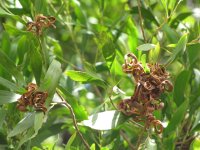
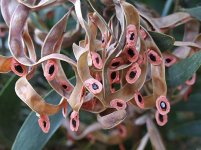
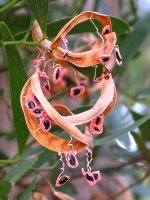
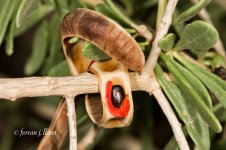
below, different forms of A. melanoxylonbased on seed pod types..some botanists have argued that melanoxylon should be given 2 subspecies..the first (more twisted, yellow-pink aril) is the kind that in experience has almost no alkaloids..the other forms i am not sure if they have been looked at..
 

Attachments

  • starr-090804-3679.jpg
    starr-090804-3679.jpg
    2.7 MB · Views: 0
  • Amelanoxylonseed.jpg
    Amelanoxylonseed.jpg
    35.3 KB · Views: 0
  • flat%2C550x550%2C075%2Cf.jpg
    flat%2C550x550%2C075%2Cf.jpg
    81.1 KB · Views: 0
  • 20090201_soussmassa_447.jpg
    20090201_soussmassa_447.jpg
    143.1 KB · Views: 0
..and regarding the future of acacias and other plants of earth, i leave you with the following dance track (from 2002)
[YOUTUBE]
and if the dance track's too much, here's something alternate to listen too..:)
..save the seed!

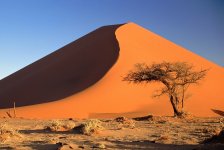
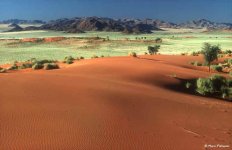
and some images, the last being Camel Thorn (Acacia eribola) again..
 

Attachments

  • Sand-Dunes-And-Acacia+Tree-Namib-Desert-Namibia.jpg
    Sand-Dunes-And-Acacia+Tree-Namib-Desert-Namibia.jpg
    1 MB · Views: 0
  • Mars_Terraforming_Montage.jpg
    Mars_Terraforming_Montage.jpg
    115.4 KB · Views: 0
  • mountains.gif
    mountains.gif
    9.7 KB · Views: 0
  • marsterraforming1.jpg
    marsterraforming1.jpg
    34.3 KB · Views: 0
..not to mention all the birds and other creatures great and small..!
[YOUTUBE]
...
ok, back to the Vedas..
an image-journey..

and an interesting specimen from India [1st image below]

Acacia eburnea Willd.
:"Family; Mimosacea
Distribution: Common in hilly areas of dry deciduous forests. Limited to Peninsular India.Photographed at Eastrenghats of Nellore district.
Description: 2.5-3.5mts tall small tree with large ivory -white thorns. Leaves 2-3cm long, 4pairs of pinnae,leaf lets 7-8pairs , leaflets 2x1mm,elliptic or obovate, obtuse. Flowers heads on axillary peduncles, peduncles bracteate below the middle,0.6-1cm across, flowers hermaphrodite, with redpurple corolla and yellow stamens,Calyx companulate, petals united, stamens numerous, free, anthers small, ovary sessie, 5-9ovuled. Pod very thin, flat curved in a hook, 5-7 seeded.
This species is not recorded in Flora of Nellore district by B.Suryanarayana and A.S.rao."

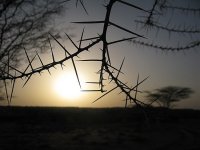
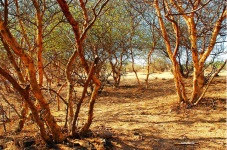
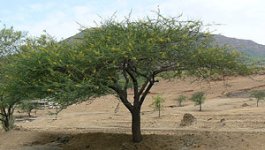
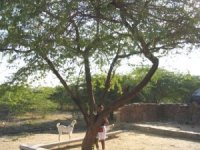
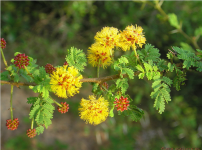
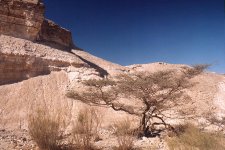
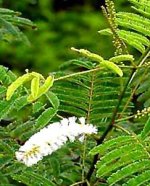
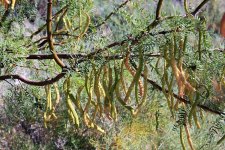
next up, Acacia nilotica (and A. aribica) [reported DMT active recently in south africa] ..in Hindi 'Babul' or 'Kikar', the Bengali people call it 'Babla'..in Tamil and Malayalam the tree is known as 'Karu-velam'..[images 2 and 3]

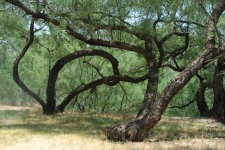
..then we have acacia dominated forest in Gujarat (image 4)
Acacia tortillis (also found Africa), 'thorn of soma'..here in India..
followed by Khadira Acacia catechu) , some art, and the return of Durga...namaste..and victory to durga!:d
 

Attachments

  • Acaciacatechu_19564.jpg
    Acaciacatechu_19564.jpg
    27.8 KB · Views: 0
  • durga+is+beautiful.png
    durga+is+beautiful.png
    725.3 KB · Views: 0
  • my+sleeping+karma.png
    my+sleeping+karma.png
    484.4 KB · Views: 0
  • 11298848623acacia-tortilis.jpg
    11298848623acacia-tortilis.jpg
    53.5 KB · Views: 0
  • acacias+of+gudjarat.png
    acacias+of+gudjarat.png
    865.2 KB · Views: 0
  • babul-tree_1802.jpg
    babul-tree_1802.jpg
    27.3 KB · Views: 0
  • babul_tree.jpg
    babul_tree.jpg
    26.5 KB · Views: 0
  • Acacia+eburnea.png
    Acacia+eburnea.png
    682.4 KB · Views: 0
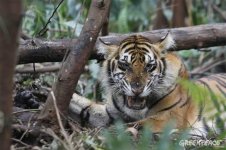
..and speaking of Ark II..save the seed!
the image below was captioned:
An endangered Sumatran tiger was found on the border of PT Arara Abadi, an APP related Acacia plantation in the province of Riau. The tiger died before it could be evacuated. © Greenpeace/Melvinas Priananda
..let all look after All..!
<3
 

Attachments

  • 25562_49567.jpg
    25562_49567.jpg
    42.6 KB · Views: 0
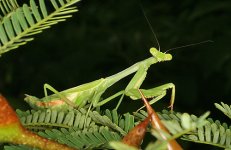
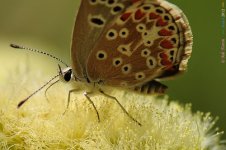
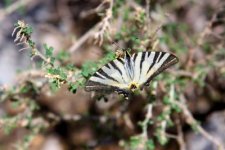
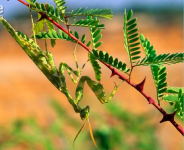
..Acacian Mantids and Butterflies..

Striped mantis (Blepharopsis mendica) on Camel Thorn in Africa, then two allies of Catclaw Acacia (A. gregii) in Arizona, and another green character from somewhere else..
larvae of butteflies grazing on Passiflora species sequester Harmalas from the plant..see Passifloras thraed..
 

Attachments

  • preying_mantis_acacia_7750.jpg
    preying_mantis_acacia_7750.jpg
    116.5 KB · Views: 0
  • 7391763996_245260db0e.jpg
    7391763996_245260db0e.jpg
    102 KB · Views: 0
  • 12619848-swallowtail-butterfly-in-the-acacia-bush.jpg
    12619848-swallowtail-butterfly-in-the-acacia-bush.jpg
    28.6 KB · Views: 0
  • Striped+mantis+(Blepharopsis+mendica).png
    Striped+mantis+(Blepharopsis+mendica).png
    482.2 KB · Views: 0
Do any Australian acacias have thorns ? [ I note that many or all [?] African acacias are thorny ; causing me to wonder about the infamous legendary " Crown of Thorns " ] ...:?
 
..you're actually quite a channeller Major Tom..i sent a message to a friend the other day about the Crown of Thorns..and that 'king of the 'jews'' may actually be 'king of the 'mothers' of juda..
a cruel joke to place the sacred tree on his head..
and what else would one construct a crown of thorns out of in judea? ..the 'thorn' tree..akkis..
speaking of Yesu, the Essenes were recorded in the day as growing medicinal plants, including Acacia raddiana..one of their medicines was the endangered Palm of Jerusalem, constituents unknown..one of these palms, called Methuselah, was germinated in 2005 from 2000 year old seeds excavated at Masada!
Medicinal date palm from oldest known seed planted
the Israeli seedling may advance medicines and reveal genetic relationships between ancient and modern date palms, experts say.
..now, i wonder if deep down, preserved in a crevice are some Essene Medicine Acacia seeds..given the survival drive of the acacia, though, i'd say the trees still looking over Masada are direct relatives..
ps. on a personal note: regarding militant tree-protectionism, the last rune reading i had done (10 years ago) by a real wise woman was: 'You guard what is true like a thorn guards a rose..'

..only a small minority of Australian acacias have thorns..e.g. Kangaroo Thorn (Acacia paradoxa) first picture below (seeding), and A. victorieae..their relationship to African acacias needs to be investigated more..
next pic..acacian Crown of Thorns..then visionary mystic and herbalist Hildergaard von Bingen..
followed by Methuselah..from Masada 70AD!..
and then
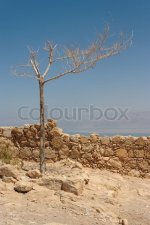
an acacia near Nahal Rahak creek 2 miles south from Masada, and then one at the ruins of the old fortress itself..
 

Attachments

  • acacia+paradoxa+-+seed.jpg
    acacia+paradoxa+-+seed.jpg
    4.3 MB · Views: 0
  • crown-of-thorns-1.jpg
    crown-of-thorns-1.jpg
    199.1 KB · Views: 0
  • Hildegard.jpg
    Hildegard.jpg
    23.6 KB · Views: 0
  • DATED_PALM.jpg
    DATED_PALM.jpg
    35.6 KB · Views: 0
  • 31.jpg
    31.jpg
    177.5 KB · Views: 0
  • Acacia%40Masada.jpg
    Acacia%40Masada.jpg
    53.3 KB · Views: 0
..on the Gnostic side of things..
In 1950 Doresse tracked down the original site of discovery to Nag Hammadi, 280 miles south of Cairo. Some peasants in the area directed him to the site of the ancient town of Chenosboskion. Its ancient Coptic name, Shenesit, means "acacias of the God Seth".
[http://anoniem.org/?http://www.essene.com/Gospels/GnosticAndSophia.html]
..the predominant tree in the region is Acacia tortillis..
pictured below, Nag Hammadi, A. tortillis nearby, and a newly described species of 'mesquite' from the United Arab Emirates Prosopis plastifora..
 

Attachments

  • new+species.JPG
    new+species.JPG
    36.6 KB · Views: 0
  • picture1.gif
    picture1.gif
    29.1 KB · Views: 0
  • cliffs.jpg
    cliffs.jpg
    85.6 KB · Views: 0
Brian Leigh Molyneaux [ The Sacred Earth , p. 90 ] writes of an analogy of Christ's sacrifice with the " Tree of Life " and that " indeed medieval iconography often shows the Crucifixion on a tree rather than a cross " .... [ personally , I am a heretic [?] believing that ALL religions are " runaway legends " ; and that the origins of Christianity date from much earlier times than the Romans in Judea . Furthermore , I am inclined to believe that " He " seriously angered some very powerful folk - perhaps a Pharoe - who were determined to stamp out the Gnostic cults of the day ... ] :twisted:
 
Wow, all the religion-plant connections are totally fascinating! It runs so much deeper than I previously thought :want:

nen888 said:
...and a newly described species of 'mesquite' from the United Arab Emirates Prosopis plastifora..

Do you know if any Nexians from the USA have done work with mesquites there yet (genus info p.12)? I've seen them mentioned here and there in the thread but it's a loooong one to sift through :d Bioassays? I just found out that Prosopis glandulosa Torr. var. torreyana occurs in my area so I'll keep an eye out.

In other news: A preliminary extraction attempt of 20g A. caffra leaves yielded a small amount of yellow/green oil. Slightly sweet smelling but not overwhelmingly DMTesque to me. I made a fairly large error (forgot to soak overnight - began with the 3 x 45 minute boils) but I'm still new to extractions so I'll get there. Next time will be with 50 or 100g of material and I'll be sure to soak. Solvent used was naphtha, popped in the freezer.
 
..interesting and groovy theory Major Tom..ps. i think some of 'His' relatives unfortunately passed into spirit at Masada..whatever one's viewpoint, something deep in the traditions of Abraham nearly died there 70AD..

yeah, xantho, acacias are implicated in just about every world 'religion'..
to me the fall from the garden is when instead of talking about and 'listening' to 'spirit' through the trees, people started saying things like "moses said..", or "x is the only prophet" etc..
the Gnostics, like me, opposed such 'middle men' between the individual and communion with the mystery, the houses of the holy..for this they were persecuted..the BIshop Irenaeus threatened to get the Pope to send a Legion to Egypt to wipe out the Nag Hammadian (and i think secretly also Nazarean) Gnostics..c 170 AD..The bulk of his writings were directed against Gnosticism, such as "Adversus haereses" (Against Heresies)..


..interesting about the A. caffra..it is one species i don't know of any reports of tryptamines..as far as the most likely candidates in your collection we've been enjoying in the Acacia & Mimosa Image Gallery, i would nominate A. (or F.) albida and A. sieberiana..most of the species on p.6 of that thread look kind of 'interesting', reddish twigs/growth etc..
..prosopis next post..
 
..now, Prosopis, xantho is a big and fairly uncharted world..
fortunately we know of many traditional ethnobotanic uses orally of various Mesquites, as many of the alkaloids found in them are unique/new/unknown..along with the harmalas and tryptamines known from the genus..

a lot of research has begun in recent years into the medicinal side of prosopis..antifungal activity..[against some food toxins]
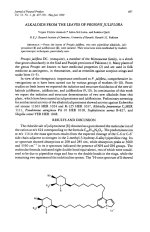
["Alkaloid extracts of Prosopis juliflora (Sw.) DC. (Mimosaceae) against Alternaria alternata"
M.P. Raghavendra, S. Satish, and K.A. Raveesha 2009]

..completely new alkaloids such as juliprosinene and juliflorine [see image/paper attached]
and juliprosine, a (1:1) mixture of 3-oxo- and 3-oxo-juliprosine and juliprosopine ["Structure–activity relationships of alkaloids from mesquite" (Prosopis juliflora (Sw.) DC.) Hiroshi Nakano et al 2004]
"Prosopis juliflora is used for feeding cattle and humans. Intoxication with the plant has been reported, and is characterized by neuromuscular alterations and gliosis."[Alkaloids from Prosopis juliflora leaves induce glial activation, cytotoxicity and stimulate NO production.
A.M.M. Silvaa et al 2007]
..this cattle poisoning seems, however, like Phalaris, to not be so relevant to humans..the cause of the poisoning (rather than intoxication) aspect is from excess Nitrates in the brain..such excessive levels of nitrate are from grazing enormous amounts of plant matter..kilos!
"Gliosis has historically been given a negative connotation due to its appearance in many CNS diseases and the inhibition of axonal regeneration caused by glial scar formation. However, gliosis has been shown to have both beneficial and detrimental effects, and the balance between these is due to a complex array of factors and molecular signaling mechanisms, which affect the reaction of all glial cell types."[wikipedia]
from this groovy US blog Mesquite - description, history, use and benefits:
Honey
Mesquite (Prosopis glandulosa), Screwbean Mesquite
(Prosopis pubescens ) and Velvet Mesquite (Prosopis
velutina).
All 3 are deciduous and have characteristic bean pods which have long
been used by humans, wildlife and livestock as a food source. It is
estimated that over 75% of a Coyote's diet in late summer is mesquite
beans.

Native Americans relied on the mesquite pod as a dietary staple from
which they made tea, syrup and a ground meal called pinole. They also
used the bark for basketry, fabrics and medicine. A favorite of bees and
other insects, mesquite flowers produce a fragrant honey.
and from the groovy Native American Herbs and Plants of the Southwest Mesquite
Mesquite is one of the most common desert trees, growing below 5,000 feet in altitude, near washes or at road edges, where it can catch the little extra bit of water that it needs. The leaves are feathery, the branches have strong, straight thorns, and the flowers are attractive, fragrant, yellow catkins. You may collect the leaves, flowers, pod and bark for medicinal use. A tea made from Mesquite is astringent and antibacterial, and is useful internally for diarrhea and GI tract inflammations, ranging from ulcers to colitis. Used externally, the tea makes a good antiseptic wash for any irritated or broken skin injuries.

CAUTIONS:

It is best to make the tea fresh for each use, but can be stored up to 2 weeks under refrigeration.

ALWAYS:

Be sure of the identity of the plant before you use it. If a preparation makes you sick or gives you a rash, don't use it, and throw it away! If your condition does not improve, see your doctor. Be sure to let your physician know EVERYTHING that you are taking!

..there's a lot out there on Mesquite..except of course ritual/visionary use..
.
 

Attachments

  • arizona+mesquite+1.jpg
    arizona+mesquite+1.jpg
    388.1 KB · Views: 1
  • clay_mesquite.jpg
    clay_mesquite.jpg
    663.9 KB · Views: 1
  • 02-05_hsc--paige_confluence.jpg
    02-05_hsc--paige_confluence.jpg
    241.8 KB · Views: 1
  • new+prosopis+alkaloids.jpg
    new+prosopis+alkaloids.jpg
    372.8 KB · Views: 0
... perhaps I worded my previous post badly - I believe Gnostic faith to be sacred and holy . Encounters with what seems to be a divine intelligent presence , seemingly the creation of life , has left me awestruck , humbled and a believer .... [ apparently , after the evolution of Roman orthodox Christianity the Gnostics were persecuted as heretics .... " beliefs and teachings were systematically suppressed and outlawed , slowly eradicating the very esoteric roots and traditions from which the great prophet Jesus Christ originally emerged from " ... ..." In the year 381 AD Theodosius finally made heresy a crime against the state . Gnostic writings were condemned as a " hotbed of manifold perversity ", which " should not only be forbidden , but entirely destroyed and burned with fire " { Luke A Myers . Gnostic Visions , p. 218 }. ..." The reason why much of the early Christianity has become lost and is so greatly misunderstood today is because of the fact that after the Roman Empire claimed to hold the one true source of Christianity , thus claiming orthodoxy , they named all other forms of Christianity including the Gnostics as heretics , viewing their religious beliefs as well all other religious traditions as perverse forms totally misguided from the one truth that was the written word of God " . { ibid } ] .... " Augustine , the great spokesman for Catholic Christianity , expressed the mood of the times when he explained that coercion was necessary since many people only respond to fear . Military force was " indispensable " in suppressing heretics for their own good , of course . Augustine proclaims : " filled with fear myself , I fill you with fear." The spirituality of St. Paul and Jesus was love and knowledge and now only a few hundred years later was replaced by the Roman churches religion of obedience and terror." {ibid}.
 
^Yeah Major Tom, St. Augustine was a creep! And, like Phillip K. Dick said 'The Roman Empire never ended!'
Thanks for that Masada acacia image Nen. Very touching and haunting.
And lovely picture of Acacia Acacian:). :love:

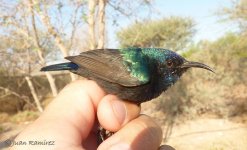
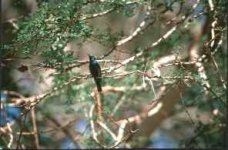
The Palestinian Sunbird loves the nectar of thorny acacia bushes. Second picture from great middle-eastern bird blog: Bits, pieces and an Oriental Skylark...
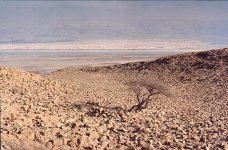
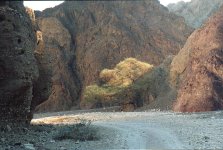
And other pictures from a fantastic middle-eastern acacias photo gallery: Acacia middle East - search in pictures
Showing A. tortillis/raddiana near the spots John the Bapist and similar characters wandered in their youth.
 

Attachments

  • 34.jpg
    34.jpg
    214.7 KB · Views: 0
  • 03-1.jpg
    03-1.jpg
    179.1 KB · Views: 0
  • M2+oct12+Eilat.jpg
    M2+oct12+Eilat.jpg
    87.4 KB · Views: 0
  • image007.jpg
    image007.jpg
    18.9 KB · Views: 0
  • 01.jpg
    01.jpg
    140.2 KB · Views: 0
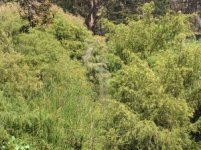
hey fellow acacians! sorry i have been busy lately working... exhausting making vinegar and mayonaise I must say! anyways.. i'm very sorry to stir the pot here, but I am having doubts as to the I.D of the species I got that active extract from... the thing is, i used phyllodes from two differen't trees, which at the time I thought were the same tree (one which I presumed to just be an older specimen) .. though the other day I went and paid them another visit and the mature tree looks like it could be a differen't species. The phyllodes are not as sharp, erect or short as the mucronata I posted up earlier.. but instead quite papery and a bit longer..

.. they are both in seed at the moment so I collected some pods... they are identical on both trees. same length, colour texture, same seed size.. curled the same way.. literally identicle. so i'm not sure if the mature tree is a slight genetic variant, just differing with age or another species all together.. heres some photos. I collected some more phyllodes from each which I am going to test separately to figure out which I got spice from.. if it was indeed one of the other as I'm beginning to suspect

pics below of the mature specimen

unsuree.jpg


unsureq.jpg
 
I find it very difficult to ID acacias with any certainty - many different species look very similar to me , and I am unable to definitely separate them or ID with accuracy... the above photos actually look very similar to a variety of " narrow phyllode " type of " A. Maidenii " I have growing . The seed were purchased from a large commercial Oz native seed supplier . { I suspect my tree may have some activity , but at the time I was taking small bark scrapings and twig clippings from all of my specimens in order to obtain sufficient material to be worth the effort , yet minimize damage done . In future I hope to be able to collect enough bio-mass to be able to weigh samples from individual plants / species and thus be able to calculate yield percentages and post here ... } .:?
 
thanks major.. Today I am going to test that specimen as well as the mucronata I posted pics of earlier so I will know for sure which it was that gifted me the extract. In terms of the material I collected there was a bit more of the mature tree than the confirmed mucronata in the mix. I don't know how I didn't see this at the time! They were both in flower and a couple hundred meters away from each other so I guess I must have passed it off a little quickly. sorry guys! kinda hoping its the mucronata that had it.. i really like the vibe of that tree

edit.. they weren't in flower at time of harvest, though they were at time of identification
 
Back
Top Bottom