• Members of the previous forum can retrieve their temporary password here, (login and check your PM).

Harmala Brew Recipes

@northape Considering the pursuit of 'better' tasting brew, I would avoid acetic acid and use tartaric acid instead. :) Cheers!
I know, but that is not my pursuit at all. After years of working with rue, I am fine with the taste. Some other acid choice might be better, but I am comfortable with acetic acid. That is why I always include the guideline "adjust water to pH 6" so people can make their own choice ;)
 
@northape Considering the pursuit of 'better' tasting brew, I would avoid acetic acid and use tartaric acid instead. :) Cheers!
Note to self:

English:
tartaric acid
German: Weinsäure
French: acide tartrique
Spanish: ácido tartárico
Italian: acido tartarico
Dutch: wijnsteenzuur
Portuguese: ácido tartárico
Polish: kwas winowy
Russian: винная кислота
 
Weight of resin converted to seed weight

0.5–0.6 g Harmala resin ≈ 3 g Harmala seeds
0.7–0.8 g Harmala resin ≈ 4 g Harmala seeds
0.9–1.0 g Harmala resin ≈ 5 g Harmala seeds
1.1–1.2 g Harmala resin ≈ 6.0 g Harmala seeds
1.3–1.4 g Harmala resin ≈ 7.0 g Harmala seeds
1.5–1.6 g Harmala resin ≈ 8.0 g Harmala seeds
1.7–1.8 g Harmala resin ≈ 9.0 g Harmala seeds

Harmala Resin Extraction TEK
 
Harmala powder: 13 g (≈ 0.46 oz)
Water: 500 mL (≈ 17 fl oz / 2.1 cups)
  1. Place the harmala powder and 500 mL (17 fl oz / 2.1 cups) of water into a regular saucepan with a lid.
  2. Simmer gently for 60 minutes at 100°C (212°F). Keep it at a gentle simmer rather than a vigorous boil.
  3. Filter the liquid to remove the solids.
  4. Add enough water to the filtered liquid to bring the total volume back to 500 mL (17 fl oz / 2.1 cups).
  5. Stir in 4 teaspoons of chocolate milk powder (do not use cocoa/cacao powder). Mix until completely dissolved.

    *Do not drink everything; begin with 25%
 
  • Harmala powder: 13 g (≈ 0.46 oz)
  • Passionflower powder: 13 g (≈ 0.46 oz)
  • Water: 1 L (≈ 33.8 US fl oz / 4.23 US cups / 4.0 metric cups)
  • Chocolate milk powder: 2 tablespoons (≈ 30 mL / 1.0 US fl oz)
  • Pan: Stainless steel with metal lid
  • Heating: 240°C (≈ 464°F) for 40 minutes

    *Do not drink everything; begin with 25%
Reduce to 400ml (≈ 13 oz)
 
Last edited:
I know, but that is not my pursuit at all. After years of working with rue, I am fine with the taste. Some other acid choice might be better, but I am comfortable with acetic acid. That is why I always include the guideline "adjust water to pH 6" so people can make their own choice ;)
Use regular rainwater and you need no acid. People, please try to accept the rue's taste. It's half of the medicine. Just as the smell and taste of coffee energize you in the morning, so the taste of rue prepares your body for the medicine. Why mask it? Medicine should not be a pleasant experience. Those are my thoughts on it.
 
People, please try to accept the rue's taste. It's half of the medicine. Just as the smell and taste of coffee energize you in the morning, so the taste of rue prepares your body for the medicine. Why mask it? Medicine should not be a pleasant experience.
I fail to see the added benefit of your comment in this thread, which is dedicated to detailed recipes for Harmala brews. In context, your overall tone comes across as a passive-aggressive, patronizing, and moralizing criticism of my recipe, framed as a general statement rather than addressed to me directly.

“Why mask it?” seems particularly pointed in this context. I have been taking Harmala for more than 12 years at this point, and if I do not particularly appreciate the taste, then that is simply my preference. I mainly use this thread to document and log my recipes. If other members find them useful and want to try them, that's fine; if they don't, that's equally fine.

There is therefore no need to turn a difference in taste preference into a broader statement about how Harmala should be consumed or what constitutes the proper way to approach it.
 
Sorry if you found my comments aggressive in any way. That was not my intention at all. I respect your position, and you can ask a moderator to remove my posts from this thread. I'm fine with it. Just reference this post, and they can clean the thread for you.

Peace 🕊️
 
you can ask a moderator to remove my posts from this thread. I'm fine with it. Just reference this post, and they can clean the thread for you.
I actually think the last two comments need to remain in this thread to guide its overall direction.
 
How are you achieving this temp?
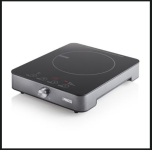
It is impossible to achieve this temperature through conventional means; the numbers listed reflect the settings on my Princess induction plate, model 01.303010.01.001.

The plate has predetermined temperature settings, starting at 60°C (140°F) and increasing in 20°C (36°F) increments up to 240°C (464°F). After conducting numerous evaporation tests, I came to understand that simply setting the induction plate to 100°C (212°F) produces very different results from using the 240°C (464°F) setting.

It appears that when the induction plate is set to 100°C (212°F), it operates in cycles consisting of short bursts at that temperature. In contrast, the 240°C (464°F) setting appears to provide a much more continuous heat output. As a result, when using the 240°C (464°F) setting, the pan is exposed to continuous heat, while the liquid itself remains at a relatively steady temperature of approximately 93°C (199°F).

I believe I mentioned this earlier in the thread, although I understand that not everyone is going to read through the entire discussion. I also think this illustrates one of the challenges of using a thread as a personal online storage place for all my Harmala recipes while simultaneously making that information accessible to other members and non-members of this forum.

Because I post relatively infrequently, information that I need to explicitly note can eventually fall outside my longer-term memory. Part of the issue is also that, to me, it is obvious that I am referring to the setting on the induction plate, rather than the actual temperature of the liquid under those conditions.

I will therefore take your question into consideration in future publications. However, I am hesitant to make a firm promise that I will add such a note 100% of the time. As I have explained above, this is partly due to the fact that I may not retain the distinction in my longer-term memory.


°C​
°F​
Power mode​
60 °C​
140 °F​
200 W​
80 °C​
176 °F​
400 W​
100 °C​
212 °F​
600 W​
120 °C​
248 °F​
800 W​
140 °C​
284 °F​
1000 W​
160 °C​
320 °F​
1200 W​
180 °C​
356 °F​
1400 W​
200 °C​
392 °F​
1600 W​
220 °C​
428 °F​
1800 W​
240 °C​
464 °F​
—​
 

Attachments

  • Screenshot from 2026-08-13 17-46-12.png
    Screenshot from 2026-08-13 17-46-12.png
    83 KB · Views: 0
Last edited:
Okay but for your recipe to be useful for others it's better to generalize it and use terms like simmer, boil, or bring to a certain temp but not the specific settings of your induction stove.

It sounds like rue can pair nicely with chocolate but I wonder if harmalas would interact with and potentiate the alkaloids in chocolate. People report negative interactions with coffee.
 
Okay but for your recipe to be useful for others it's better to generalize it and use terms like simmer, boil, or bring to a certain temp but not the specific settings of your induction stove.
For recipes to be useful for me it's mandatory to write down the settings that I have used in my experiments, which means I need to list the specific settings of my induction stove.

“It sounds like rue can pair nicely with chocolate but I wonder if harmalas would interact with and potentiate the alkaloids in chocolate. People report negative interactions with coffee.”

I have made concoctions of Harmala and Ilex Guayusa 100s of times and never had any single negative interaction with these compounds. I do think its note worthy to mention that Ilex Guayusa shares some of the same contents as Coffea arabica, mainly caffeine.
 
Back
Top Bottom